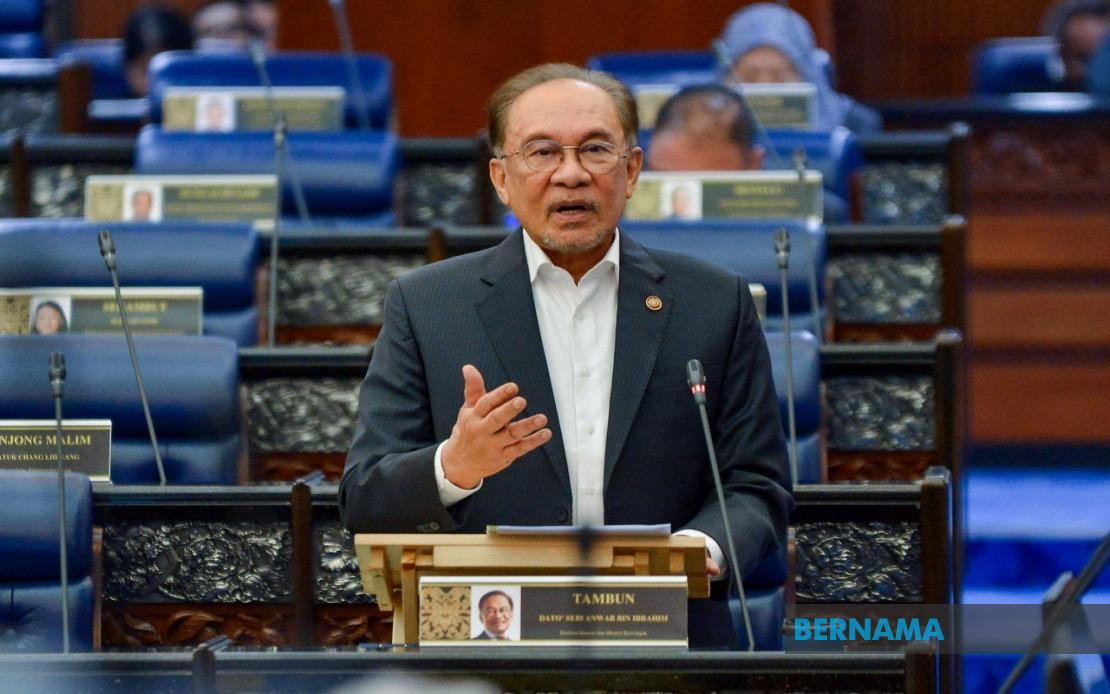
Prime Minister Datuk Seri Anwar Ibrahim has outlined a measured approach to foreign worker recruitment that seeks to balance genuine sectoral labour shortages against the imperative to create sustainable employment for Malaysian citizens. Speaking in Parliament on July 14, Anwar emphasised that while certain industries remain dependent on migrant labour, the government intends to tighten controls and enforce existing protocols to ensure local job-seekers receive priority consideration before new foreign worker visas are approved.
The policy position represents an attempt to navigate competing pressures that have intensified across Malaysia's economy. Small and medium enterprises continue to signal labour shortages in agriculture, construction, hospitality and manufacturing, while simultaneously youth unemployment and underemployment remain persistent concerns in urban areas. Anwar's framing suggests the government recognises both realities rather than treating them as mutually exclusive, though the practical reconciliation of these objectives remains complex.
Central to the government's strategy is a commitment to streamline the existing stock of foreign workers already present in Malaysia. Anwar indicated that priority should be accorded to the millions of documented migrant workers currently in the country when filling vacancies, rather than automatically approving new recruitment from abroad. This approach implies that inefficiencies in existing worker placement and retention, rather than absolute labour scarcity, may explain reported shortages in some sectors. Better coordination between employers and the existing migrant workforce could theoretically address gaps without expanding the overall foreign labour footprint.
The Prime Minister also identified a longstanding governance challenge that has escaped serious political scrutiny: the informal economy surrounding foreign worker recruitment and management. Anwar characterised foreign worker syndicates as entrenched networks that have permitted wealth accumulation at the expense of both workers and employers for decades. This acknowledgment signals potential appetite for dismantling recruitment intermediaries that extract economic rents while facilitating exploitation and irregular employment arrangements. Tackling these networks would require sustained coordination between the Ministry of Human Resources and the Ministry of Home Affairs, alongside law enforcement agencies.
Anwar indicated that any expansion of foreign worker quotas would proceed through joint assessment by the human resources and home affairs ministries, incorporating security considerations alongside labour market analysis. This institutional design reflects concern that unchecked migrant recruitment poses national security risks, a calculation that has become routine in Southeast Asian policymaking particularly regarding refugee populations and irregular migrants. The reference to security aspects underscores that foreign labour policy is no longer treated purely as an economic matter but as one intersecting with border management, community cohesion and counterterrorism imperatives.
Enforcement represents another pillar of the government's framework. Anwar pledged that regulatory breaches by foreign workers would trigger consistent sanctions irrespective of the worker's nationality or origin, explicitly including Rohingya migrants who have become a flashpoint in Malaysian political discourse. However, he also extended an assurance that workers complying with regulations would receive legal protections and workplace safeguards. This dual message—strict enforcement coupled with rights recognition for compliant workers—attempts to signal that the issue is fundamentally about rule of law rather than xenophobia, though messaging in this domain remains susceptible to political manipulation.
The government has also identified a specific abuse pattern regarding professional worker visas that warrants tighter scrutiny. Anwar noted instances where companies obtained approvals to recruit specialists in high-value sectors such as artificial intelligence and digital technology, only to deploy these workers in roles unrelated to their authorised expertise. Such misallocation undermines the stated rationale for overseas recruitment—filling genuine skills gaps that cannot be met domestically—and represents fraud against the visa approval process. Tightening verification mechanisms for professional worker placements could address this without necessarily restricting overall foreign labour numbers.
The broader context shaping this policy includes Malaysia's demographic transition and educational advancement. Increasing numbers of young Malaysians possess secondary and tertiary qualifications, yet job creation has not kept pace with expectations, particularly in sectors offering career progression and competitive remuneration. The government faces pressure to demonstrate that localisation policies translate into concrete opportunities for Malaysian youth rather than serving as rhetorical cover for labour importation. This requires both addressing credential-to-job mismatch through skills training and ensuring that foreign worker policies genuinely subordinate to local employment priorities.
Regionally, Malaysia's approach reflects trends visible across Southeast Asia where governments attempt to calibrate foreign labour admissions against domestic political sensitivities around wages, employment and national identity. Thailand, Singapore and Indonesia have all experimented with various frameworks balancing these tensions. Malaysia's particular challenge is managing a large existing stock of documented and undocumented migrants while contending with humanitarian claims from displaced populations, particularly Rohingya, whose presence in the country remains politically contentious and legally ambiguous.
The implementation of these principles will ultimately depend on bureaucratic capacity and political will to enforce regulations consistently across the economy. Corruption within labour departments, complicity of employers in regulatory violations, and the structural informality of significant segments of Malaysia's economy all pose implementation risks. Whether the government can sustain principled enforcement without yielding to sectoral lobbying or cost pressures from businesses will determine whether this policy framework translates into genuine prioritisation of local workers or remains largely aspirational.
Anwar's parliamentary remarks suggest the government intends to move beyond simplistic foreign worker bans or unlimited recruitment toward a more sophisticated regulatory regime. However, the practical details—including specific sector thresholds, wage parity requirements, training investments and enforcement resource allocations—remain to be articulated. These specifics will prove decisive in determining whether the policy genuinely reorders labour market outcomes for Malaysian citizens or primarily reshuffles administrative requirements without materially shifting employment patterns.

