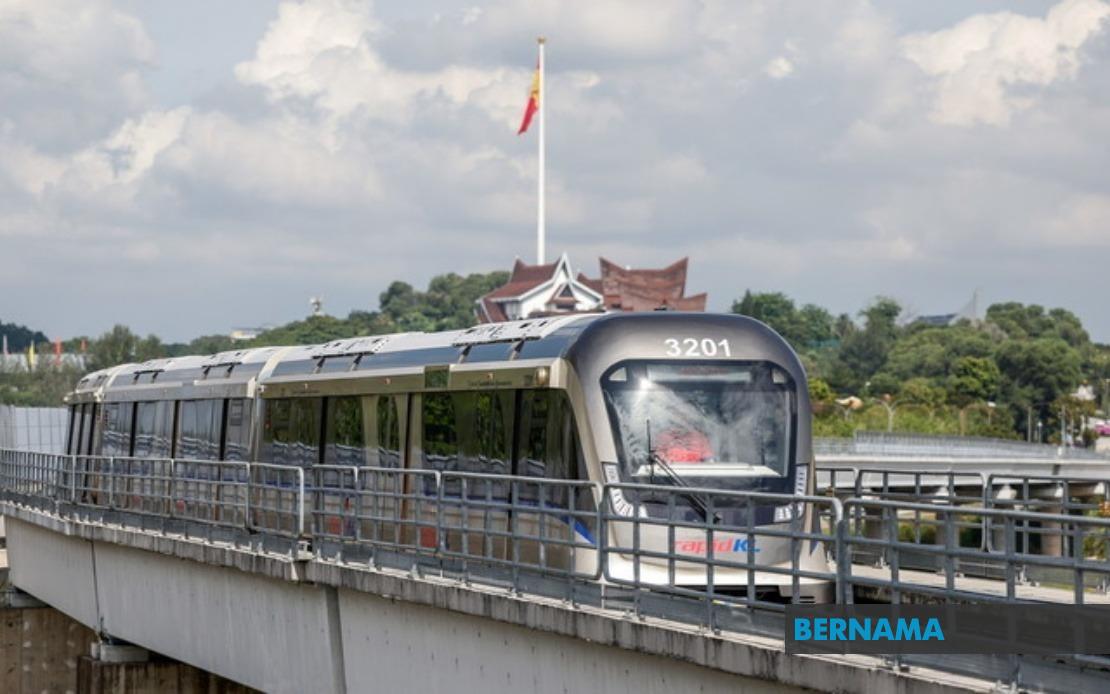
The federal government has committed to meeting with Sultan Sharafuddin Idris Shah to address royal concerns regarding the troubled LRT3 Shah Alam Line project. Transport Minister Anthony Loke made the announcement after the Sultan of Selangor publicly questioned the initiative's implementation, cost trajectory, and schedule slippage during remarks delivered on July 1.
Loke's decision to seek a formal audience reflects the administration's acknowledgement of the Ruler's standing in state affairs and the significance attached to clarifying government decisions affecting Selangor residents. The minister indicated that his ministry would provide additional context surrounding the project's trajectory and justify decisions taken during implementation phases spanning multiple administrations.
The Sultan's intervention into the LRT3 debate carries particular weight given the constitutional position of the Selangor monarchy in overseeing state development. Sultan Sharafuddin's July 1 statement highlighted the project's fractured timeline: a suspension lasting over 18 months following the 2018 Federal Government transition, compounded by a subsequent 19-month disruption attributable to COVID-19 pandemic constraints through 2021. These delays fundamentally altered project parameters that were originally conceived under prior governance arrangements.
According to the Ruler, the extended timeline necessitated substantial design modifications that reduced the functional scope of the initiative. Station configurations were downscaled, train carriage allocations were trimmed, and five planned stations along the proposed alignment were entirely eliminated from the scheme. These reductions effectively transformed what had been envisioned as a comprehensive rapid transit solution into a more limited infrastructure investment.
Crucially, Sultan Sharafuddin reframed the LRT3 discussion away from prestige-driven infrastructure toward foundational public utility. His emphasis that the project serves essential mobility needs for ordinary commuters rather than political symbolism establishes a benchmark against which government justifications must be measured. This royal perspective suggests that explanations focused on technical complexity or cost-benefit analysis may carry less resonance than those demonstrating tangible utility to Selangor residents.
Beyond the immediate LRT3 matter, Loke highlighted parallel government transportation initiatives ahead of the July 11 Johor state election. The Transport Ministry has coordinated with Keretapi Tanah Melayu Berhad to augment Electric Train Service frequency on the Kuala Lumpur-Johor Bahru corridor, enabling outstation voters easier access to return home and participate in the 16th Johor State Election. This logistical support reflects recognition that electoral participation depends partly on infrastructure accessibility.
The KTMB service expansion specifically targets voters returning from Singapore, offering connections through intermediate stations including Segamat and Labis that serve broader Johor populations beyond the primary corridor. Northern region voters similarly benefit from enhanced ETS capacity, allowing them to stage through Kuala Lumpur with reduced journey friction. The ministry framed these enhancements as civic facilitation rather than overt electoral mobilization, though the timing preceding a significant state contest underscores the political context.
For Malaysian readers, the LRT3 Shah Alam episode illustrates persistent tensions between federal infrastructure ambitions and regional implementation realities. Projects initiated under one administration face inherited constraints when political power transitions occur, yet their benefits accrue to local populations who depend on functional transport networks regardless of which government party engineered particular phases. The Selangor Sultan's intervention signals that royal institutions continue exercising meaningful oversight of state-level development questions.
The July 11 Johor election itself involves 56 state seats distributed across 172 candidates, with early voting mechanisms scheduled for July 7. Transport infrastructure supporting electoral participation represents a lower-profile government activity than major project launches, yet demonstrates how administrative capabilities directly enable democratic participation. Voters unable to access convenient transportation to polling stations face practical disenfranchisement despite formal voting rights.
Looking forward, the government's commitment to brief Sultan Sharafuddin suggests institutional respect for consultative processes, even when royal reservations emerge regarding specific initiatives. Southeast Asian governance contexts frequently embed formal and informal mechanisms for executive-monarchy dialogue, particularly concerning major state projects. The willingness to seek formal audience—rather than defensively dismissing criticism—indicates confidence that supplementary explanation will address specific concerns the Sultan identified.
The LRT3 project's evolution also raises broader questions about infrastructure planning under political uncertainty. When multiparty systems produce government transitions, long-term capital projects face susceptibility to cost pressures, timeline disruptions, and design modifications justified by changed administrations' priorities. Malaysia's experience with LRT3 exemplifies challenges confronting developing nations attempting sustained infrastructure investment across political cycles, with eventual users bearing consequences of delays and scope reductions regardless of which governing coalition occasioned particular delays.

