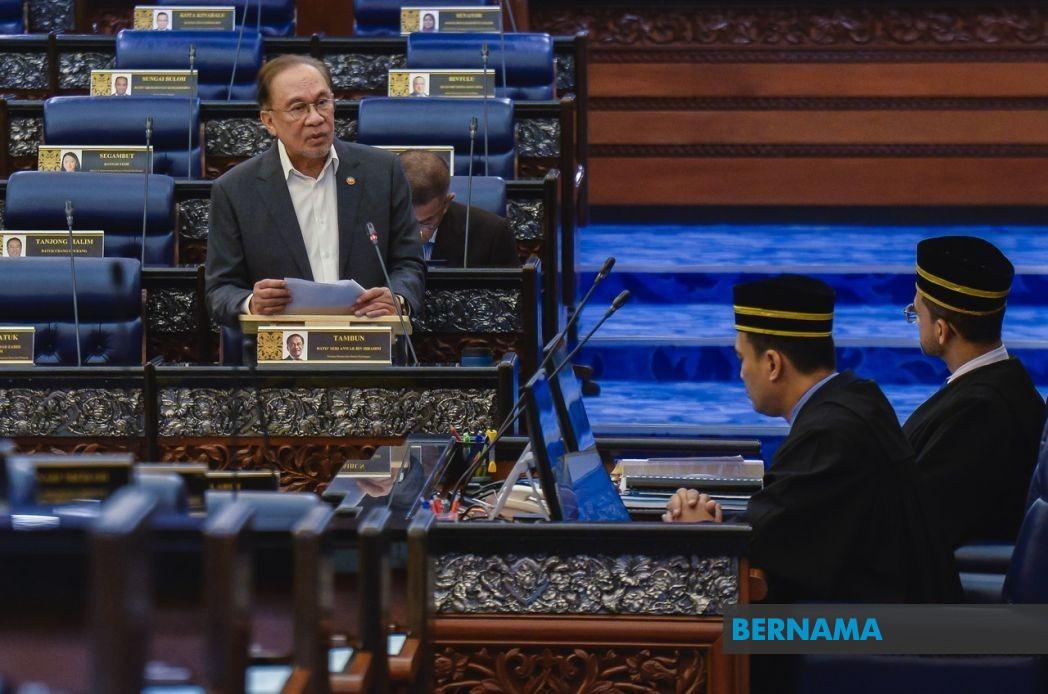
Prime Minister Datuk Seri Anwar Ibrahim has committed to investigating claims that petrol station operators incurred substantial financial losses during the transition to Malaysia's enhanced fuel subsidy framework. Speaking in Parliament during Minister's Question Time, Anwar acknowledged the grievances raised and indicated that discussions would be initiated with oil companies to assess the extent and nature of the difficulties faced by station operators during the shift in subsidy implementation.
The issue has gained traction after petrol station operators alleged losses ranging between RM40,000 and RM50,000 during the period when the government moved towards its targeted RON95 petrol and diesel subsidy programme. This transition represented a significant policy overhaul designed to direct subsidies more efficiently to eligible consumers rather than providing blanket support across all fuel sales. The temporary disruptions and operational adjustments required during such a substantial shift in how fuel pricing and subsidies function have created hardship for independent operators who manage retail petrol stations across the country.
Anwar, who simultaneously holds the Finance Minister portfolio, delegated the investigative responsibility to Second Finance Minister Datuk Seri Amir Hamzah Azizan. The delegation suggests a structured approach to the inquiry, allowing the finance ministry to conduct detailed consultations with oil companies and petrol station associations. This two-tier investigation mechanism signals the government's intent to move beyond surface-level acknowledgment and conduct a thorough examination of financial records and operational data from the critical period when the subsidy mechanism changed.
The Prime Minister's response emphasised the collaborative relationship that has developed between the government and both oil companies and petrol station operators in rolling out the targeted subsidy system. Anwar stressed that the successful implementation of the RON95 and diesel subsidy programme has depended fundamentally on the operational cooperation of these industry players. Without their willingness to adapt to new procedures, manage price adjustments at the pump, and implement verification systems for eligible customers, the government's objectives could not have been realised as effectively.
For Malaysia's retail fuel sector, the transition to targeted subsidies represented a watershed moment that required rapid operational adjustment. Petrol station operators needed to install new point-of-sale systems capable of identifying eligible subsidy recipients, train staff on new procedures, manage inventory during price adjustments, and reconcile accounts under a fundamentally different economic model. The compressed timeline for implementation inevitably created friction and temporary inefficiencies that translated into measurable losses for many independent operators managing single or small chains of stations.
The question raised by Ipoh Timur MP Howard Lee Chuan How reflects broader concerns within the petrol station operator community about the distribution of adjustment costs. While the government achieved its policy objective of establishing a more targeted subsidy mechanism, the burden of transition fell disproportionately on retail operators who had limited control over pricing and timing. This tension between macro-level policy success and micro-level business disruption represents a classic challenge in subsidy reform implementation across the region.
Anwar's commitment to discussion and collaborative problem-solving, conditional on identifying genuine shortcomings, opens space for potential remedial measures. The government appears open to considering compensation mechanisms or extended grace periods for operators who can demonstrate verifiable losses during the transition period. However, any such measures would require careful documentation and would need to avoid creating perverse incentives or reopening the broader subsidy transition to renegotiation.
The broader context of Malaysia's fuel subsidy reforms matters significantly for regional observers. Malaysia has been attempting to balance fiscal sustainability with social protection, gradually shifting from universal fuel subsidies toward means-tested or targeted systems. This transition has proven politically sensitive and operationally complex across Southeast Asia, affecting Indonesia, Thailand, and Vietnam similarly. Malaysia's experience managing the adjustment period for petrol station operators offers lessons for neighbouring countries contemplating similar reforms.
The petrol station operator sector in Malaysia comprises predominantly small and medium enterprises with limited financial buffers to absorb transition costs. Unlike integrated oil companies with diversified operations and substantial capital reserves, independent station operators operate on relatively thin margins and depend on steady cash flow. The temporary disruptions during subsidy mechanism changes can create genuine liquidity crises for these businesses, which explains why the RM40,000 to RM50,000 loss estimates, while perhaps modest in aggregate terms, represent serious hardship for individual operators.
Anwar's response also indirectly acknowledged that policy implementation, however well-intentioned, rarely proceeds without friction. By committing to further investigation and discussion rather than dismissing the complaints outright, the Prime Minister signalled that the government recognises its responsibility to consider the welfare of industry participants affected by its policy decisions. This approach reflects an understanding that sustainable policy reform requires stakeholder buy-in and demonstrates responsiveness to legitimate grievances.
Looking forward, the outcome of Amir Hamzah's consultations with oil companies and petrol station operators could influence how the government manages future subsidy transitions or other significant policy shifts affecting the business community. If losses are verified and remedies provided, it establishes precedent for acknowledging transition costs. If the investigation finds losses were temporary and corrected through normal market adjustment, it provides political cover for maintaining the subsidy reform framework without modification. Either outcome will inform how Malaysia approaches subsequent economic policy changes.

