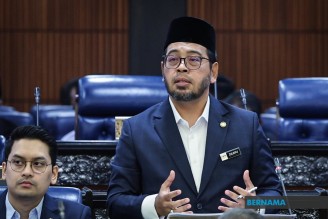
Malaysia's government has signalled its determination to overhaul the management and oversight of Tabung Haji following a decade-long financial crisis that brought the institution to the brink of insolvency. At a special sitting of Dewan Rakyat lasting more than 10 hours, policymakers outlined a series of structural and regulatory measures designed to prevent a repeat of the failures that required a government bailout and exposed weaknesses spanning from 2014 to 2020. The announcements represent the most significant governance restructuring of the religious finance institution since its establishment under the Tabung Haji Act 1955, reflecting both the severity of the crisis and mounting public concern over the management of funds held by over five million Malaysian savers.
The cornerstone of the reform package centres on a proposed division of supervisory responsibilities that would fundamentally reshape how Tabung Haji operates. Minister in the Prime Minister's Department (Religious Affairs) Dr Zulkifli Hasan explained that a task force headed by Tabung Haji chairman Tan Sri Abdul Rashid Hussain, and including Bank Negara Governor Datuk Seri Abdul Rasheed Ghaffour and Securities Commission chairman Datuk Mohammad Faiz Azmi, has recommended that the Securities Commission assume regulatory authority over the institution's investment portfolio and fund management practices. Religious and pilgrimage-related operational matters would remain under the purview of the Prime Minister's Department, while Tabung Haji would continue as a legally distinct entity. This bifurcated approach seeks to inject professional investment oversight into an institution that had previously operated with insufficient checks on its capital deployment decisions.
The financial scale of Tabung Haji's troubles underscores the urgency driving these reforms. Accumulated losses reached nearly RM13 billion, a figure that pales beside the potential liability the government faced in 2018 when panic withdrawals threatened to accelerate. Had large-scale deposit flight occurred without intervention, the state would have confronted liabilities approaching RM74.5 billion. Finance Minister II Datuk Seri Amir Hamzah Azizan disclosed that seven of the 14 problematic investments had been entirely written off, representing a complete loss of capital in those holdings. Particularly damaging was Tabung Haji's indirect exposure to 1Malaysia Development Bhd through its investment in Putrajaya Perdana Bhd, an entanglement that revealed how inadequate due diligence and governance lapses had metastasised through the institution's portfolio. The admission that these losses occurred represents an acknowledgment of systemic failures requiring more than incremental adjustment.
The legislative framework governing Tabung Haji faces comprehensive revision. Amendments to Act 535 will explicitly prohibit sitting politicians from serving on the institution's board of directors, a measure addressing concerns that political appointments had compromised investment decision-making and accountability mechanisms. The revised legislation will mandate that profit distributions, or hibah payments to depositors, be determined exclusively on the basis of independently audited financial accounts rather than discretionary judgments by management. Every significant Tabung Haji decision will henceforth be evaluated against a single criterion: the financial and fiduciary interests of the Muslim community whose savings the institution holds in trust. These changes represent a deliberate effort to depoliticise an institution whose governance had arguably been compromised by competing institutional and factional pressures within the political system.
Parliamentary scrutiny during the special sitting generated additional proposals that extend beyond the government's immediate reform agenda. Aminolhuda Hassan, Member of Parliament for Sri Gading representing the Pakatan Harapan coalition, advanced a proposal for establishing a unified regulatory authority responsible for supervising all large non-bank financial institutions. This framework would encompass Tabung Haji alongside the Employees Provident Fund, Permodalan Nasional Bhd, the Retirement Fund Incorporated, and the Armed Forces Fund Board. Under current arrangements, Malaysia lacks a single supervisory body with consolidated responsibility for prudential oversight, systemic risk assessment, and governance compliance across the non-bank financial sector. The fragmentation of regulatory authority creates interstices through which problematic practices can develop undetected, a risk Aminolhuda's proposal seeks to eliminate through institutional consolidation and unified standards.
Operational vulnerabilities identified during the inquiry extend into Tabung Haji's revenue structures. Young Syefura Othman, representing Bentong, prompted discussion of the institution's dangerous dependence on income derived from UJSB sukuk holdings, which the Royal Commission of Inquiry determined contributed approximately 26 per cent of annual revenues. This concentration of income derivation from a single asset class creates structural fragility, as deterioration in sukuk valuations directly threatens the institution's capacity to meet obligations to depositors. The RCI report recommended diversification of income sources and reduction of reliance on assets vulnerable to specific market segments. Addressing this vulnerability requires active management intervention to reorient the investment portfolio toward uncorrelated revenue streams, reducing single-point-of-failure risk embedded in the current revenue model.
The Royal Commission of Inquiry whose recommendations now inform government policy conducted an exhaustive examination of institutional practices and decision-making across the seven-year period from 2014 to 2020. The resulting 211-page report, released publicly on 29 July following its formal presentation to the Yang di-Pertuan Agong on 30 August 2022, identified 25 specific recommendations for institutional reform and operational improvement. By 30 July, Tabung Haji management had implemented 75 per cent of these recommendations, suggesting responsive engagement with the inquiry's findings. The government's decision to convene a special parliamentary sitting to present these findings and debate reforms signals political commitment to addressing the crisis transparently rather than allowing investigations to recede from public attention once initial media interest waned.
Accountability mechanisms form an explicit element of the reform package. Finance Minister II Amir Hamzah stressed that investigations into the circumstances producing such substantial losses would proceed comprehensively without favouritism, with enforcement action pursued against any individuals or entities found culpable. The government's stated refusal to conceal uncomfortable truths, even when financial figures inflicted reputational damage, suggested determination to establish a historical record of institutional failure and remediation. This approach contrasts with earlier periods when information regarding Tabung Haji's troubles circulated primarily through restricted channels. Public disclosure and parliamentary debate create constituencies interested in ensuring implementation of reforms and monitoring institutional compliance with new standards.
For Malaysian depositors and the broader Muslim community whose savings Tabung Haji holds, these reforms carry direct implications. The strengthening of investment governance and introduction of external regulatory oversight should reduce the probability of future capital losses resulting from inadequate due diligence or misaligned incentive structures. The prohibition of active politicians from board membership removes a conflict of interest that arguably contributed to suboptimal investment decisions. Mandatory reliance on audited financial statements for hibah distributions replaces discretionary methodologies that may have obscured the true financial condition of the institution. Collectively, these measures aim to restore confidence among the institution's five million-plus account holders that their deposits will be managed according to fiduciary principles rather than institutional or political considerations.
Regionally, Tabung Haji's travails and subsequent reforms carry relevance for other Muslim-majority nations operating comparable religious financial institutions. The Malaysian experience demonstrates both the institutional vulnerabilities to which such bodies remain susceptible and the mechanisms through which democratic oversight and transparent parliamentary scrutiny can drive systematic remediation. The decision to convene a Royal Commission, publicly release its findings, and implement recommendations in response to democratic deliberation establishes a template potentially applicable across Southeast Asia. As Islamic finance expands throughout the region, the governance lessons embedded in Tabung Haji's crisis and reconstruction merit careful consideration by policymakers elsewhere in Malaysia's immediate neighbourhood and across the broader Muslim world.

