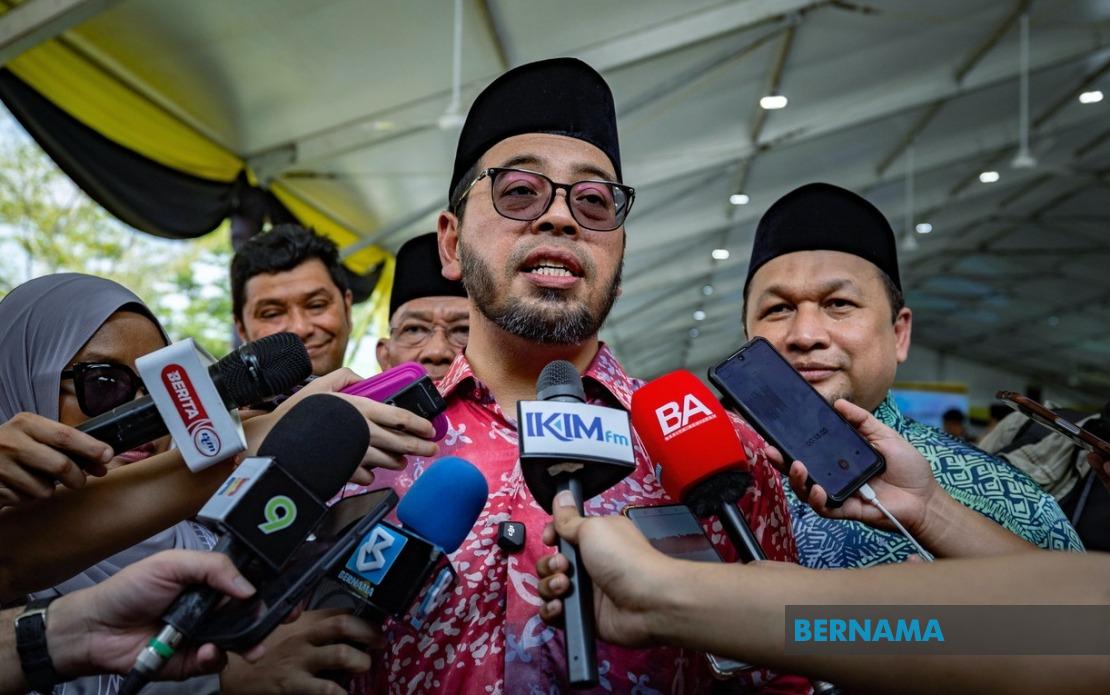
The Malaysian federal government views pondok institutions and religious schools as essential strategic partners in creating a balanced, values-driven society, according to remarks made by Minister Dr Zulkifli Hasan at a major gathering in Perak. Speaking at the 2026 Perak Pondok and Religious Schools Gathering (HIPSA) held in Chemor, Zulkifli articulated a government philosophy that extends beyond conventional measures of national progress, arguing that true development must be evaluated through the lens of human quality and moral grounding rather than economic output alone.
The gathering, officiated by Prime Minister Datuk Seri Anwar Ibrahim and attended by Perak Menteri Besar Datuk Seri Saarani Mohamad and Chief Secretary to the Government Tan Sri Shamsul Azri Abu Bakar, brought together approximately three thousand participants from religious schools, pondok institutions, KAFA teachers, civil society organisations and grassroots communities. The event underscored the continued importance the government places on Islamic educational institutions as foundational pillars within Malaysia's broader development framework, particularly as the nation pursues the Malaysia MADANI agenda.
Zulkifli's remarks reflect a deliberate policy direction from the Prime Minister's Department (Religious Affairs) to strengthen collaborative relationships between federal authorities, state governments, State Islamic Religious Departments and Islamic educational bodies nationwide. This coordination effort aims to ensure that Islamic education continues evolving in a systematic, high-quality manner responsive to contemporary requirements, positioning religious schools not as peripheral institutions but as central players in Malaysia's nation-building enterprise.
The recognition of these educational institutions carries significant weight in Malaysia's multi-religious context. By explicitly naming pondok and religious schools as strategic partners, the government signals that Islamic education and values transmission are viewed as integral to national stability and social cohesion, not merely as sectarian interests. This framing is particularly relevant for Southeast Asian readers given the region's complex religious demographics and the need for harmonious inter-community relations as societies develop economically.
During the gathering, Minister Zulkifli presented MADANI Aid Baskets to twelve recipients representing two hundred fifty beneficiaries from surrounding communities, demonstrating tangible financial support flowing from federal coffers to grassroots beneficiaries. This symbolic gesture connected abstract policy commitments to concrete material assistance, bridging the gap between governmental rhetoric and lived experience for families dependent on religious institution-centred support networks.
The programme featured intellectual engagement through a forum titled "The Role of Religious Scholars and Leaders in Nation Building," which brought together prominent Islamic scholars and community leaders. Speakers included Sheikh Wazir Che Awang Al-Makki from Kelantan, former Perak mufti Datuk Seri Wan Zahidi Wan Teh and preacher Ustaz Mohamad Saifuddin Abdul Latiff, providing intellectual weight to discussions about how religious educators contribute to nation-building beyond strictly theological domains.
Beyond symbolic gestures and intellectual forums, HIPSA 2026 delivered practical support mechanisms including distribution of essential food provisions to vulnerable households, presentation of cheques to pondok institutions and religious schools throughout Perak, sponsorship programmes for student fees, and accelerated pathways for the Sijil Pelajaran Malaysia qualification. These interventions reflect a multi-layered approach addressing both institutional sustainability and individual student advancement.
Yayasan Dakwah Islamiah Malaysia (YADIM), which coordinated the event, framed the gathering within the Malaysia MADANI framework, which prioritises community well-being and human capital development. This positioning links Islamic educational initiatives to broader national development objectives, suggesting that investment in religious schools aligns with contemporary governance priorities beyond traditional religious domains. The connection to MADANI also reflects how the government seeks to integrate Islamic institutional interests within comprehensive national narratives.
The emphasis on supporting pondok communities and KAFA teachers represents recognition that these grassroots structures have historically functioned as educational and social service providers to communities, particularly in rural areas where state educational infrastructure may be less developed. By formalising this recognition and channelling resources accordingly, the government acknowledges the shadow welfare and education systems maintained by religious institutions across Malaysia.
For Malaysian and Southeast Asian policymakers, this approach suggests a particular governance model wherein religious institutions are incorporated into state development frameworks rather than maintained at arm's length. This integration strategy contrasts with secular-leaning approaches and reflects pragmatic calculations about leveraging existing community networks and institutional capacity for development outcomes. However, it also raises questions about the long-term implications of deepening government involvement in religious educational spaces.
The location of HIPSA 2026 in Perak, a state with significant religious institutional presence, and the involvement of Prime Minister Anwar Ibrahim in officiating proceedings indicated the political importance attached to this constituency. The visible commitment from the highest government echelons suggests that support for Islamic educational institutions represents sustained, deliberate policy rather than sporadic gestures.
Moving forward, the government's positioning of religious schools as strategic development partners appears to reflect both genuine conviction about values-guided nation-building and strategic recognition of these institutions' capacity to deliver services and shape communities. Success in this collaborative model will likely depend on how effectively federal resources translate into educational quality improvements and how well government and religious institutional interests remain aligned around shared development objectives.

