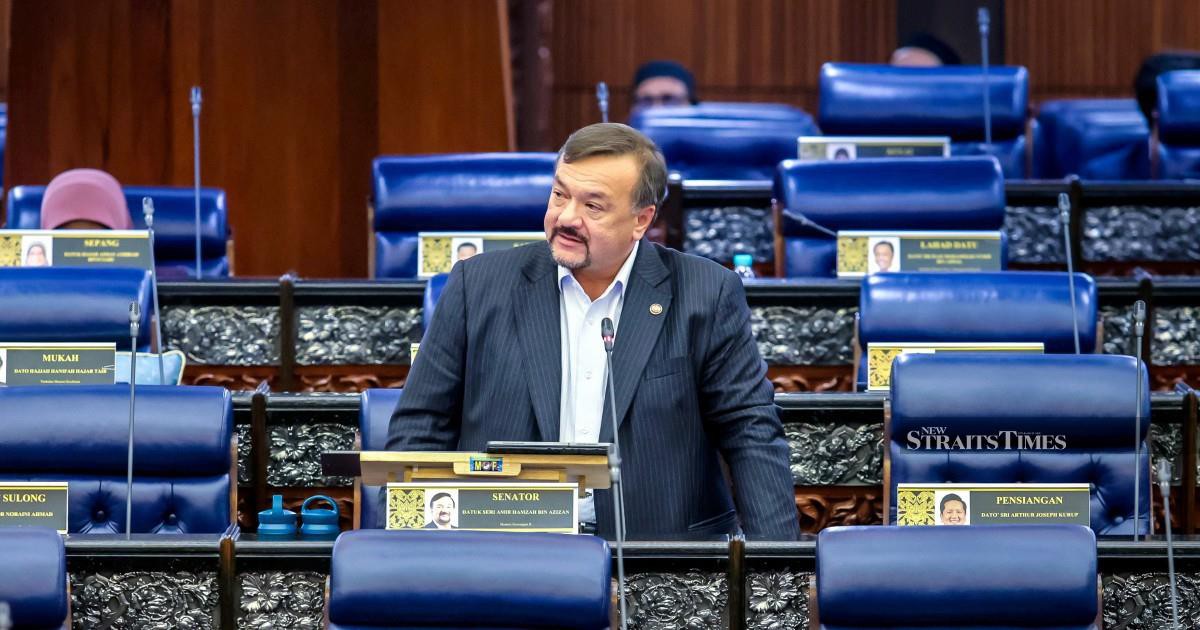
The government will extend no shield of protection to anyone implicated in wrongdoing at Tabung Haji, as intensifying probes into the institution's historical investment practices and financial stewardship proceed without compromise. This unequivocal stance represents a sharpening of official resolve to dismantle layers of institutional opacity that have long clouded the pilgrimage savings fund's operations and to establish a comprehensive accountability framework regardless of seniority or political affiliation.
Tabung Haji, formally the Pilgrims Fund Board, occupies a unique position in Malaysia's financial architecture as a dedicated savings and investment vehicle serving the Muslim community preparing for the Hajj pilgrimage. The fund's accumulated assets and the trust of millions of account-holders have made it both strategically significant and vulnerable to mismanagement. Recent revelations regarding the depth and breadth of questionable financial decisions have catalysed heightened parliamentary and public scrutiny, transforming the institution from a matter of routine administrative oversight into a litmus test for governance integrity at the highest levels.
The explicit commitment to impartiality in investigations reflects growing recognition that partial accountability mechanisms or selective prosecution would only deepen public cynicism. By insulating the investigation process from political considerations and personal protection networks, authorities signal a readiness to follow evidence wherever institutional hierarchies or political connections might lead. This approach carries particular resonance in Malaysia's contemporary political climate, where citizens have become increasingly attuned to patterns of preferential treatment and the use of official investigative machinery for selective prosecution.
Tabung Haji's investment record has come under sustained examination, with questions arising about asset allocation decisions, foreign exchange exposures, and the adequacy of risk management frameworks governing the deployment of contributor funds. The fund's substantial holdings across multiple asset classes—including listed equities, unlisted vehicles, and international securities—created numerous junctures where investment judgement could diverge from optimal stewardship. Scrutiny of how these decisions were made, who authorised them, and what advisory mechanisms existed to calibrate risk represents the methodological core of ongoing investigations.
Financial management deficiencies extend beyond investment strategy to encompass operational expenses, related-party transactions, and the transparency of fund valuations. The complexity inherent in managing an institution that simultaneously functions as a savings accumulator and an investment portfolio creates multiple pressure points where self-interest or inadequate oversight might compromise fiduciary standards. Reconstructing the chain of decisions and identifying points of responsibility demands painstaking forensic examination of decades of institutional records.
The investigations carry profound implications for Malaysia's broader trajectory toward institutional reform and the restoration of public confidence in state-affiliated bodies. Tabung Haji's management directly affects the retirement and pilgrimage readiness of millions of Muslim Malaysians across income brackets and geographic locations. Any finding of systematic mismanagement thus transcends narrow institutional concerns to implicate the government's capacity to safeguard assets entrusted to it by ordinary citizens who often lack sophisticated financial resources or means to monitor complex investment portfolios independently.
Regional observers will scrutinise how Malaysia conducts these investigations as a barometer of governance quality within Southeast Asia. The peninsula's status as a significant Islamic finance hub means that institutional mishaps at Tabung Haji reverberate across the broader Muslim financial services ecosystem. Confidence in Malaysian institutions underpins the region's competitive positioning in attracting Islamic investment and serving as a knowledge centre for Shariah-compliant financial management.
The commitment to unpartisan investigation also reflects evolving norms around what constitutes acceptable institutional performance. Malaysia's political transitions over recent years have brought expectations that accountability mechanisms would strengthen rather than atrophy. Public discourse increasingly demands that high-ranking officials and connected individuals face the same investigative rigour as lower-ranked employees. This democratic principle, while straightforward in enunciation, requires institutional courage to implement when investigations risk destabilising political arrangements or touching influential figures.
Transparency in the investigative process itself will prove as important as the eventual conclusions. Regular public communication about investigation scope, findings as they emerge, and the mechanisms through which accountability will be operationalised can help offset the reputational damage already incurred and demonstrate government commitment to genuine reform. Conversely, opaque processes—even those pursuing genuinely wrongful conduct—invite suspicion and undermine the legitimacy of eventual outcomes.
The stakes for Tabung Haji's future institutional design are substantial. Investigations may recommend structural reforms, strengthened governance frameworks, enhanced independent oversight, or amendments to the fund's legislative mandate. Such reforms would signal that institutional failure, while damaging, catalyses genuine improvement rather than mere symbolic gestures toward accountability.

