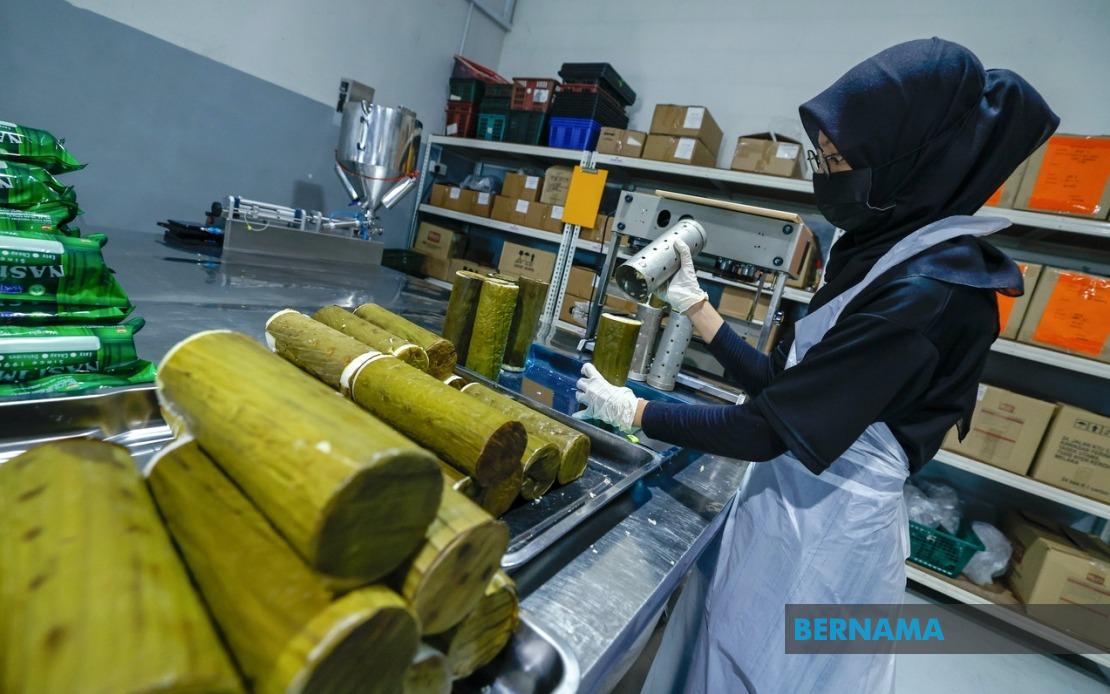
The Malaysian government has intensified its push to remove financing bottlenecks that have long constrained the growth of micro, small and medium enterprises, with Prime Minister Datuk Seri Anwar Ibrahim emphasizing that substantial budget allocations mean little if businesses cannot access the funds. Speaking in Parliament during Minister's Question Time, Anwar, who doubles as Finance Minister, underscored that accelerating loan disbursement represents a critical component of the administration's broader strategy to anchor economic growth through small business development. The commitment reflects growing recognition that processing delays have historically dampened entrepreneurial momentum and deterred promising ventures from materializing.
Addressing a parliamentary question from Datuk Seri Takiyuddin Hassan, Anwar detailed several concrete improvements already underway across government-linked financial institutions. TEKUN Nasional, the national entrepreneurship fund supporting lower-income business founders, now disburses financing within five days—a dramatic compression that exemplifies the government's efficiency targets. Bank Rakyat has trimmed its approval window for micro-enterprise lending to six working days, while SME Bank has capped processing periods at no more than 15 working days for loan applications ranging from RM100,000 to RM1 million. These metrics represent substantial reductions from previous timelines and signal coordinated effort across multiple lending channels.
The government's broader MSME support framework now encompasses more than RM15 billion in financing facilities and loan guarantees, with RM5 billion specifically reserved for Bumiputera entrepreneurs. This dual-track approach reflects the administration's commitment to both broad-based small business growth and targeted support for indigenous business communities. Anwar noted that since May, Bank Negara Malaysia approved nearly RM1 billion through the SME Stabilisation Relief Facility, benefiting over 1,500 enterprises across various sectors. The Business Financing Guarantee Scheme proved even more expansive, approving RM4.9 billion in the first half of the year to support more than 6,000 MSMEs, demonstrating substantial throughput despite economic headwinds.
Critically, Anwar acknowledged the distinction between government initiative and banking sector autonomy. While the administration has introduced measures and improved timelines, private banks retain independent authority over individual lending decisions. Bank Negara Malaysia serves as the regulatory intermediary, responsible for ensuring financial institutions comply with established policies and that financing actually reaches eligible entrepreneurs rather than remaining inaccessible through bureaucratic friction. This framework attempts to balance government objectives with market-based banking operations, though the PM's emphasis on accelerating approvals suggests some tension between policy goals and institutional caution.
The question of international trade complications surfaced when Anwar addressed concerns about stringent financing conditions imposed by certain banks regarding transactions involving sanctioned nations. He acknowledged that previous regulatory ambiguity, combined with United States and allied sanctions against Iran and Russia, had created genuine obstacles to Malaysian commerce with these countries. However, Anwar signaled a substantive shift in approach, noting that the government has initiated discussions with both Iran and Russia to streamline payment arrangements and facilitate expanded bilateral trade and investment despite the sanctions regimes these nations face. This represents a notable geopolitical positioning distinct from strict sanctions compliance.
The Prime Minister elaborated on efforts to normalize trade with Russia, referencing recent discussions with President Vladimir Putin that addressed multiple impediments to commercial exchange. Visa restrictions and sanctions-related complications that previously prevented direct flights between Russia and Malaysia are now being systematically resolved through diplomatic channels. These developments carry significance for Malaysian businesses attempting to diversify export markets and for companies with existing supply chain relationships in Eastern Europe, suggesting that trade policy is shifting toward pragmatic accommodation rather than automatic deference to Western sanctions frameworks.
Amanah Ikhtiar Malaysia emerged as another focal point when MUDA parliamentarian Syed Saddiq Syed Abdul Rahman pressed the government on expanding microfinance access beyond its predominantly female borrower base. Anwar confirmed that while approximately 98 percent of AIM's borrowers are women—reflecting the scheme's successful targeting of female entrepreneurs—the program itself contains no gender restrictions. The government has committed to increasing AIM's loan allocation in recent budgets and has approved expansion of financing eligibility to qualified male applicants, signaling gradual broadening of the microfinance ecosystem. Simultaneously, the administration plans to strengthen AIM's focus on young entrepreneurs through age-targeted financing products and enhanced loan management mechanisms designed to maximize repayment reliability.
The emphasis on youth-oriented financing reflects recognition that demographic transitions and generational entrepreneurship patterns require tailored policy responses. Young Malaysians entering business require not only capital access but appropriately structured loan terms that account for their typically lower asset bases and different risk profiles compared to mature entrepreneurs. By encouraging AIM to develop specialized products for this cohort while implementing stronger repayment supervision systems, the government signals confidence that young entrepreneurs represent viable lending prospects if provided suitable frameworks and support infrastructure.
The aggregate policy picture suggests coordinated action across multiple institutional channels—from specialized agencies like TEKUN Nasional and Bank Rakyat to mainstream commercial banks subject to BNM oversight. Yet the government's ability to meaningfully accelerate approvals ultimately depends on banking sector cooperation and the sector's willingness to streamline internal processes. While Anwar's public statements commit the administration to supporting faster timelines, the practical constraints of risk assessment, collateral evaluation, and credit analysis within individual bank operations may resist compression beyond certain thresholds. The challenge facing policymakers involves maintaining lending prudence while eliminating unnecessary procedural delays.
For Malaysian entrepreneurs and small business stakeholders, the announced improvements offer genuine relief if implementation matches rhetoric. Reduced approval periods from months to days or weeks would substantially alter the feasibility calculus for time-sensitive business opportunities, particularly in sectors where market windows close quickly. The government's allocation of RM15 billion across multiple schemes provides meaningful capital availability, though absorption capacity and matching suitable enterprises with appropriate financing instruments remain ongoing challenges. Whether these initiatives translate into measurable improvements in MSME financing accessibility and competitiveness will become evident as the government tracks throughput metrics and gathers feedback from the business community regarding actual borrowing experiences.

