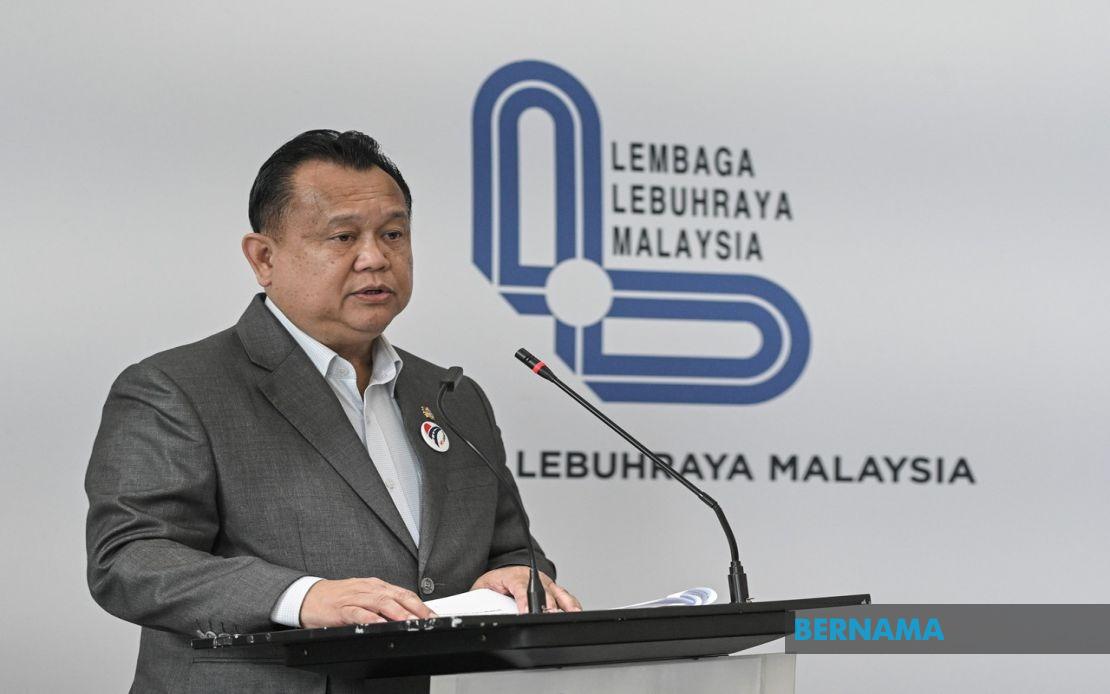
The government has committed RM25.2 million to enhance safety on Malaysia's most dangerous stretches of highway through a solar-powered LED lighting initiative that will see 3,000 new light poles installed across 32 identified locations. Works Minister Datuk Seri Alexander Nanta Linggi announced the allocation, which falls under the MADANI Monitoring programme and represents a significant step toward reducing traffic accidents on the nation's expressway network.
This investment reflects the government's heightened focus on road safety following Prime Minister Datuk Seri Anwar Ibrahim's announcement of highway safety funding in the 2026 Budget. The original allocation had earmarked RM30 million for this purpose, but the ministry has opted for a phased approach, releasing RM25.2 million initially whilst preserving additional funds for future assessments of safety requirements across the highway system.
The selection of solar-powered technology represents a forward-thinking approach to infrastructure development in Southeast Asia, where energy efficiency and sustainability have become increasingly important considerations for public works projects. By harnessing solar energy, the government can reduce ongoing operational costs associated with traditional street lighting whilst simultaneously addressing environmental concerns—a dual benefit that extends the value of the initial investment beyond immediate safety improvements.
The 32 highway locations targeted in this first phase were identified as particularly problematic areas where accident rates and severity justify urgent intervention. These sites typically suffer from inadequate lighting conditions that contribute to driver error, reduced visibility during night-time travel, and increased vulnerability during adverse weather conditions. Enhanced illumination at such locations has proven effective in other regional transport networks at reducing collision frequency and severity.
Works Minister Nanta Linggi emphasised that the contractor has already received the Letter of Acceptance, enabling immediate commencement of on-site installation work. This expedited timeline reflects the government's determination to address road safety concerns with tangible results rather than extended planning periods. The ministry has set November 2024 as the completion deadline for the entire first-phase project, suggesting a compressed but achievable implementation schedule.
The involvement of multiple government agencies—including the Finance Ministry and the Malaysian Highway Authority—demonstrates the cross-departmental coordination required for large-scale infrastructure projects. This collaborative approach helps ensure that funding mechanisms, technical specifications, and safety standards align across different governmental levels, reducing implementation delays and ensuring consistent quality across all 32 locations.
For Malaysian motorists, particularly those who regularly travel on long-distance highways during evening and night hours, improved lighting at accident-prone locations translates to measurably safer conditions. Commercial drivers, tourists, and commuters on routes such as the North-South Expressway and other major federal routes will benefit from reduced visibility-related hazards that currently contribute significantly to Malaysia's road accident statistics.
The MADANI framework under which this project operates emphasises targeted, data-driven public investment in areas where government intervention can yield the highest safety returns. Rather than distributing limited funds thinly across the entire highway network, this approach concentrates resources on locations where accident patterns indicate the greatest need. This methodology allows policymakers to demonstrate measurable impact and justify continued funding in subsequent phases.
The phased implementation strategy also provides valuable learning opportunities. As the first 32 locations undergo lighting improvements, the government and Malaysian Highway Authority can monitor accident rate changes, lighting system performance, maintenance requirements, and cost efficiencies. This data will inform decisions about expanding the programme to additional dangerous stretches, potentially accelerating the timeline for nationwide implementation if early results prove successful.
Regionally, Malaysia's investment in smart highway safety infrastructure positions the nation as a leader in adopting sustainable solutions to transport challenges faced across Southeast Asia. Other countries in the region grappling with similar road safety issues may examine this project's outcomes to inform their own infrastructure decisions, potentially creating opportunities for Malaysian contractors and technology providers to export expertise.
The financial commitment also reflects growing recognition that road accidents impose substantial hidden costs on the economy through medical expenses, vehicle damage, lost productivity, and insurance claims. By investing RM25.2 million in preventive measures, the government aims to reduce these far larger economic drains—a calculation that justifies the infrastructure expenditure from both humanitarian and fiscal perspectives.
Looking forward, the success of this initial phase will likely determine the scope and speed of subsequent expansions. If the 32 locations demonstrate measurable reductions in accident rates following the lighting installation, this will create momentum for deploying the remaining RM4.8 million from the original RM30 million allocation and potentially securing additional budget allocations in future years. The project thus represents both an immediate safety intervention and a pilot programme that could reshape how Malaysia approaches highway accident prevention.