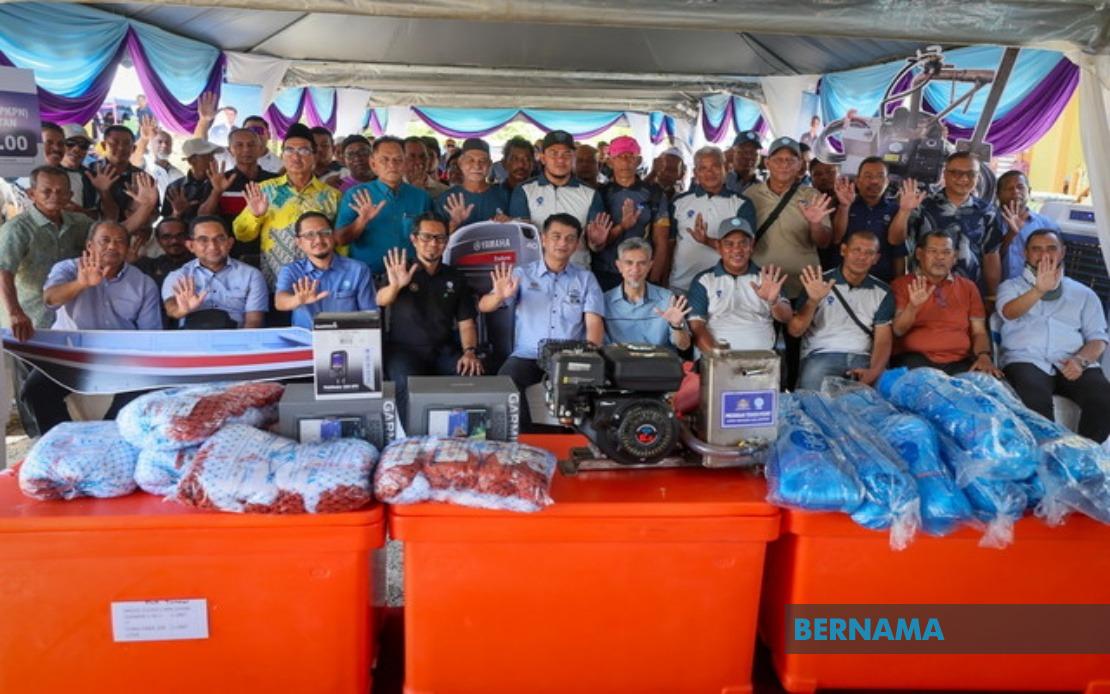
The Malaysian government has committed RM10 million in annual funding to upgrade housing conditions for fishermen nationwide through the Special Fishermen Housing Project, marking a significant intervention in the welfare of one of the country's most vulnerable occupational groups. Muhammad Faiz Fadzil, chairman of the Fisheries Development Authority of Malaysia (LKIM), announced the initiative during a session with Kelantan fishermen at the Fish Inspection Complex in Pengkalan Kubor, underscoring the administration's recognition that improved living standards directly correlate with economic stability in fishing communities.
The funding framework divides resources between two complementary initiatives aimed at addressing both immediate shelter needs and long-term housing aspirations. Over RM6.8 million has been directed towards renovating 344 existing fishermen's homes throughout Malaysia, while the remaining RM3.1 million supports construction of 36 entirely new residential units. This dual approach reflects policymakers' understanding that fishing families occupy varying positions along the economic spectrum, from those requiring essential repairs to their dwellings to younger or newly established households seeking their first permanent homes.
Progress on the repair component has advanced substantially, with work currently at 80 percent completion and anticipated to conclude between August and September of this year. The new construction phase, however, faces a more protracted timeline extending through the remainder of 2024, primarily because land tenure complications present unexpected obstacles. Muhammad Faiz explained that inherited property rights, unclear ownership documentation, and related administrative complexities have introduced delays that extend beyond ordinary construction schedules. These challenges highlight a persistent issue affecting rural Malaysian communities where land transactions and property registration systems sometimes lack the clarity found in urban areas.
The financial allocations per unit reflect regional economic disparities and construction cost variations across the federation. Peninsular Malaysia receives RM84,000 per unit for new construction, while Sabah and Sarawak benefit from higher allocations of RM95,000 per unit, acknowledging elevated material costs and logistical expenses in East Malaysia. Repair work receives standardised support of up to RM20,000 per household nationwide. In Kelantan specifically, the state has received RM388,000 in dedicated funding, positioning it among the primary beneficiaries of this initiative given the state's substantial fishing population and historical economic dependence on maritime industries.
Beyond immediate housing improvements, LKIM has articulated a broader strategic vision that repositions fishermen away from exclusive dependence on conventional fishing practices towards more diversified income streams. Muhammad Faiz identified declining fish stocks and escalating operational costs—particularly for fuel—as structural challenges constraining the traditional fishing model's viability. Although government subsidies have partially cushioned fishermen against fuel price volatility, such support mechanisms cannot indefinitely offset the fundamental economic pressures reshaping the sector.
The authority has consequently initiated a sustained push encouraging fishermen to transition into aquaculture operations, positioning fish and prawn farming as economically superior alternatives to open-water fishing. This policy shift gains urgency from Malaysia's ambitious national development targets, which envision aquaculture generating 40 percent of domestic fish production by 2030. Current production levels fall substantially short of this objective, creating both challenge and opportunity for fishing families willing to embrace new methodologies and business models.
To catalyse this sectoral transition, LKIM has allocated RM400,000 to Kelantan's State Fishermen's Association (PENEKA) specifically for tank-based prawn farming development. This initiative provides tangible infrastructure and technical support enabling fishermen to experiment with aquaculture on a manageable scale before committing extensive personal capital. The project demonstrates recognition that successful economic transition requires institutional support, technical training, and initial investment capital that individual fishermen may struggle to mobilise independently.
Muhammad Faiz indicated the aquaculture programme represents an expandable template intended for replication across additional states, suggesting LKIM envisions systematic, nationwide adoption rather than isolated regional experiments. Such rollout strategy implies the authority has identified successful operational models and secured sufficient political and budgetary commitment to support broader implementation. For fishermen across Malaysia—particularly those in regions where marine resources face pressure or where fuel costs disproportionately impact profitability—these aquaculture initiatives present pragmatic pathways toward enhanced income stability and reduced market volatility.
The combined housing and aquaculture interventions reveal government acknowledgement that fishing communities require multifaceted support addressing both immediate welfare needs and long-term economic sustainability. By simultaneously improving residential conditions while facilitating sectoral economic diversification, policymakers attempt to create conditions enabling upward mobility and reduced vulnerability to the commodity price fluctuations that have historically defined fishing communities' economic precarity. The success of these initiatives will significantly influence whether younger Malaysians remain committed to maritime livelihoods or pursue alternative employment in urban centres, with profound implications for coastal community demographics and social stability across the nation.

