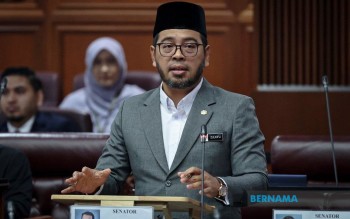
The Malaysian government has committed over RM10 billion to rescue Tabung Haji (TH), the nation's premier Islamic savings and investment institution, from a severe financial crisis triggered by years of mismanagement and embezzlement. Speaking during a special parliamentary session, Minister in the Prime Minister's Department (Religious Affairs) Dr Zulkifli Hasan outlined the government's intervention strategy, emphasizing that the bailout aimed at rehabilitating TH's balance sheet rather than acquiring the institution's assets or restructuring its ownership.
The financial distress afflicting Tabung Haji had reached critical proportions by late 2018, when the deficit between assets and liabilities surged past RM10 billion—a devastating figure for an institution responsible for managing savings and facilitating pilgrimage for hundreds of thousands of Malaysian Muslims. With only three months remaining in that quarter to devise solutions, the situation demanded immediate government intervention to prevent complete institutional collapse and protect the deposits and investments of millions of account holders across the country.
Dr Zulkifli Hasan made particular effort to counter misinformation circulating in certain quarters, categorically denying allegations that TH assets had been transferred to non-Muslim entities or Chinese businessmen. Such claims, he suggested, represented deliberate attempts to inflame communal tensions and manipulate public sentiment during a sensitive period of institutional restructuring. He stressed that Urusharta Jamaah, the investment company managing formerly troubled assets from TH, remains a wholly-owned subsidiary of the Ministry of Finance Incorporated, maintaining entirely within public sector control.
The revelation of TH's insolvency exposed deep governance failures within one of Malaysia's most significant financial institutions. The twin problems of mismanagement and embezzlement had eroded capital reserves and compromised the institution's ability to honor its obligations to savers and investment participants. Years of inadequate oversight, according to earlier findings, had permitted questionable investments and financial transactions to proceed without proper scrutiny, gradually weakening the organization's foundation.
The government's rescue package represented a significant financial commitment that underscored the political and social importance of maintaining TH's stability. For Malaysian Muslims, particularly those from lower and middle-income backgrounds who form the bulk of TH's membership, the institution provides an accessible savings mechanism tied to Islamic financing principles and facilitates the economically significant hajj pilgrimage. A complete institutional failure would have devastated millions of individuals and families who depend on TH for both savings preservation and spiritual aspirations.
Parliamentary briefings on the Royal Commission of Inquiry report into TH's collapse revealed systematic governance lapses spanning multiple administrations. The inquiry examined how an institution established with clear social mandates had gradually succumbed to internal dysfunction and external pressures. Understanding these deficiencies proved essential to designing restructuring mechanisms that would not merely address the immediate financial emergency but also implement safeguards against future repetition of similar institutional failures.
The Pakatan Harapan government, which initiated these rescue and investigative processes, framed the bailout within a longer-term sustainability strategy rather than a temporary financial patch. Officials articulated that restoring TH to solvency required comprehensive internal reforms, strengthened governance frameworks, and renewed accountability mechanisms. The RM10 billion injection thus represented not simply a financial rescue but a foundation for institutional reconstruction designed to ensure TH's viability across future decades.
For Malaysian policymakers and financial regulators, the TH crisis illustrated vulnerabilities within the Islamic finance sector and the risks posed by inadequate institutional oversight. The sequence of events—from mismanagement and embezzlement through to eventual insolvency and government rescue—demonstrated how institutional failures affecting millions of ordinary Malaysians could escalate rapidly without timely intervention. The episode prompted broader conversations about governance standards across public-sector financial institutions.
The government's explicit denial that asset transfers involved non-Muslim entities addressed a sensitive issue within Malaysian public discourse. Such clarifications proved necessary because misinformation about religious and ethnic dimensions of financial transactions can rapidly gain traction in a diverse society, particularly when institutional stability appears threatened. By emphasizing that restructured assets remained within Muslim-majority public institutions, officials sought to maintain public confidence during a delicate period of reform.
The pathway toward TH's financial rehabilitation required not merely injecting capital but fundamentally reorganizing institutional practices and decision-making structures. Government officials indicated that the restructuring plan encompassed operational improvements, enhanced internal controls, and revised investment strategies designed to rebuild reserves and restore capacity to service members' expectations. This multifaceted approach acknowledged that financial rescue alone, without accompanying organizational transformation, would prove insufficient to prevent recurrence of similar crises.
As TH undergoes this substantial restructuring, the institution faces both challenges and opportunities. Restored financial stability creates space for management innovation and strategic repositioning within Malaysia's Islamic finance landscape. Yet the rehabilitation process must simultaneously rebuild confidence among millions of savers and participants who experienced the anxiety of institutional instability and the uncertainty surrounding their accumulated savings.
The government's commitment to TH's recovery reflects broader recognition that well-functioning financial institutions serving Muslim communities constitute essential infrastructure for social and economic stability. Beyond the immediate fiscal commitment, sustained political and regulatory attention to governance quality will determine whether current rescue efforts produce durable institutional transformation or represent merely temporary stabilization preceding renewed difficulties.

