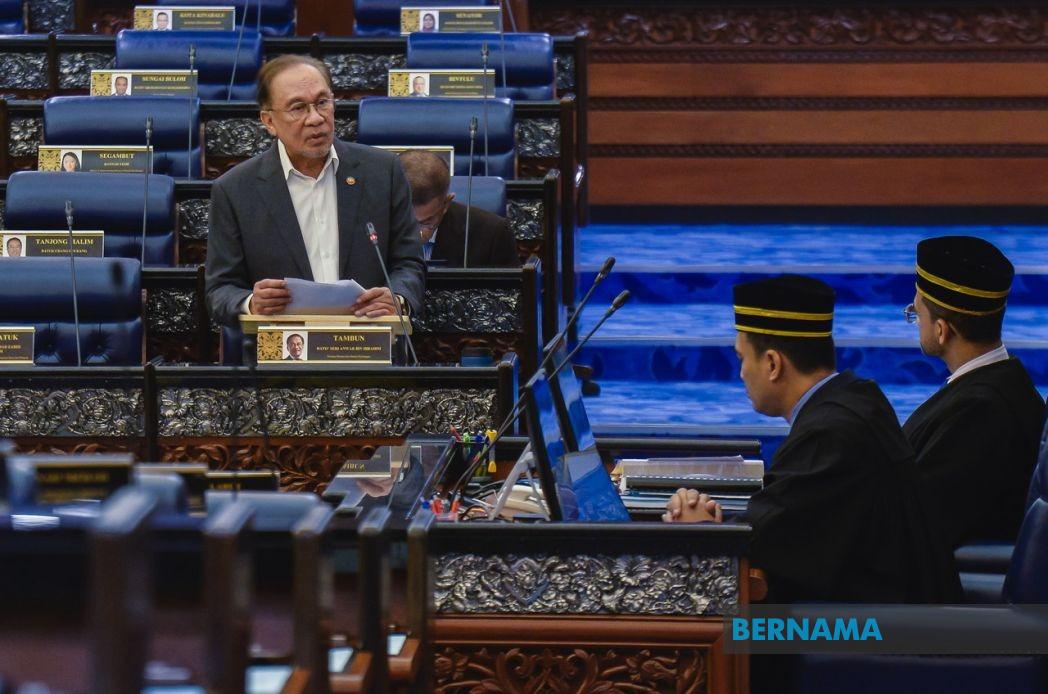
Prime Minister Datuk Seri Anwar Ibrahim has moved to dispel confusion about government policy towards Federal Land Development Authority (FELDA) settlements, emphasising during parliamentary question time that no blanket prohibition exists on programmes held within these communities. His remarks came in response to questions raised in the Dewan Rakyat, where he sought to distinguish between the legitimate rights of state governments and elected officials to conduct activities in FELDA areas versus the legal constraints imposed by election regulations.
The clarification addresses concerns that have circulated within FELDA communities and among state administrators regarding their freedom to organise events and undertake administrative functions. Anwar stressed that elected leaders at the state level operate with considerable latitude to initiate programmes within FELDA settlements, subject only to the overarching framework of Malaysia's election laws. This distinction proves crucial for understanding the government's actual position, as it permits substantive engagement with FELDA residents while maintaining the integrity of electoral processes.
Central to the Prime Minister's explanation is the separation between programme activity itself and the deployment of government resources for political campaign purposes. State governments retain the prerogative to organise events, issue land titles, and undertake development initiatives within FELDA areas without government interference. However, the use of FELDA machinery, personnel, and facilities specifically for campaign-related activities falls outside permissible boundaries under election law. This framework allows menteri besar or other state officials to enter FELDA settlements and conduct their own programmes independently of federal structures.
Anwar specifically addressed the controversy surrounding the FELDA Settlers' Day programme that had been scheduled for Kluang, Johor, on June 20 and 21. He categorically denied that his office had issued any directive ordering cancellation of this event, further reinforcing his assertion that no systematic suppression of FELDA activities has been orchestrated by the federal government. The denial carries particular weight given the prominence of FELDA in Malaysia's rural political landscape and the sensitivity surrounding any perception of federal overreach into state-level activities affecting these communities.
The Prime Minister's broader message emphasises the MADANI Government's commitment to uplift FELDA settlements through substantive policy interventions rather than administrative restrictions. He articulated a vision in which FELDA communities, which he characterised as having suffered from inadequate attention and neglect during previous administrations, would receive enhanced support and development resources. This reframing positions the government's actions as constructive rather than restrictive, attempting to redirect public perception from concerns about limitations to expectations of improvement.
Several concrete initiatives underscore this commitment to FELDA welfare enhancement. The establishment of dialysis centres within FELDA settlements represents a healthcare expansion that directly addresses medical accessibility challenges faced by rural populations. These facilities extend beyond basic infrastructure to provide specialist services that would otherwise require residents to travel to urban centres. Simultaneously, the government has undertaken to expand development facilities through federal agencies, signalling systematic attention to the infrastructure deficits that characterise many longstanding FELDA schemes.
Anwar credited Deputy Prime Minister Datuk Seri Dr Ahmad Zahid Hamidi as a collaborative partner in this revitalisation effort, framing the initiative as a joint commitment at the highest levels of government. This partnership framing serves multiple purposes: it demonstrates sustained institutional focus on FELDA issues, it distributes political responsibility across multiple senior figures, and it suggests that FELDA improvement represents a priority transcending normal ministerial silos. The explicit acknowledgement of past management failures—what Anwar characterised as FELDA settlements being left behind in rural development projects—represents a candid assessment that may resonate with communities feeling historically marginalised.
For Malaysian stakeholders, particularly those in rural constituencies and state administrations, this clarification carries implications for governance dynamics. State governments can proceed with confidence that legitimate activities within FELDA areas will not face federal obstruction, provided they respect the technical requirements of election law. However, the emphasis on election law compliance suggests that scrutiny will persist regarding activities that blur the line between administrative functions and campaign purposes. This creates an incentive structure for clean governance while preserving operational space for substantive state-level engagement.
The FELDA sector itself represents a historically significant component of Malaysia's development model, encompassing hundreds of thousands of settlers and their families across numerous schemes nationwide. These communities have often occupied a distinctive political position, balancing dependency relationships with government institutions against aspirations for economic autonomy and social progress. Recent political contestation within FELDA areas reflects broader national dynamics, but the Prime Minister's clarification suggests an attempt to depoliticise the relationship between government and FELDA, reframing it around shared development objectives rather than partisan advantage.
The clarification also carries implications for federal-state relations more broadly. By explicitly recognising state prerogatives within FELDA areas while maintaining the boundary around election law compliance, the government navigates the complex terrain of cooperative federalism. States retain discretionary authority over many functions affecting FELDA residents, yet the federal government preserves its role in setting national electoral standards. This framework potentially reduces friction between federal and state administrations on FELDA matters, though the precise boundaries between permissible activity and electoral impropriety may require continuing interpretation.
Looking forward, the effectiveness of FELDA policy will depend substantially on whether the development initiatives gain traction in improving material conditions within settlements. The announcement of dialysis centres and expanded facilities represents relatively concrete commitments, though implementation timelines and resource allocation will determine whether these translate into tangible benefits. FELDA communities, having experienced cycles of promise and disappointment, will likely maintain vigilance regarding whether the government's stated commitment produces sustained improvement or remains aspirational rhetoric.
The Prime Minister's parliamentary intervention ultimately reflects an attempt to recalibrate the relationship between government and FELDA communities around development rather than restriction. By clarifying that no blanket prohibition on programmes exists while emphasising adherence to election law, Anwar seeks to position the government as enabling rather than constraining. Whether this messaging successfully shifts perceptions will depend on subsequent implementation and the tangible impacts on FELDA welfare across the coming months.

