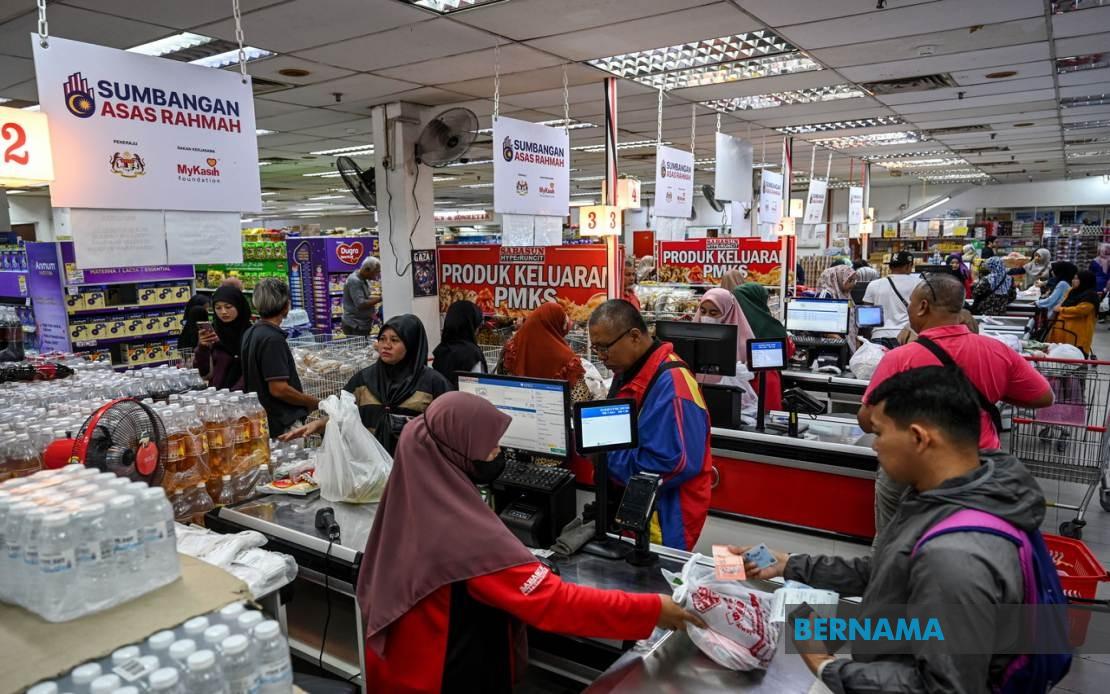
Prime Minister Datuk Seri Anwar Ibrahim has signalled that the MADANI Government is actively exploring the possibility of enhancing cash assistance to Malaysians through two key welfare programmes, pending improvements in the country's economic trajectory. Speaking during a community engagement event in Ipoh on July 19, Anwar underscored that discussions on expanding the Sumbangan Tunai Rahmah (STR) and Sumbangan Asas Rahmah (SARA) schemes have already begun, with detailed consideration expected during the forthcoming Budget deliberations. This represents a measured commitment to social welfare expansion, tied deliberately to economic conditions rather than an outright promise.
The Prime Minister, who also holds the Finance Ministry portfolio, revealed that Tan Sri Johan Mahmood Merican, the Treasury secretary-general, had been consulted on the feasibility of increasing assistance levels. This collaborative approach between political leadership and senior bureaucratic officials indicates a structured process for evaluating potential benefit enhancements rather than ad-hoc policy announcements. By involving the Treasury at an early stage, the government signals its intention to ground any expansion decisions in realistic fiscal projections and available revenue streams, a prudent measure given Malaysia's ongoing fiscal consolidation efforts.
The conditional framing of the assistance increase reflects the government's balancing act between meeting immediate social demands and maintaining broader macroeconomic stability. Anwar's repeated emphasis that such increases depend on whether "the economy allows" acknowledges the reality that expansionary welfare policies must be calibrated against inflation management, currency stability, and debt servicing obligations. For Malaysian households currently benefiting from STR and SARA—which together represent significant monthly income support for lower-income and vulnerable segments of the population—this statement offers qualified optimism rather than certainty.
The STR programme, introduced as part of pandemic relief measures, has evolved into a recurring assistance scheme providing direct cash transfers to eligible citizens. SARA similarly targets households requiring urgent financial support. Both programmes have become politically significant instruments for demonstrating government responsiveness to cost-of-living pressures that Malaysians face amid persistent inflation and rising basic commodity prices. Any meaningful increase to these schemes would address widespread public concern about purchasing power erosion, particularly among retirees, the unemployed, and those in irregular employment.
Anwar's statement carries particular significance given Malaysia's complex fiscal environment. The government has been working to narrow budget deficits while simultaneously managing various spending pressures, from infrastructure investment to debt service. By conditioning assistance increases on economic improvement, the Prime Minister is essentially communicating to the financial markets and international observers that the government remains committed to fiscal discipline while retaining the flexibility to redirect resources toward social priorities if conditions permit. This nuanced messaging aims to maintain both investor confidence and public welfare aspirations.
Beyond the cash transfer programmes, Anwar also highlighted government commitment to supporting the welfare of security personnel, particularly members of RELA—the Malaysian Volunteer Corps Department. This dual emphasis on civilian welfare and security force benefits reflects a broader policy approach recognizing that comprehensive social protection extends across occupational categories. RELA members, who contribute voluntarily to disaster response and internal security operations, have historically received modest government support, and Anwar's commitment to maintain annual RM3 million in welfare allocations acknowledges the role these civilian security volunteers play in national resilience.
The allocation of RM3 million for RELA welfare, maintained from the previous year, suggests the government considers this spending level a baseline commitment. However, Anwar's acknowledgement that this amount "is certainly not enough" implies potential future expansion if budget circumstances allow. This framing mirrors the broader welfare expansion conversation, indicating that the government is simultaneously juggling multiple competing social demands while seeking to demonstrate responsiveness across different constituencies—beneficiaries of cash transfer schemes and members of security and disaster response organisations alike.
For Malaysian policymakers and analysts, the Prime Minister's remarks underscore the interconnection between macroeconomic performance and welfare policy capacity. As Malaysia navigates post-pandemic economic recovery, inflation management, and structural economic transformation, the room for welfare enhancement remains constrained. Nevertheless, Anwar's explicit commitment to revisit assistance levels during Budget deliberations signals that social spending remains a government priority, provided fiscal space emerges. This stance contrasts with more austere approaches and suggests the administration is attempting to maintain its MADANI social contract messaging while adhering to fiscal responsibility frameworks.
The timing of these statements also warrants consideration within Malaysia's broader political context. By announcing welfare expansion discussions publicly and linking them to Treasury consultations, the government demonstrates institutional diligence and transparency in policy development. This approach may resonate with voters concerned about assistance adequacy while also signalling to fiscal hawks and financial market participants that any spending increases will be grounded in realistic economic assessment rather than electoral cycles or populist spending.
Looking forward, the actual Budget outcome will reveal how seriously the government pursues these assistance enhancements. Should the economy demonstrate sufficient resilience—reflected in faster-than-expected growth, improved government revenues, or better-than-projected fiscal performance—increased allocations to STR and SARA become plausible. Conversely, if economic headwinds persist or unexpected fiscal pressures emerge, the conditional language provides political cover for maintaining current assistance levels. For Malaysians relying on these welfare schemes, the emphasis on future consideration offers modest hope alongside acknowledgement that expansion cannot be guaranteed.

