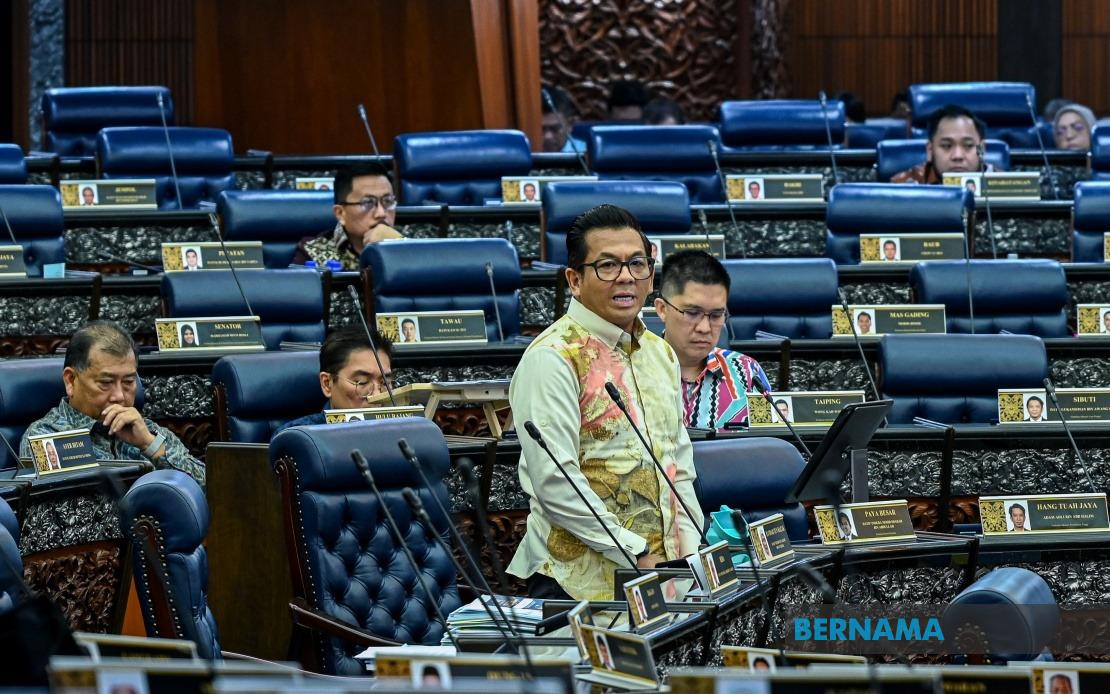
The Malaysian government is drawing on household expenditure data to craft more nuanced responses to the rising cost of living, particularly focusing on the significant disparities that exist between urban centres and rural communities. Deputy Economy Minister Datuk Mohd Shahar Abdullah explained during parliamentary question time that the Basic Living Expenditure framework, or PAKW, provides the analytical foundation needed to design interventions that actually reflect how Malaysians in different regions spend their money.
The PAKW, developed by the Department of Statistics Malaysia, operates on a straightforward principle: understanding why and how Malaysians spend money differently across the country allows policymakers to avoid one-size-fits-all approaches that often miss the mark. Rather than assuming uniform household economics from Perlis to Sabah, the framework acknowledges that a family in Kuala Lumpur faces vastly different shopping baskets and cost pressures than one living in rural Kelantan. This recognition marks a departure from traditional policy formulation that has historically struggled to account for regional variation.
To make this data more accessible, the government has launched myPAKW.dosm.gov.my, an online calculator that allows ordinary Malaysians to input their spending patterns and understand where their money goes. Mohd Shahar emphasised that household spending is fundamentally driven by three variables: affordability, immediate needs, and discretionary wants. By making the calculator public, the government is attempting to create transparency around living costs while simultaneously gathering real-time data on how household economics are evolving across the country.
The disparities the government has identified are striking. Kuala Lumpur residents face a PAKW baseline of RM5,639, nearly one-third higher than the RM4,254 figure recorded for Kelantan and substantially above the RM4,511 benchmark for Sabah. These differences are not merely statistical abstractions; they represent fundamentally different cost structures facing families depending on where they live. Urban residents contend with higher property costs, transportation expenses, and service charges, whilst rural populations often grapple with limited access to goods, forcing them to travel further or pay premium prices for basic commodities.
The government's response to these disparities extends beyond data collection into active labour market intervention. Training and skills development programmes form the centrepiece of the strategy, with the explicit aim of raising both the income floor for vulnerable workers and the income ceiling for those seeking advancement. This approach has been formalised within the Five-Year Malaysia Plans, with regular updates occurring twice per cycle to ensure policies remain responsive to evolving economic conditions. The underlying logic is that addressing cost-of-living pressures requires not just price controls or subsidies, but structural improvements in earning capacity across the population.
Evidence of this strategy's implementation can be seen in how the national Poverty Line Income has evolved. In 2016, the PLI stood at RM980, a figure that many observers consider inadequate for basic survival. By 2024, this threshold had climbed to RM2,705, representing a nearly 176 percent increase over eight years. This dramatic upward revision suggests the government is recalibrating its understanding of what constitutes a liveable income in Malaysia, though observers debate whether the pace of increase has kept genuine alignment with actual cost pressures facing low-income households.
The parliamentary exchange that prompted these revelations originated from concerns about inflation and rising prices raised by Wan Hassan Mohd Ramli of PN-Dungun, who referenced a 2023–2025 field study involving economists tasked with developing solutions to these persistent pressures. This research initiative underscores recognition within government that inflation affects different populations differently, and that rural communities often face compounded disadvantages due to supply chain inefficiencies, limited competition among retailers, and transportation markup costs.
For Malaysian readers and policymakers, the PAKW framework represents an important evolution in how government approaches cost-of-living challenges. Rather than pursuing blanket price controls or universal subsidies that often create market distortions, the government is attempting to build policy on empirical understanding of actual household economics. This approach aligns with contemporary development economics thinking, which emphasises targeting and precision over generalised interventions.
However, the framework's effectiveness ultimately depends on implementation quality and political will. Making data available through an online calculator is valuable, but translating household spending patterns into concrete policy changes requires sustained commitment. The recurring updates to Five-Year Plans suggest institutional architecture for continuous refinement, yet the gap between Kuala Lumpur's RM5,639 baseline and Kelantan's RM4,254 indicates substantial work remains in bringing regional cost structures closer to parity.
For Southeast Asian neighbours monitoring Malaysian policy developments, the PAKW approach offers a potential template for addressing cost-of-living challenges in their own contexts, where urban-rural disparities often exceed even Malaysia's significant differences. The emphasis on data-driven, regionally sensitive interventions rather than centralised price controls reflects broader regional trends toward more sophisticated governance approaches.
Looking ahead, the government's strategy hinges on whether income growth can outpace cost increases, particularly in rural areas where wage structures have historically lagged urban counterparts. The integration of PAKW data into policy formulation represents a necessary foundation, but whether this translates into tangible improvements in household purchasing power across all regions will determine whether this framework ultimately succeeds in narrowing Malaysia's persistent cost-of-living divide.

