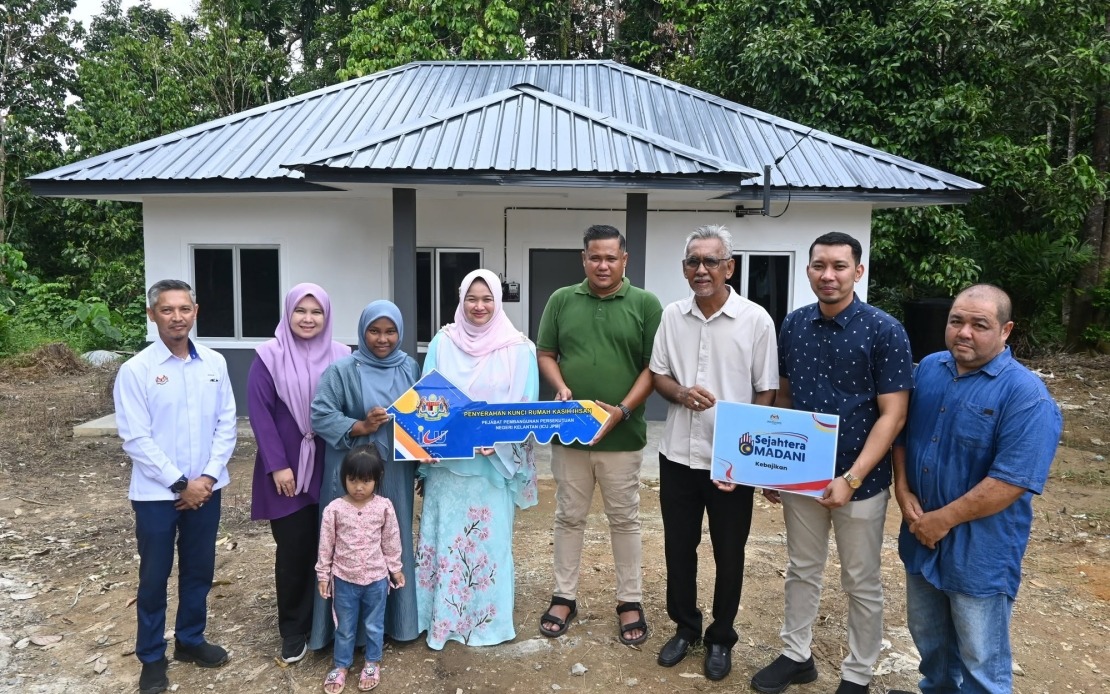
Prime Minister Datuk Seri Anwar Ibrahim's administration has moved forward with its housing initiative in Kelantan by handing over Rumah Kasih Ihsan properties to two families in Jeli, marking another step in the government's broader push to enhance living conditions for lower-income Malaysians. The initiative reflects the administration's emphasis on translating policy commitments into tangible improvements in citizens' daily lives, particularly in rural districts where housing quality remains a pressing concern.
The Kelantan Implementation Coordination Unit, operating under the Prime Minister's Department, spearheaded the distribution of these homes with the support of the PMX Coordination Team. Dr Wan Nur Ibtisam Wan Ismail, the ICU director for Kelantan, personally oversaw the handover ceremony on August 19, underscoring the government's direct involvement in executing its welfare agenda at the state level. This decentralised approach through ICUs represents an attempt to translate federal policy into localised action, addressing the specific needs of communities like Jeli.
The first beneficiary, Yusof Mohamed Nawawi from Kampung Renyut, received formal documentation confirming the government's commitment to construct a new residence that would replace his existing dwelling with a more secure and comfortable alternative. This arrangement differs from immediate occupancy, instead offering a family the assurance that housing improvements are forthcoming—a transition mechanism that acknowledges the complexity of large-scale construction efforts. For families living in substandard conditions, such commitments represent not merely architectural improvements but the prospect of better health, safety, and dignity.
In contrast, Shamsul Bahri Che Musa received his completed Rumah Kasih Ihsan home, allowing for immediate relocation from previous accommodations. The dual approach—combining newly constructed units with homes nearing completion—reflects practical implementation strategies where some projects have reached their final stages while others remain in active development. This staggered delivery method, though potentially stretching government resources across multiple fiscal cycles, enables the administration to demonstrate ongoing commitment to its beneficiaries.
Beyond the transfer of property deeds, both families also received food baskets, a supplementary gesture acknowledging that housing alone does not constitute comprehensive welfare support. This bundled approach recognises that families transitioning into improved housing may face temporary financial pressures, and additional provisions help ease the adjustment period. Such complementary measures, though modest in economic terms, reinforce the government's messaging about holistic support for disadvantaged communities.
The Kelantan ICU has articulated a philosophical framework underpinning the Rumah Kasih Ihsan programme, emphasising that secure housing functions as a foundation for broader prosperity rather than merely providing physical shelter. According to the unit's perspective, a safe home catalyses hope and confidence, elements that officials argue translate into improved educational outcomes for children, better health management for families, and enhanced engagement in economic activities. This reasoning positions housing interventions within a development paradigm that values social outcomes alongside infrastructure metrics.
The programme's implementation in Jeli carries particular significance given Kelantan's geographic position in Malaysia's northeast and its ongoing development challenges. Rural constituencies like Jeli, where traditional agriculture remains dominant, frequently experience infrastructure gaps and lower average household incomes compared to urban centres. Targeting such districts with housing assistance aligns with the government's stated objective of ensuring equitable development across Malaysia's diverse geography, addressing regional disparities that persist despite decades of national development planning.
For policymakers and observers tracking the government's social agenda, the Rumah Kasih Ihsan rollout provides insight into how the administration prioritises welfare spending within competing budget constraints. The programme's focus on replacing or upgrading existing structures rather than constructing entirely new residential areas suggests a strategy emphasising efficiency and direct poverty alleviation. By targeting families in demonstrable housing need, the government aims to maximise welfare gains per ringgit spent, though debates persist about whether such targeted approaches adequately address systemic housing shortages.
The involvement of the Prime Minister's office in publicly acknowledging these home transfers, through social media platforms, reflects contemporary political communication strategies emphasising direct engagement between leadership and constituents. By sharing details of specific beneficiaries and their circumstances, the government creates narratives demonstrating responsiveness to citizen hardship, a messaging approach that extends beyond traditional governmental channels. However, such visibility also invites scrutiny regarding programme scale, selection criteria, and the proportion of housing-insecure families actually reached by current initiatives.
Moving forward, the trajectory of Rumah Kasih Ihsan in Kelantan and potentially across other states will indicate whether this represents a sustained, adequately funded commitment or a more limited intervention. The success of the programme depends not merely on construction quality but on integration with broader support systems including access to employment, education, and healthcare. For Jeli residents and similar communities across Malaysia's rural heartland, these home transfers symbolise government acknowledgment of their circumstances, though translating this recognition into systematic improvements requires sustained policy attention and resource allocation beyond the symbolic value of handover ceremonies.

