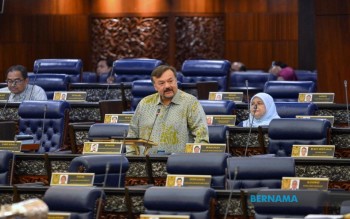
Malaysia's Finance Minister II, Datuk Seri Amir Hamzah Azizan, has unveiled substantial progress in the government's effort to shore up the nation's micro and small business sector, announcing the approval of more than RM500 million in micro-financing that has reached in excess of 30,000 entrepreneurs within a seven-week window spanning May 15 to June 26, 2026. The disbursements represent a critical intervention during a period of intensifying cost pressures on small operators across the economy, addressing concerns raised by lawmakers about the sustainability of Malaysia's hawker trade and informal commercial enterprises.
The funding forms part of a larger policy framework that commits RM5 billion in aggregate support through the government's Micro Financing Facility Programme. This structured allocation reflects recognition among policymakers that micro enterprises—often operating with minimal capital buffers and limited access to traditional banking channels—face heightened vulnerability when facing macroeconomic headwinds. The programme channels capital through a diverse network of state-backed financial institutions, leveraging the distribution capacity and local market knowledge of Amanah Ikhtiar Malaysia, Agrobank, Bank Simpanan Nasional, Bank Rakyat, MARA, and TEKUN Nasional. By working through multiple lenders rather than a single conduit, the government has constructed a system capable of reaching borrowers in underserved geographic areas and niche sectors.
Paralleling this direct financing programme, the government has simultaneously rolled out the RM5 billion MADANI Government Assistance Guarantee Scheme, administered through Syarikat Jaminan Pembiayaan Perniagaan Bhd (SJPP). This guarantee mechanism operates on a different principle from direct lending, instead reducing the perceived risk for conventional banks when advancing credit to micro, small and medium enterprises. Between May 15 and June 20, 2026, the SJPP had approved RM219 million in financing guarantees benefiting over 300 MSMEs, with particular concentration in agriculture, construction, logistics and tourism sectors. These four industries represent critical pillars of Malaysia's economy, and the targeting suggests deliberate policy prioritisation of sectors deemed essential to employment and regional development.
The guarantee scheme's effectiveness hinges on its ability to expand the lending appetite of commercial banks, which remain the primary source of capital for formalised MSMEs. By absorbing a portion of default risk, SJPP effectively lowers the cost of credit and improves loan availability for borrowers who might otherwise be deemed insufficiently creditworthy under standard banking criteria. This approach complements rather than substitutes for the direct micro-financing programmes, creating a layered support structure that accommodates enterprises at different stages of formalisation and growth. For Malaysian hawkers and informal traders operating outside the traditional banking system, the direct micro-financing channel through AIM and TEKUN remains the more accessible entry point, whilst registered MSMEs can leverage the guarantee scheme to restructure existing debt or access larger capital amounts.
Amir Hamzah's statement to Parliament also emphasised that SJPP is actively working with commercial banks to facilitate restructuring and rescheduling arrangements, as well as deploying targeted repayment assistance for existing borrowers facing acute cash flow difficulties. This component addresses a distinct challenge faced by many MSMEs: the burden of servicing existing obligations during periods of revenue contraction. Rather than forcing businesses into default, allowing borrowers to extend repayment schedules or temporarily reduce their obligations provides breathing room for operations to stabilise. Such forbearance measures represent a pragmatic alternative to bankruptcy and business closure, preserving employment relationships and productive assets that might otherwise be lost.
The government has further supplemented these initiatives through Bank Negara Malaysia's RM5 billion SME Stabilisation Relief Facility, launched in mid-May 2026. By early July, this dedicated programme had approved nearly RM1 billion in financing for more than 1,500 MSMEs, demonstrating brisk uptake among eligible applicants. The central bank's direct involvement signals the gravity with which monetary authorities view the current stress in the MSME sector, and the facility's scale reflects the nationwide scope of the challenges facing small business operators. Unlike the guarantee schemes, Bank Negara's direct lending programme allows the central bank to implement more flexible credit terms and pricing that may better accommodate the cash flow volatility characteristic of small enterprises.
Collectively, these three programmes—the Micro Financing Facility Programme, the MADANI Government Assistance Guarantee Scheme, and Bank Negara's SME Stabilisation Relief Facility—represent a comprehensive policy response spanning multiple government agencies and utilising both direct lending and risk-mitigation mechanisms. The diversity of instruments reflects policymakers' understanding that small businesses are heterogeneous, operating across different sectors, at varying stages of formalisation, and facing distinct financing constraints. A one-size-fits-all approach would necessarily exclude some borrowers; by deploying multiple channels with different eligibility criteria and terms, the government has maximised the proportion of struggling enterprises able to access some form of assistance.
Financial capacity remains sufficient to sustain this support infrastructure into the future, with approximately RM4 billion in uncommitted funds still available across the schemes. This remaining liquidity is substantial and suggests the government anticipated higher take-up or plans to sustain the programmes beyond the initial announcement period. The availability of RM4 billion in reserve also indicates that the government has not been forced to exhaust its budgeted allocation prematurely, implying that either application rates remain below initial projections or that the government possesses additional contingency resources beyond the publicised RM5 billion commitment. For Malaysian business operators seeking financing, this adequacy of funds reduces the risk that applications will be rejected due to funding exhaustion.
For Malaysia's broader economic policy context, these micro-financing initiatives represent recognition that the sustainability of the nation's commercial ecosystem depends on the vitality of small operators. Hawkers, street traders, small retailers, and informal service providers collectively employ millions of Malaysians and generate substantial economic activity, yet access limited institutional credit and benefit from few safety nets. The government's willingness to deploy RM5 billion across direct lending and guarantee schemes suggests acknowledgment that market-driven credit allocation has failed to adequately serve this segment. This represents a significant policy commitment, though whether it proves sufficient to materially alleviate stress in the MSME sector will depend on execution quality and the sustainability of supportive measures as macroeconomic conditions evolve.
Regional observers noting these Malaysian initiatives may find instructive lessons in the multi-channel architecture deployed here. Southeast Asian economies increasingly recognise that small business resilience is foundational to inclusive growth and employment, yet many lack institutional frameworks capable of delivering credit efficiently to micro borrowers. Malaysia's combination of state development finance institutions, commercial bank partnerships, and central bank facilities demonstrates how a government can mobilise multiple policy instruments to address a complex market failure. The effectiveness of this approach in revitalising the MSME sector over coming months will likely influence policy approaches across the region.

