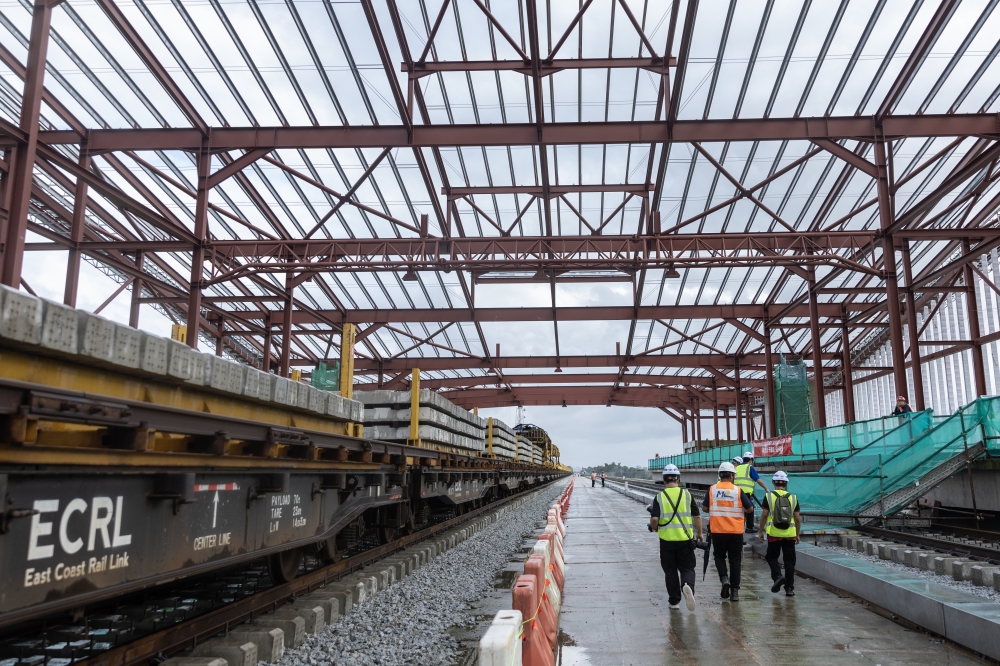
Putrajaya has unveiled an ambitious RM207 million development package comprising 46 separate projects earmarked for the Pasir Puteh parliamentary constituency, signalling a concerted effort to harness the economic opportunities presented by the East Coast Rail Link infrastructure. The initiative underscores the federal government's broader strategy to translate major transport connectivity investments into tangible socioeconomic gains for communities along the corridor, particularly in rural and semi-rural areas of Malaysia's east coast region.
The Pasir Puteh constituency, located in Kelantan, stands positioned to benefit substantially from proximity to the ECRL network upon completion. The rail link, once operational, is expected to facilitate cargo movement, passenger connectivity, and regional trade flows that could stimulate local enterprise development and commercial activity. By frontloading infrastructure and social investments ahead of the rail link's commissioning, the government aims to prepare the constituency to maximise these emerging opportunities and ensure equitable distribution of prosperity beyond urban centres.
The approved project portfolio encompasses diverse development categories designed to address multifaceted community needs. Infrastructure enhancements, economic empowerment initiatives, skills training programmes, and social welfare provisions feature prominently within the package. This diversified approach reflects recognition that sustainable regional growth requires simultaneous investment across physical infrastructure, human capital development, and institutional capacity building—elements that work synergistically to create an enabling environment for enterprise and commerce.
Key infrastructure components likely include road improvements, water supply systems, electrical grid reinforcement, and possibly digital connectivity upgrades essential for modern economic participation. Such foundational investments reduce transportation costs, lower operational barriers for businesses, and improve quality of life metrics that attract and retain skilled labour. For a constituency historically dependent on agricultural and traditional sectors, modernised infrastructure serves as a critical enabler for economic diversification and value-chain integration.
The timing of this announcement reflects strategic alignment with broader national development blueprints emphasising regional rebalancing. Malaysia's development discourse has increasingly focused on reducing geographical economic disparities and ensuring that major infrastructure projects serve the prosperity of surrounding communities, not merely transit corridors. The Pasir Puteh initiative exemplifies this philosophy by deliberately coupling transport infrastructure with targeted interventions designed to generate downstream economic spillovers.
Local enterprise development constitutes another critical dimension of the allocation strategy. Programmes supporting small and medium enterprises, entrepreneurship training, and business incubation services are presumably included to enable local residents to transition into services and commerce sectors complementary to improved transport connectivity. Agricultural modernisation initiatives may also feature, given Kelantan's traditional economic base, facilitating farmers' transition toward value-added production and improved market access through the ECRL network.
Skills development represents a vital component recognising that infrastructure alone cannot generate employment without a workforce equipped for emerging opportunities. Training programmes in logistics, hospitality, advanced agriculture, and digital economy sectors would prepare residents for jobs created by enhanced regional connectivity and commercial expansion. This forward-looking investment in human capital distinguishes the package from purely infrastructure-focused approaches, acknowledging that sustainable development requires alignment between physical assets and workforce capabilities.
The project approval process involves coordination across multiple government agencies and levels, reflecting the complexity of administering regionally-integrated development initiatives. Federal ministries, state and local authorities, and relevant statutory bodies must synchronise planning, budgeting, and implementation timelines to ensure coherent project execution and maximised synergistic effects. Such coordination challenges are particularly acute in Malaysia's federal structure, yet essential for achieving integrated regional development outcomes.
For Malaysian readers monitoring infrastructure investments and regional development trends, the Pasir Puteh package illustrates how government attempts to operationalise concepts of inclusive development and spatial equity. Whether the initiatives successfully translate into sustained prosperity for residents will depend on implementation fidelity, adequate ongoing funding, and alignment with private sector responses to improved connectivity. The ECRL's ultimate economic impact will partly depend on such complementary investments that prepare communities to participate productively in emerging economic networks.
The announcement also carries political significance within Kelantan's competitive electoral landscape. Demonstrable development allocations targeting specific constituencies serve as tangible manifestations of government responsiveness to constituents' needs, influencing electoral calculations. For Pasir Puteh residents, the approval signals substantial public resources directed toward their locality, though delivering promised benefits requires effective project management and sustained political commitment beyond electoral cycles.
Regional observers monitoring Southeast Asian infrastructure integration patterns will recognise the Pasir Puteh allocation as part of Malaysia's broader engagement with transnational connectivity corridors. The ECRL's integration with regional supply chains and trade networks creates multiplier effects extending beyond the immediate corridor, potentially strengthening Malaysia's position within regional economic hierarchies. Strategic localised investments like the Pasir Puteh package represent attempts to ensure that Malaysia's communities and enterprises capture proportionate benefits from deepening regional economic interdependence.
Looking forward, the success metrics for this development initiative extend beyond standard infrastructure completion indicators to encompass employment generation, income distribution improvements, skills acquisition rates, and business formation trends. Tracking these outcomes over the medium term will illuminate whether strategically-timed public investments can effectively bridge growth gaps and prepare communities for economic transitions accompanying major transport infrastructure projects.

