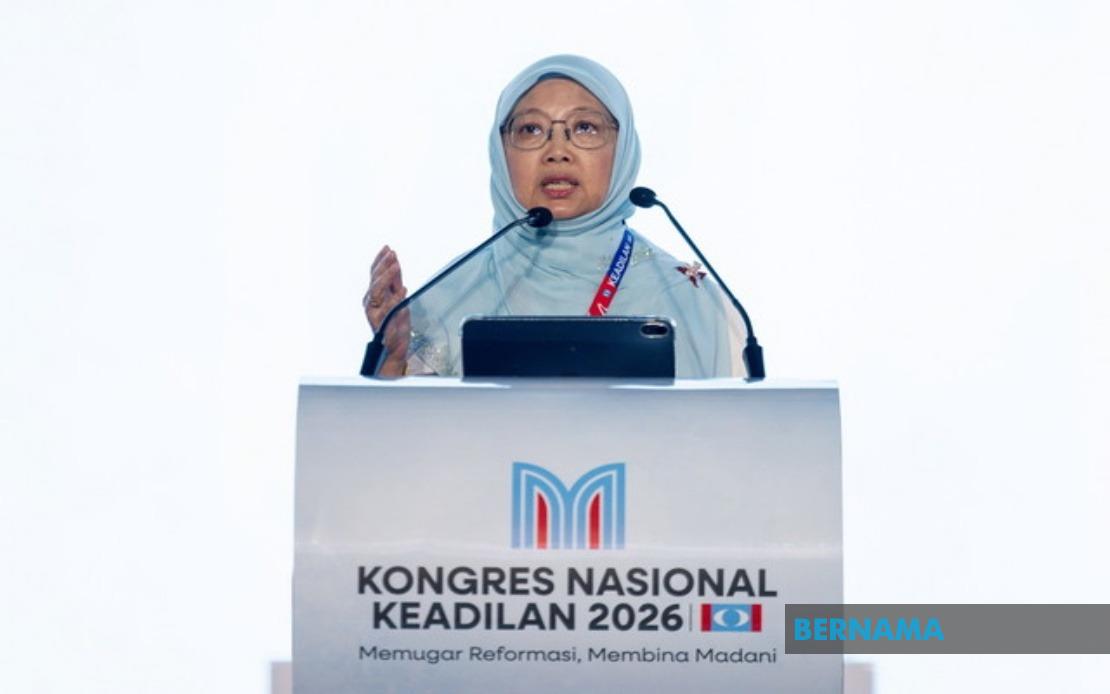
The journey into government marks only the commencement of genuine reform work, not its conclusion, according to Parti Keadilan Rakyat vice president Datuk Seri Dr Zaliha Mustafa. Speaking at the PKR 2026 National Congress in Melaka, she articulated a fundamental distinction between the party's historical struggle and its current responsibilities as a ruling entity. This framing carries significance for Malaysian politics, where several reform-oriented coalitions have struggled to translate electoral mandates into substantive institutional change.
Zaliha's remarks reflect an evolving maturity within PKR's discourse. The party's two-and-a-half-decade crusade for political transformation should not be reduced to a mere vehicle for power acquisition, she insisted. Rather, the core objective has always centred on fundamentally restructuring how Malaysia is administered and governed. This distinction proves crucial in a regional context where numerous reform movements have disappointed supporters after securing office, often reverting to patronage-based governance patterns or becoming absorbed into existing power structures.
The vice president articulated a vision where PKR's expanded institutional responsibilities demand corresponding demonstration of competence and integrity. The party now faces obligations to fortify governmental institutions, dismantle corrupt practices, curtail abuses of power, and ensure that justice reaches across all socioeconomic levels. These commitments extend beyond rhetorical flourishes; they represent measurable benchmarks against which the government's tenure will be evaluated by citizens and opposition critics alike.
Crucially, Zaliha acknowledged that internal accountability must accompany external governance reforms. Party members bear the responsibility to identify and rectify shortcomings within their own ranks, creating a culture of self-correction rather than the defensive insularity that often characterises ruling coalitions. This introspective element distinguishes genuine reform movements from those merely seeking to replace one set of beneficiaries with another.
The implementation of substantive change demands both courage and judicious restraint, Zaliha explained. Reform need not mean instantaneous transformation of all systems; rather, prudent prioritisation allows certain changes to take effect immediately whilst others require negotiation, preparation, and phased rollout. The distinction between speed and sloppiness proves essential in governance, where hasty decisions can undermine long-term objectives. This pragmatic approach echoes the historical example of Khalifah Umar Abdul Aziz, whom PKR president Datuk Seri Anwar Ibrahim invoked during the congress's opening proceedings.
Gradual implementation should not be conflated with postponement or diluted commitment, Zaliha emphasised. Caution does not signal abandonment of reform principles; rather, strategic sequencing ensures that changes take root durably rather than collapsing under insufficient preparation. The critical factor remains maintaining transparent direction and unwavering focus on core objectives, even when specific timelines extend beyond immediately satisfying constituent expectations.
Beyond structural governance reforms, PKR recognises an acute challenge in translating policy achievements into public awareness and acceptance. The government cannot assume that citizens will automatically comprehend or appreciate policy outcomes merely because officials have announced and implemented them. This recognition addresses a recurrent weakness within Malaysian governance, where administrations frequently fail at communicating their accomplishments in comprehensible, relatable language.
Zaliha identified strategic communication deficiencies as potentially undermining otherwise sound policy work. The party must establish more systematic, rapid, and accessible communication mechanisms capable of explaining governmental achievements in vernacular terms that resonate with ordinary Malaysians. Failure to master this communicative dimension risks allowing critics to define the narrative around the government's record, particularly in an era where social media increasingly shapes public perception.
The contest for narrative dominance in digital spaces has acquired paramount importance, according to Zaliha. Opposition forces remain active on social media platforms, and PKR cannot cede control of these influential spaces through negligence or underestimation. Winning hearts and minds requires moving beyond statistical claims about policy implementation; citizens must develop emotional and psychological identification with the government's reform agenda.
Numerical electoral margins and policy accomplishments provide insufficient guarantees of sustained public support, Zaliha argued. The crucial variable involves whether citizens feel that the government genuinely represents their interests and embodies the reform principles it espoused during opposition. This emotional dimension of governance often determines political longevity more decisively than quantitative metrics of administrative achievement.
For Malaysian observers, Zaliha's address offers candid acknowledgment of the formidable gap separating opposition rhetoric from governing reality. PKR's initial year in power has demonstrated both the possibilities and constraints of reform agendas within Malaysia's complex institutional environment. The party's capacity to consolidate support depends increasingly on demonstrating tangible improvements in citizen welfare, institutional integrity, and governmental responsiveness.
The PKR vice president's emphasis on internal discipline and communication strategy reflects learning from comparable reform movements across Southeast Asia, where several governments have encountered credibility crises through poor communication of achievements or insufficient demonstration of commitment to promised institutional changes. Malaysia's reform coalition faces heightened expectations given its explicit mandate for systemic transformation.
Ultimately, Zaliha's message constitutes both exhortation and acknowledgment of accountability. PKR members understand that their government's legitimacy rests not on winning an election but on implementing the reforms they championed during two decades of opposition. The genuine test of Reformasi unfolds in coming months through whether the coalition translates philosophical commitments into institutional practices that measurably improve governance quality and citizen satisfaction.

