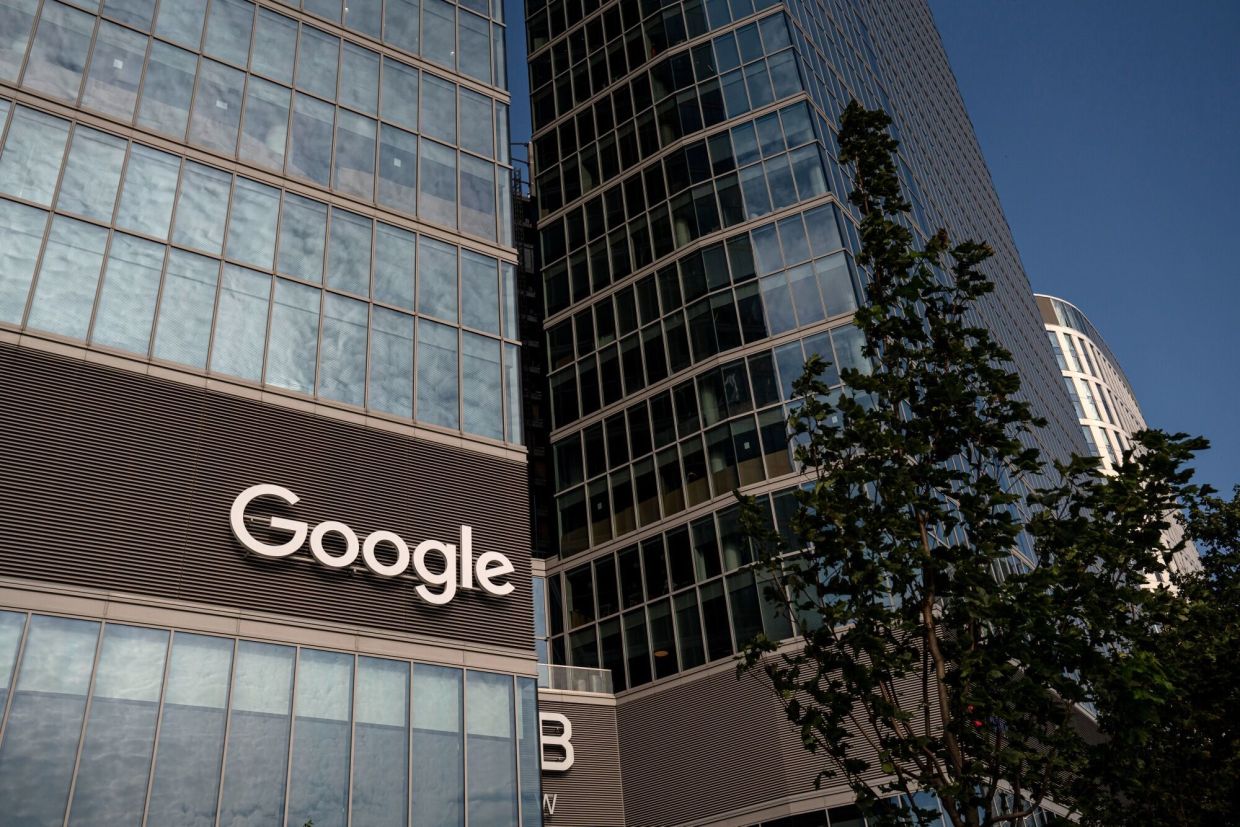
Google markets its artificial intelligence recruitment tools to corporate clients across the world as a solution to the perennial hiring challenge: how to efficiently process thousands of job applications and identify the strongest prospects. Yet within Alphabet Inc itself, some of the company's most prominent researchers have little confidence in these same systems. The contradiction between Google's external sales pitch and internal doubts reveals growing unease about the reliability of AI-driven hiring at scale.
Google DeepMind's AGI Safety and Alignment Team, a unit dedicated to studying and reducing risks posed by advanced artificial intelligence systems, has taken an unusual step: it is instructing candidates applying for its open positions to complete a supplementary form alongside their formal application. The purpose, the team made clear in an internal document, is to ensure their CVs do not get filtered out by Google's own automated screening systems. The document carried a confidential warning—"PLEASE DO NOT SHARE THIS DOC WIDELY"—suggesting the guidance was meant only for prospective applicants, not for public consumption.
The candour of the team's warning is striking. "We have an applications system with a non-trivial probability your CV will be screened out incorrectly or take too long to reach us," the document stated bluntly. By completing the special form, applicants would bypass the automated gatekeepers entirely: "Filling out this form makes sure that a real human on the team will get to see your application." This acknowledgment from a team focused on AI safety represents a tacit admission that Google's recruitment algorithms are unreliable enough to warrant workarounds, at least for positions the company considers critical.
When confronted with the revelation, a Google DeepMind spokesperson pushed back against the implication that the company's systems are faulty. The company, the spokesperson said, remains committed to recruiting "the most qualified talent at Google DeepMind" and denied that its screening systems filter out candidates incorrectly. The company characterised the special form instead as a procedural shortcut designed by the team itself, allowing resumes to reach hiring managers directly rather than passing through the recruiter review process first. However, the spokesperson also cautioned that the form provides "no shortcuts to getting hired"—only a path around the automated filters.
The controversy shines a light on a broader corporate trend with significant implications for job seekers globally, including in Southeast Asia where AI adoption in hiring is accelerating. Over the past few years, artificial intelligence has woven itself into nearly every stage of human resources operations. Some companies deploy AI models to rank applicants on predicted job performance, while others use simpler systems that scan resumes for specific keywords or credentials. The technology promises efficiency and objectivity, yet the reality is often murkier and more fallible than vendors suggest.
Google itself actively promotes AI-powered hiring tools through its Workspace division, which serves millions of businesses worldwide. The company markets new AI features as capable of "saving HR time by quickly creating drafts for job postings, evaluating resumes, and forecasting hiring needs." For corporate clients—many of them in Southeast Asia—these tools represent an appealing way to manage the labour-intensive hiring process. The fact that Google's own teams have reservations about the reliability of these systems raises uncomfortable questions about what companies are purchasing and deploying.
The risks of flawed AI recruitment systems have become increasingly apparent. A Bloomberg investigation into OpenAI's ChatGPT uncovered evidence of potential bias based on applicant names, suggesting that AI hiring tools may systematically disadvantage candidates from certain ethnic or cultural backgrounds. More formally, workplace software vendor Workday Inc faces litigation alleging that its AI hiring systems discriminate against applicants on the basis of race, age, and disability, in violation of employment law. Workday has denied these allegations and maintained that human recruiters make all final hiring decisions. These cases underscore how AI-driven recruitment, despite promises of objectivity, can perpetuate or amplify existing inequalities in the job market.
Parallel to concerns about bias and accuracy, a separate problem has emerged: sophisticated job seekers are learning to game the systems. Some candidates now use artificial intelligence tools to help them craft applications, essentially using AI to defeat AI screening systems. In response, Google DeepMind's form included an explicit warning to applicants not to rely on such tactics. The team cautioned that "a real human will read these," and moreover, those humans "get really tired of reading LLM answers, because they all sound very samey." The advisory betrays a recognition that AI-generated applications possess a sameness and formulaic quality that experienced recruiters can easily spot and, presumably, view unfavourably.
For Malaysian and Southeast Asian job seekers, the implications are worth considering carefully. As multinational corporations and local companies alike adopt AI hiring tools, the risk of being incorrectly filtered out of a competitive process is real. The fact that even Google—a company at the forefront of AI development—acknowledges such risks and provides workarounds for some of its own positions suggests that candidates should approach AI-screened applications with caution. Tailoring applications to specific human readers, rather than optimising for algorithmic detection, remains sound strategy.
The situation also raises broader questions about transparency and accountability in hiring. When companies deploy AI systems to make consequential decisions about which candidates deserve human consideration, job seekers deserve to know what criteria those systems use and how reliably they perform. Google DeepMind's informal workaround, while helpful to its applicants, is ultimately a band-aid solution that masks a structural problem: the company has built hiring systems whose reliability it does not fully trust. Until companies—and the AI vendors that supply them—become more forthright about the limitations of their tools, job seekers will need to be creative and persistent to ensure their applications receive the human attention they deserve.

