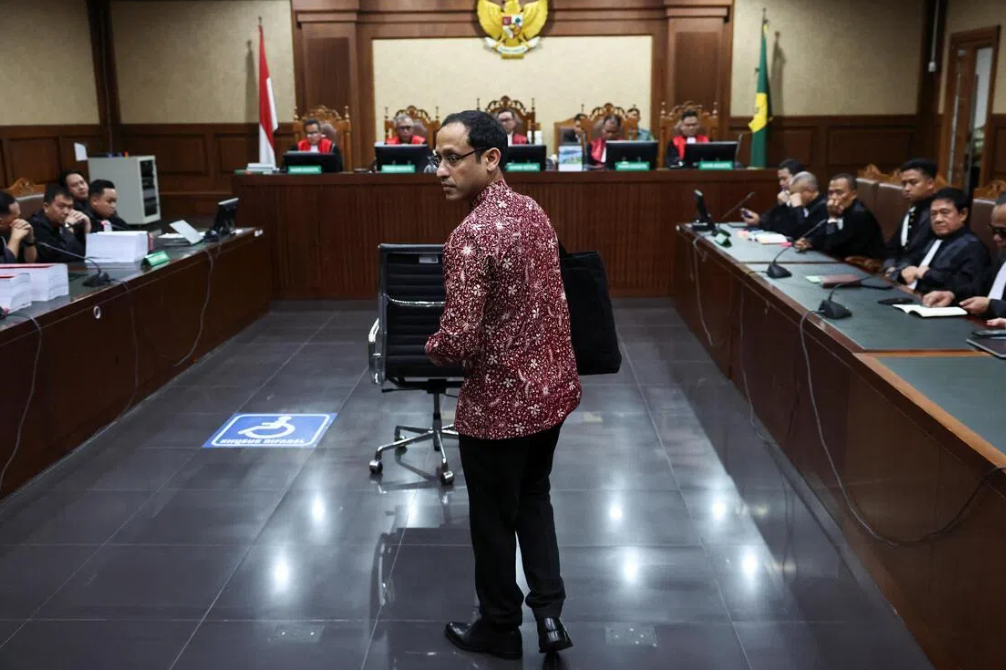
A Jakarta court has handed down a 10-year prison sentence to Nadiem Makarim, the Harvard-educated founder of Indonesia's first unicorn technology company Gojek, in connection with a massive school laptop procurement programme launched during the pandemic. The verdict, delivered on Tuesday by chief judge Purwanto, concluded one of Indonesia's most closely watched corruption trials and represents an extraordinary reversal of fortune for an entrepreneur once celebrated as embodying a new breed of reformist leadership. Beyond the prison term, Makarim faces a fine of 1 billion rupiah and must pay 809.6 billion rupiah in restitution, with an additional five years behind bars should he fail to settle the financial obligation.
The judicial panel found Makarim guilty of abusing his authority as education minister through the deliberate direction of a Chromebook procurement policy that benefited private interests over the public good. Judges determined that his actions deliberately aimed to strengthen commercial ties between Google and his own company, a motive they characterised as fundamentally incompatible with ministerial responsibility and the oath of office. This reasoning formed the crux of the prosecution's case, which alleged that the programme caused approximately 2.18 trillion rupiah in state losses while Makarim personally profited around 809 billion rupiah through transactions involving PT Aplikasi Karya Anak Bangsa, Gojek's parent company.
Makarim's trajectory from celebrated entrepreneur to convicted felon illuminates the precarious position of private-sector figures entering public service. Before his appointment as education minister under former president Joko Widodo in 2019, the 41-year-old had built Gojek into a dominant regional powerhouse offering courier delivery, motorcycle taxi services, food delivery, and the GoPay digital payments platform. The company achieved unicorn status and commanded a valuation of approximately US$10 billion by the time Makarim accepted the cabinet position, seemingly bringing technological expertise and private-sector dynamism to government administration.
The controversy centres on a scheme to procure roughly 1.1 million Chromebook laptops between 2020 and 2022, when schools nationwide transitioned to remote learning as the pandemic disrupted conventional classroom operations. Prosecutors alleged that pre-existing ministry studies conducted in 2018 had already established that Chromebook devices would perform poorly in Indonesia's remote and rural areas where internet infrastructure remains inadequate, suggesting the policy lacked sound technical foundation. They further pointed to an August 2019 group chat containing discussions about a Chromebook-focused digitalisation plan that predated Makarim's formal cabinet appointment, implying pre-planned coordination.
The defence mounted a vigorous counter-argument centring on good faith and pandemic necessity. Makarim's legal team contended that the programme operated transparently with honourable intentions during an unprecedented educational crisis, emphasising that approximately 97 per cent of the 1.1 million laptops reached 77,000 schools by 2023. Crucially, they maintained that Makarim received no direct financial compensation from the procurement process and sought full acquittal when presenting their closing arguments in early June. They characterised the allegations as fundamentally misguided, rejecting claims that Google's commercial investments in his company influenced procurement decisions.
The prosecutors had sought substantially harsher penalties: an 18-year prison sentence, the same 1 billion rupiah fine, and 5.6 trillion rupiah in restitution. Their case relied on documentary evidence and testimony suggesting coordinated planning to advantage both Google and Gojek through state procurement contracts. The court's final sentence of 10 years represents a significant reduction from prosecution requests, though it still constitutes a severe penalty reflecting judicial acceptance of core corruption allegations.
The trial itself transcended typical legal proceedings to become a cultural phenomenon in Indonesia's political landscape. Gojek motorcycle drivers attended hearings wearing company jackets to demonstrate solidarity, while court sessions were livestreamed and generated social media campaigns calling for public viewing parties. The proceedings received amicus curiae briefs supporting Makarim's position, reflecting the complexity of public opinion surrounding a prominent entrepreneur accused of misconduct. This unusual visibility underscores deeper questions about whether Indonesia's professional class views government service as worth the reputational and legal risks.
Makarim's family background adds another dimension to the trial's significance. His father Nono Anwar Makarim stands as a prominent lawyer in Indonesia's legal establishment, while his maternal grandfather participated in the country's independence struggle, placing the family within Indonesia's political and social elite. These connections may have amplified media attention while simultaneously making his conviction more symbolically consequential for narratives about elite accountability and the rule of law.
In his final defence statement before sentencing, Makarim explicitly framed the case as carrying implications far beyond personal procurement decisions. He appealed directly to the court's broader social responsibility, asking judges to consider how their verdict would influence young Indonesians' willingness to serve the public sector. "Youth across all of Indonesia, and the diaspora in every corner of the world, await your answer to the question echoing in their hearts: 'Is this country still safe for us to serve?'" he posed, attempting to shift the trial's narrative from technical corruption charges to systemic questions about whether talented professionals from outside politics can participate in government reform without facing existential legal jeopardy.
The conviction carries significant ramifications for Southeast Asia's broader development trajectory. Indonesia has positioned itself as a technology-driven economy with ambitions to become a regional innovation hub, yet this case suggests that private-sector expertise in public administration remains vulnerable to legal challenge and political weaponisation. For Malaysia and other regional nations attempting to recruit technology entrepreneurs into government roles, the Makarim verdict offers a cautionary lesson about institutional frameworks necessary to protect ministerial decision-making from retroactive prosecution based on procurement outcomes.
Makarim's case also reflects ongoing tensions within Indonesia's anti-corruption apparatus regarding how aggressively to pursue high-profile cases. The Corruption Eradication Commission and Attorney-General's Office clearly prioritised prosecution despite the pandemic's extraordinary circumstances and Makarim's earlier entrepreneurial reputation. This suggests that even prominent public figures cannot rely on past achievements or good intentions to shield themselves from accountability mechanisms, a principle that simultaneously strengthens rule-of-law institutions and potentially discourages the private-sector talent recruitment that developing economies desperately require.
Moving forward, Makarim's conviction will likely influence how future technology leaders evaluate opportunities to enter government service across Southeast Asia. The financial penalties and imprisonment terms represent serious consequences that may deter entrepreneurial figures from accepting ministerial positions, potentially limiting the pool of candidates with modern business expertise willing to undertake reform initiatives. Whether this outcome strengthens or weakens Indonesia's institutional development depends ultimately on whether similar cases become systemic patterns or remain exceptional circumstances involving unusual political dynamics.

