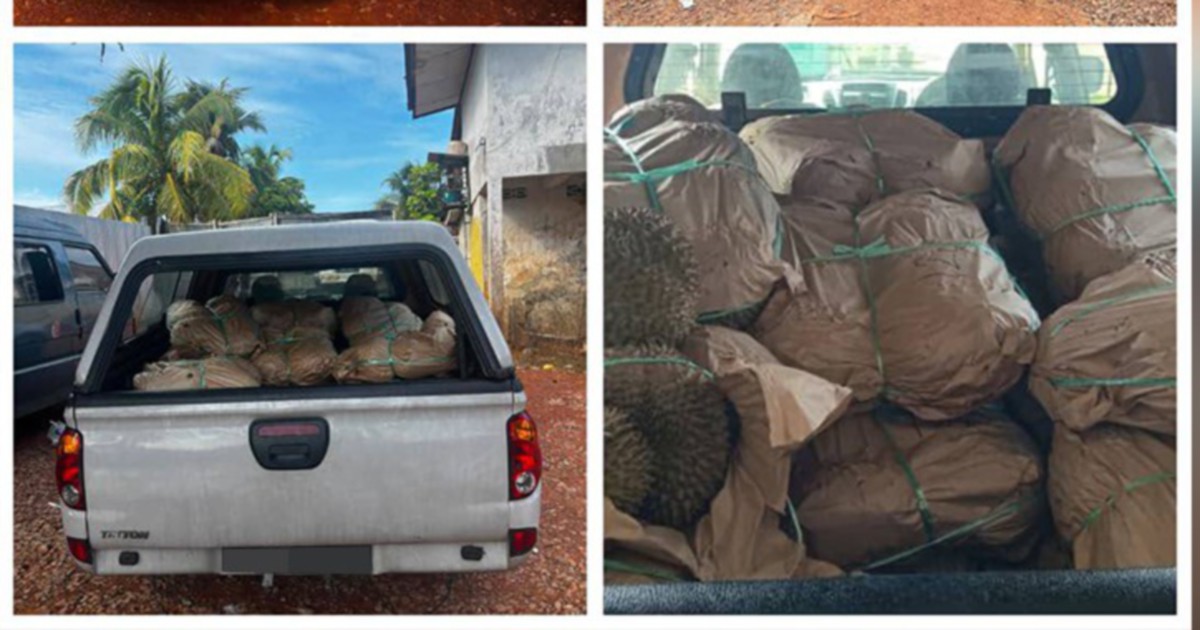
Authorities have intensified enforcement efforts against illegal smuggling operations along Malaysia's borders, with the General Operations Force conducting a significant raid at an unsanctioned maritime entry point in Rantau Panjang. During the operation, officers apprehended a young driver and intercepted a substantial consignment of the country's prized durian fruit, signalling renewed focus on controlling the illicit cross-border trade in agricultural commodities.
The incident unfolded at the Abe Li Posmen illegal jetty, where GOF personnel detected suspicious activity indicating the movement of contraband goods. Upon inspection, officers discovered approximately 350 kilogrammes of durians that had apparently entered the country through unofficial channels, bypassing standard customs and quarantine procedures. The interception highlights vulnerabilities in maritime border security that smugglers continue to exploit, particularly for high-value agricultural products destined for regional markets.
The arrested individual, identified as a 20-year-old driver, was taken into custody pending further investigation. In addition to the fruit seizure, authorities also impounded the four-wheel-drive vehicle used in the smuggling operation, valued at considerably over RM50,000. The confiscation of the transportation asset signals an escalating enforcement strategy aimed at disrupting the financial viability of smuggling networks by targeting the equipment essential to their operations.
Durians occupy a unique position in Malaysia's economy and cultural identity, commanding premium prices in both domestic and international markets. The fruit's high market value—particularly for prized varieties such as Musang King and D24—makes it an attractive target for smugglers seeking quick profits through illegal cross-border trade. The seizure reflects broader concerns about organised networks circumventing official trade channels to avoid proper taxation, quality controls, and export documentation.
Illegal maritime entry points scattered along Malaysia's extensive coastline present persistent enforcement challenges for government agencies. These unmonitored jetties enable smugglers to avoid detection by customs and immigration authorities, allowing contraband to reach distribution networks before regulatory bodies can intervene. The GOF's detection at Abe Li Posmen demonstrates the importance of regular patrol operations and intelligence-gathering in remote coastal areas, though the sheer number of potential landing sites complicates comprehensive border security.
The operation reflects Malaysian authorities' commitment to strengthening agricultural trade integrity and protecting legitimate domestic producers. When smuggled produce enters the market, it undermines farmers who comply with proper licensing, phytosanitary standards, and tax obligations. Beyond economic considerations, unauthorised imports bypass health and safety inspections, creating potential food security risks for consumers who unknowingly purchase unvetted agricultural products.
Regionally, Malaysia's smuggling networks often operate in coordination with neighbouring countries, particularly Thailand and Singapore, where durian demand remains exceptionally strong. Thai buyers represent a significant market for Malaysian durians, both through legitimate export channels and increasingly through informal cross-border flows. The seizure suggests that smugglers are attempting to bypass official export procedures, likely to avoid export taxes, quality certifications, and traceability requirements that legitimate trade demands.
The GOF's operations remain critical to Malaysia's border security infrastructure, particularly given resource constraints that limit comprehensive coverage of all potential entry points. The force coordinates with other agencies including the Royal Malaysia Police, Malaysian Customs Department, and maritime authorities to create layered enforcement networks. However, the sophistication of smuggling operations—utilising fast boats, timing operations around shift changes, and exploiting geographic knowledge—continues to test institutional capacity.
This particular seizure represents one instance within a broader pattern of agricultural contraband interdictions that Malaysian authorities have documented over recent years. Durians, along with other high-value goods such as timber and seafood, feature prominently in smuggling statistics, reflecting both their economic value and the relatively high prices they command in offshore markets. The cumulative effect of numerous seizures suggests that enforcement efforts are having measurable impact, though they remain reactive rather than preventive in nature.
The case also underscores why Malaysian policymakers have prioritised technology investments and intelligence-sharing mechanisms to enhance border security. Real-time surveillance systems, drone monitoring, and information exchange with regional partners represent emerging tools in combating smuggling networks that operate with increasing coordination and sophistication. The 20-year-old's arrest may lead investigators to other individuals involved in the broader distribution chain, potentially disrupting larger operations.
Moving forward, addressing root causes of smuggling—including regulatory costs for legitimate exporters, price differentials across regional markets, and limited enforcement resources—remains essential for sustainable solutions. While seizures generate headlines and demonstrate enforcement capacity, structural reforms affecting taxation, licensing procedures, and international trade agreements ultimately shape whether smuggling networks remain economically viable. The Rantau Panjang operation thus serves as a visible reminder of ongoing tensions between enforcement capacity and the powerful economic incentives driving agricultural smuggling throughout Southeast Asia.

