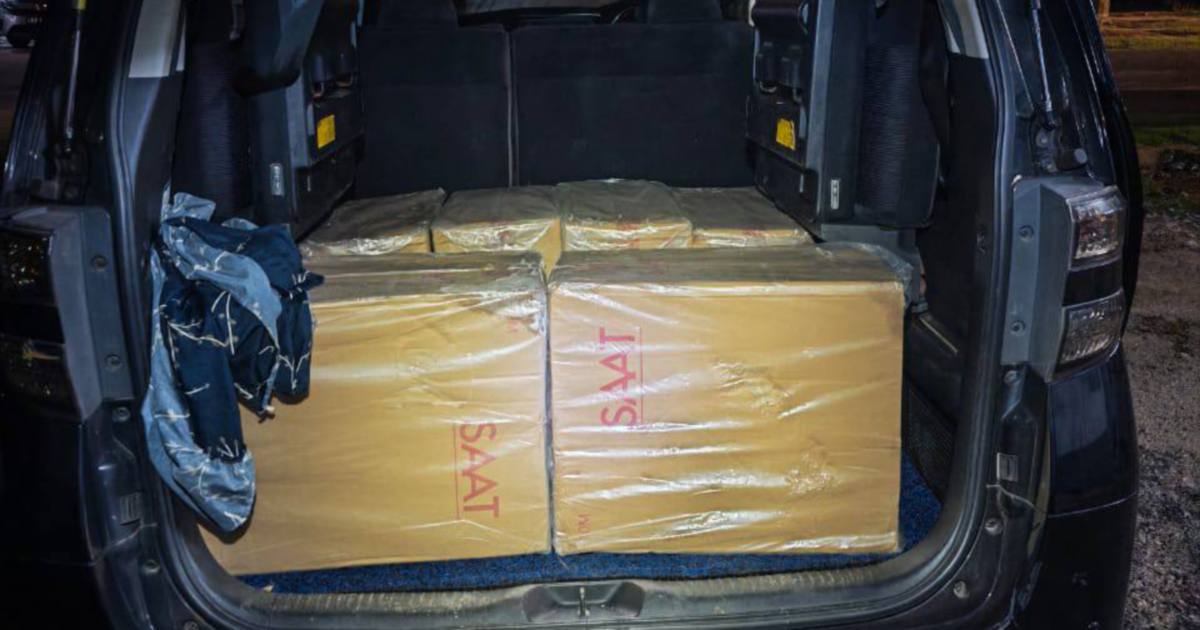
Federal enforcement agents have scored a significant victory against the illicit tobacco trade in the northeast, apprehending a driver and recovering a substantial cache of duty-unpaid cigarettes during an operation in Kelantan. The General Operations Force intercepted a Toyota Vellfire on the shoulder of Pasir Tumboh Bridge in Kota Baru in the early hours, leading to the discovery and seizure of approximately 60,000 cigarette sticks that authorities estimate are worth RM112,200. A 37-year-old man driving the vehicle was arrested at the scene.
The seizure underscores the persistent challenge Malaysia faces in combating illegal tobacco products, a market segment that continues to erode government revenue and undercut legitimate manufacturers. Cigarettes diverted from the official supply chain—whether through smuggling, tax evasion, or clandestine production—represent a significant enforcement priority for federal authorities including the GOF, which operates under the Ministry of Defence. The value of contraband intercepted in a single vehicle stop suggests the operation was part of a distribution network rather than an isolated trafficking attempt.
Kelantan's strategic location along Malaysia's northeastern corridor has made it a recurring flashpoint for smuggling activities. The state's proximity to Thailand and its role as a transshipment hub between major ports and inland consumption centres means the region experiences considerable illicit trade pressures. The Pasir Tumboh area, situated along a key transport artery connecting Kota Baru to other municipalities, has emerged as a surveillance hotspot for enforcement teams seeking to intercept contraband in transit. The timing of the early-morning interception suggests intelligence-led operations rather than random roadside checks.
The GOF's enforcement capability reflects a broader institutional commitment to border security and internal contraband suppression. Operating with expanded powers to conduct stop-and-search operations, the force has become instrumental in the government's anti-smuggling initiatives alongside the Royal Malaysian Customs Department and the Malaysian Maritime Enforcement Agency. The coordination between these bodies, particularly in northeastern states with porous land borders and coastal exposure, remains critical to reducing the supply of illegal products.
Cigarette smuggling carries economic implications beyond lost customs revenue. The proliferation of duty-unpaid tobacco products distorts market pricing, makes smoking more affordable and accessible—particularly to younger consumers—and incentivises retailers to source cheaper black-market supplies. This dynamic has long concerned public health advocates and legitimate businesses alike. Additionally, the criminal networks orchestrating large-scale tobacco smuggling often operate across multiple illicit commodity streams, including controlled pharmaceuticals and other contraband, making enforcement efforts multidimensional.
The arrest of the driver represents a potential investigative lead into wider trafficking networks. Authorities typically scrutinise such cases for evidence of supply chains, funding mechanisms, and downstream distribution points. The question of whether the 37-year-old was an independent operator or part of an organised syndicate often determines whether prosecutions target individuals or dismantle larger infrastructure. In Kelantan, where similar seizures have been documented periodically, building cases against mid-tier traffickers can yield intelligence about upstream sources and downstream buyers.
The RM112,200 valuation serves as a proxy for the duty lost to the Malaysian government had these cigarettes entered the legal retail stream. This figure also indicates the approximate retail value, suggesting significant profit margins for smugglers when goods are sold at discounted rates through informal channels. Such economics explain the persistence of tobacco smuggling despite law enforcement risks; the financial incentives remain robust across supply chains.
For Malaysian consumers, the proliferation of illicit cigarettes has created a shadow market where quality control, regulatory compliance, and traceability are absent. Counterfeit brands, adulterated products, and genuinely dangerous substitutes circulate alongside diverted legitimate stock. Public awareness campaigns have underscored these health risks, yet the price differential between legal and illegal cigarettes continues driving consumer demand in price-sensitive segments.
The GOF operation also reflects evolving enforcement tactics that combine fixed-point monitoring with mobile patrols and intelligence sharing. Modern smuggling networks attempt to vary routes, timing, and vehicle types to evade detection; the early-morning stop on Pasir Tumboh Bridge suggests enforcement agencies are adapting their operational rhythms accordingly. Seasonal patterns, traffic flows, and known trafficking corridors inform deployment decisions.
Looking forward, this seizure highlights the need for sustained enforcement at strategic chokepoints while also addressing root causes of smuggling demand. Regional cooperation with Thai authorities and neighbouring countries remains essential, as the cross-border dimension of tobacco trafficking requires coordinated intelligence and joint operations. Within Malaysia, improving retailer compliance, enhancing supply-chain transparency for legal manufacturers, and tackling corruption within enforcement ranks are complementary measures that could collectively reduce market share available to smugglers.
The 37-year-old driver faces charges likely under the Excise Act 1958 or related customs legislation, with potential penalties including imprisonment and fines. Depending on investigation outcomes, additional charges related to conspiracy or organised crime could follow. The case will add to enforcement statistics demonstrating GOF's operational commitment, yet the broader battle against illicit tobacco will require sustained pressure across multiple agencies and sustained vigilance at vulnerable points along Malaysia's transport networks.

