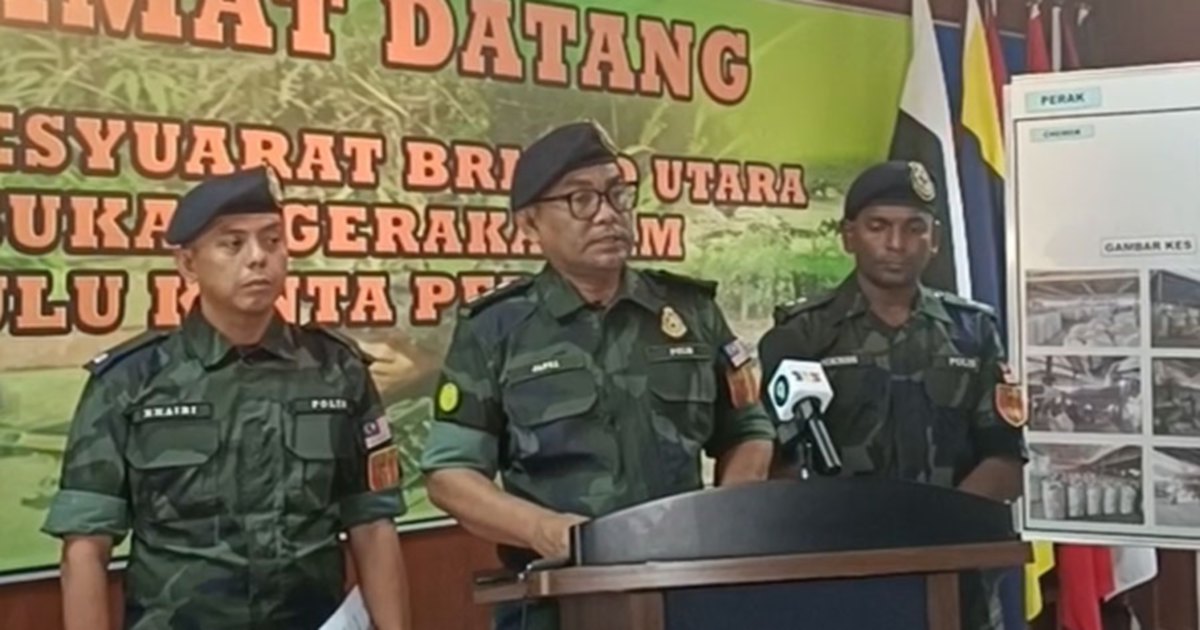
A large-scale enforcement operation by the General Operations Force Northern Brigade has dismantled what authorities describe as a significant illegal mining and mineral processing network, resulting in 30 arrests and the recovery of RM31.7 million in assets across Perak and Kedah. The coordinated raids represent one of the more substantial crackdowns in recent months on unauthorised extraction activities that have increasingly plagued the northern states, drawing heightened scrutiny from federal security agencies concerned about the scale and organisation of underground operations.
Illegal mining has become a persistent challenge throughout Malaysia, particularly in Perak and Kedah where geological conditions and relative remoteness of certain areas create conditions conducive to unauthorised extraction. The activities extend beyond simple prospecting to include sophisticated mineral processing operations that generate substantial revenues for criminal networks while devastating the natural landscape. Enforcement agencies have prioritised combating these operations, recognising that uncontrolled mining not only represents economic loss to the state through unpaid royalties and licensing fees but also poses environmental hazards through water contamination, habitat destruction, and soil degradation.
The seized equipment and minerals indicate a professionally managed operation rather than opportunistic small-scale digging. The RM31.7 million valuation suggests the network had accumulated significant stockpiles and invested in substantial processing infrastructure, likely pointing to operations spanning an extended period before intervention. Such networks typically employ dozens of workers across multiple sites, with roles ranging from excavation crews to equipment operators and individuals managing transportation and sales logistics. The scale of arrests indicates the GOF successfully mapped and targeted the operational hierarchy rather than merely disrupting a single site.
Perak, Malaysia's second-largest state by area, has long struggled with mineral extraction pressures due to its rich deposits of tin, copper, and rare earth elements alongside significant limestone reserves. The state's topography and less densely populated regions create enforcement challenges, as mining operations can continue for extended periods before detection. Kedah similarly faces pressures from its mineral wealth and agricultural land that borders sensitive border areas, complicating oversight efforts. Both states have recorded increasing incidents of illegal mining over recent years, prompting state governments to request additional federal security resources.
The GOF's involvement signals the severity authorities assign to this matter. As a paramilitary force primarily tasked with internal security and counter-insurgency operations, the GOF's deployment to mining enforcement underscores governmental determination to address the problem at scale rather than through routine local police operations. This approach indicates coordination between federal security agencies and state governments in targeting what officials clearly view as an organised criminal enterprise rather than isolated violations. The Northern Brigade's focus on systematic dismantling of networks rather than incremental enforcement suggests intelligence gathering has preceded these operations.
Environmental damage from illegal mining extends beyond immediate excavation sites. Processing minerals requires chemical inputs and generates significant water pollution affecting downstream communities and agricultural zones. Residents in areas near mining operations frequently report disrupted water supplies, damaged agricultural yields, and respiratory issues from dust and emissions. Local communities bear the environmental cost while profits accrue entirely to operators and criminal networks, creating grievances that occasionally prompt residents themselves to report suspicious activities to authorities.
The economic dimensions merit consideration beyond the seized asset value. Illegal mining represents untaxed mineral extraction that deprives both federal and state governments of royalties and licensing revenues. For Perak particularly, which historically depended on tin mining revenue, the loss of control over mineral resources has broader implications for state development funding. Additionally, such operations often operate in conjunction with money laundering schemes, as operators must integrate substantial cash proceeds into legitimate financial systems, potentially facilitating broader financial crimes.
Successful enforcement outcomes like this crackdown depend on sustained intelligence work, informant networks, and inter-agency coordination. The security forces must identify operational patterns, locate processing sites often deliberately positioned away from main transport routes, and secure evidence sufficient for prosecutions. The 30 arrests suggest thorough documentation, though the eventual conviction rate and sentencing severity will influence whether such operations view enforcement risks as prohibitively costly. Relatively light penalties in previous cases have sometimes failed to deter repeat offences by well-capitalised networks that treat fines as operational expenses.
The recovered machinery and minerals also have implications for how authorities manage seized assets. Processing equipment can be destroyed, repurposed for legitimate industrial uses, or returned to rightful owners if claims prove valid. Mineral stockpiles require secure storage and eventual disposal or sale, with proceeds theoretically returning to state governments. Proper asset management in large seizures requires coordination between security agencies, state authorities, and treasury departments to ensure valuable equipment doesn't languish in storage or disappear through bureaucratic oversight.
Looking forward, authorities will monitor whether dismantling this network creates a lasting deterrent effect or whether the demonstrated profitability and market demand for illegally extracted minerals simply enables new operators to establish replacement operations. Sustainable enforcement requires complementary measures including enhanced border monitoring to restrict sale of minerals outside licensed channels, stricter environmental compliance audits at legitimate processors that might be unknowingly purchasing illegally sourced materials, and community engagement in mining regions to reduce local participation in illegal operations. The Perak and Kedah crackdown demonstrates enforcement capacity, but preventing recurrence requires addressing the economic incentives that make illegal mining attractive despite legal prohibitions.

