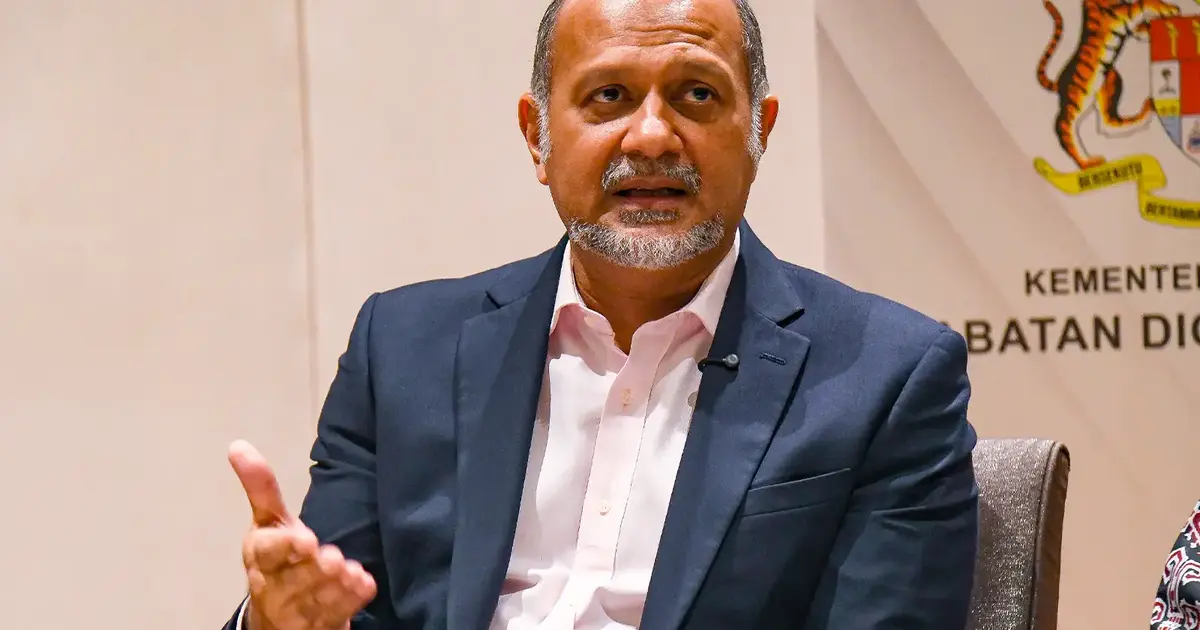
The DAP chairman has escalated calls for transparency regarding the ongoing investigation into alleged corporate mafia operations in Malaysia, formally requesting that both the Inspector-General of Police and the Malaysian Anti-Corruption Commission (MACC) share their findings publicly. Gobind Singh Deo's intervention reflects growing impatience within the ruling coalition over the pace and scope of what has become a sensitive inquiry spanning several government institutions.
The formal Cabinet directive issued in March set in motion an unprecedented multi-agency probe into what senior officials have characterized as organized criminal activity masquerading as legitimate corporate enterprise. Since that initial policy decision, investigators from both the Royal Malaysia Police and the MACC have devoted considerable resources to examining the alleged network. Gobind's position as DAP chairman amplifies the significance of his request, signalling that the party—a key component of the current coalition government—expects demonstrable progress and accountability on a matter that touches on fundamental governance and rule of law.
By explicitly stating that "ample time has been given," Gobind is making a calculated argument about reasonable investigative timelines. The duration between March and the present represents what many would consider a substantial period for preliminary findings to emerge, background checks to be completed, and initial determinations of criminality to be established. His language suggests frustration that despite this window, the investigating agencies have yet to formally communicate interim results or even the broad parameters of their inquiry to the public. This lack of communication fuels speculation and undermines confidence in institutional competence.
The MACC, which typically operates with considerable independence in corruption matters, faces particular scrutiny given its mandate to investigate white-collar crime and illicit financial flows. As the primary anti-corruption body in Malaysia, its involvement signals that the alleged corporate mafia activities involve misuse of public resources, breach of fiduciary duty, or illicit enrichment tied to government connections. The commission's silence or delayed reporting could suggest investigative complexity, jurisdictional disputes between agencies, or sensitivity around targets of inquiry who may occupy positions of influence.
The police's role in the investigation is equally consequential. The IGP must coordinate efforts across multiple divisions—including the Criminal Investigation Department, the Anti-Money Laundering and Terrorism Financing Investigation Division, and potentially the Commercial Crime Investigation Department—to map the alleged network's operations. Such coordination is notoriously time-consuming in Malaysian law enforcement, yet Gobind's impatience reflects a broader political reality: allowing an investigation to drift without public accounting creates a vacuum filled by rumour, conspiracy theory, and erosion of institutional credibility.
For Malaysian citizens and businesses, the transparency gap poses practical concerns. Companies operating in contested sectors cannot clearly determine whether their counterparts are subject to investigation. Investors struggle to assess country risk when regulatory agencies remain opaque about enforcement priorities. The undefined scope of the probe creates uncertainty that may chill legitimate commercial activity while potentially allowing guilty parties to obscure their involvement through jurisdictional gaps or agency coordination failures.
Gobind's intervention also carries implications for Pakatan Harapan's internal cohesion. The DAP, as the coalition's largest Chinese-majority party, maintains a voter base that values visible anti-corruption action. The party's chairman raising questions about investigative progress is partly a domestic signal to his own supporters that the government is indeed pursuing accountability, not simply burying uncomfortable findings. Simultaneously, it places pressure on the police and MACC leadership to demonstrate that they are not shielding politically connected individuals from scrutiny.
The request for updates must be understood within Southeast Asia's broader context of governance challenges. Malaysia, like several neighbouring economies, periodically confronts the reality of entrenched networks that blend legitimate commerce with criminal operations, political patronage with corporate control, and regulatory capture with institutional weakness. Other regional democracies have struggled to prosecute such cases effectively, particularly when targets include retired officials, corporate board members, or families of prominence. Public pressure and elite accountability—as Gobind is attempting to generate—become crucial mechanisms for ensuring investigation completion rather than abandonment.
The mechanics of responding to Gobind's request will reveal much about inter-agency coordination. The IGP and MACC leadership must determine whether they can credibly share intermediate findings without compromising investigation integrity or prejudicing potential prosecutions. This balance between transparency and operational security is notoriously difficult. Malaysian law, including the Official Secrets Act and provisions protecting ongoing investigations, may limit what can be disclosed. Yet excessive reliance on such protections invites precisely the kind of scrutiny Gobind is applying.
Looking forward, the DAP chairman's public pressure may catalyse either genuine investigative acceleration or defensive hardening by the concerned agencies. If the Inspector-General and MACC leadership perceive political pressure as inappropriate interference, they may become more circumspect about voluntary disclosure. Conversely, if they view Gobind's appeal as legitimate democratic oversight, they may move toward structured releases of sanitized findings that maintain investigation confidentiality while restoring public trust. The outcome will significantly influence how Malaysians perceive both the credibility of the anti-corruption machinery and the government's genuine commitment to rooting out organized crime disguised as corporate activity.

