Ghana's football contingent arrived in Toronto on high alert as they prepare to face Panama in a crucial World Cup Group L encounter, but the uncertainty surrounding talismanic midfielder Thomas Partey has cast a shadow over their preparations. Coach Carlos Queiroz projected confidence that his squad can perform to their full potential either way, though the decision from Canada's federal court—which heard arguments on Tuesday, just hours before the scheduled kickoff at Toronto Stadium—remains pivotal to Ghana's tactical outlook.
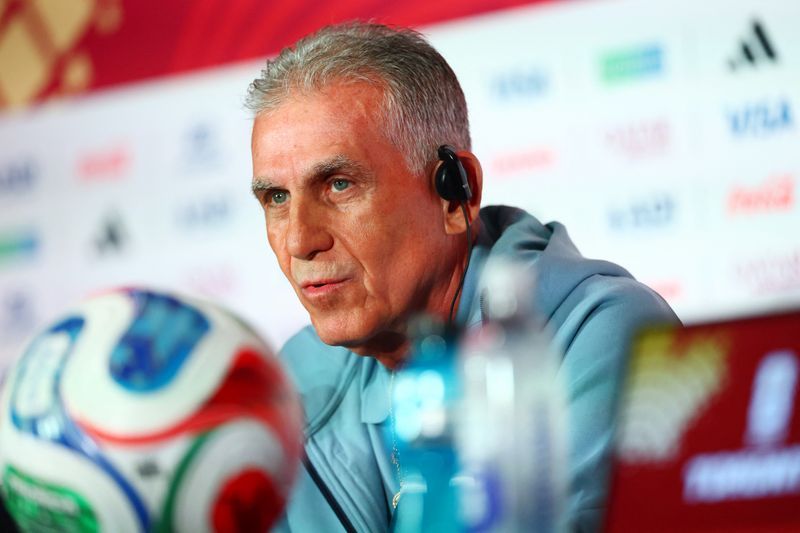
The Villarreal midfielder's entry into Canada has been blocked due to allegations of rape and sexual assault in Britain, charges that Partey categorically denies. His absence would represent a significant blow to Ghana's midfield depth and creative capacity, yet Queiroz's public positioning suggests the squad has contingency measures in place. At his Tuesday press conference, the 73-year-old Portuguese tactician declined to dwell on the legal complexities surrounding Partey, deflecting questions with characteristic terseness. "To add more comments about issues that are nonsense is not part of my business," he stated, attempting to keep the narrative focused on tactical preparation rather than off-field drama.
Queiroz's philosophy of working with available resources reflects the pragmatic approach required at international tournaments, where circumstances beyond a coach's control often force rapid adaptation. Rather than lamenting Partey's potential unavailability, he emphasised that Ghana possesses multiple quality options and has developed contingency plans. "We have our plan settled," Queiroz affirmed to journalists. "When the decision comes, we are ready." This measured response underscores the professionalism expected at World Cup level, where emotional reactions to setbacks can undermine team morale and performance.
Ghana's upcoming opponents, Panama, are no lightweight proposition in this tournament. Queiroz delivered considerable respect to the Central American side, characterising them as a well-organised and tactically disciplined outfit with tournament experience. However, the Ghana coach remained confident in his team's ability to capitalise on weaknesses he believes Panama will reveal. He highlighted Ghana's multifaceted strengths, ranging from individual pace and technical ability to collective experience and one-on-one defending capabilities. "We've got great experience, we've got quality, we've got speed, we've got skill," Queiroz enumerated. "I think we can do well in one-on-one situations. We're strong and we'll showcase our strengths in the game."
This confidence reflects Ghana's historical pedigree in African football and their squad's composition, which includes players operating at elite European clubs. The Black Stars have navigated challenging World Cup environments previously and possess the mental resilience required to overcome unexpected obstacles. Queiroz's acknowledgment of Panama's organisational strengths, combined with his identification of vulnerabilities to exploit, suggests tactical preparation has been thorough despite the off-field distractions.
Beyond the immediate Partey controversy, Queiroz also addressed another contentious issue reshaping modern World Cup football: FIFA's mandatory hydration breaks. These stoppages, introduced ostensibly to protect player welfare in challenging climatic conditions, have generated substantial debate within the coaching fraternity and among athletes. Rather than offering an immediate critique, Queiroz advocated for transparency when the tournament concludes, requesting what he termed an "integrity report" on the rule's implementation and rationale. His request cuts to the heart of lingering suspicions within football circles about whether the breaks genuinely prioritise player health or serve commercial and marketing interests.
"An integrity report must be clear and judge if this decision was really made more to protect the health and the performance of the players, or if it was made to protect marketing and other issues," Queiroz explained. This measured but pointed observation reflects concerns shared across the coaching world that tournament regulations sometimes prioritise broadcast schedules and commercial partners over pure sporting considerations. The demand for post-tournament scrutiny suggests Queiroz views the hydration breaks with cautious scepticism, though he stopped short of outright condemnation before seeing how the rule functions across various match conditions and venues.
For Malaysian and Southeast Asian football observers, Ghana's situation encapsulates broader challenges facing nations competing at the highest levels of international football. The Partey controversy illustrates how reputational and legal entanglements in overseas jurisdictions can disrupt team preparation and squad harmony, a reality that regional federations must increasingly navigate. Ghana's response—remaining focused on controllable factors while awaiting external decisions—offers a template for handling crisis situations that threaten campaign momentum.
The Panama encounter represents a significant early test in Ghana's World Cup journey, with both teams seeking to establish early momentum in Group L. Queiroz's insistence that his squad is prepared regardless of Partey's status demonstrates the psychological resilience required at tournament level, where unexpected obstacles can quickly derail campaigns if teams lack sufficient mental flexibility. Ghana's capacity to absorb setbacks and maintain tactical effectiveness will prove crucial not only in this specific match but throughout their tournament trajectory, particularly given the competitive nature of modern World Cup football where marginal gains often determine progression.