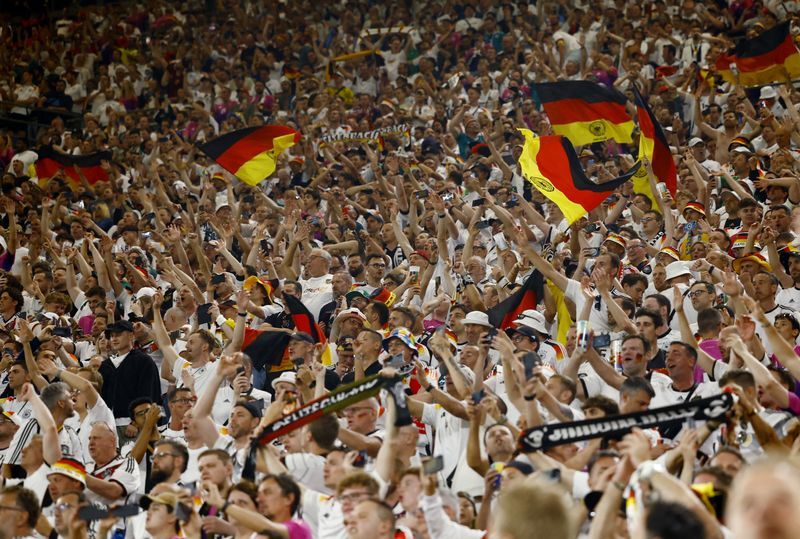
German law enforcement authorities conducted coordinated raids across the country on Wednesday, targeting the Deutsche Fußball-Bund (DFB) headquarters among several locations as part of a sweeping inquiry into alleged ticket allocation misconduct during the 2024 European Championship. The searches mark a significant moment for German football's governing body, which had overseen hosting duties for the summer tournament that unfolded across ten cities throughout the nation.
The investigation centres on allegations that thousands of tournament tickets were distributed through improper channels to favoured recipients prior to the championship matches. Prosecutors from Bochum and the North Rhine-Westphalia state criminal office confirmed that searches were underway at multiple sites, though initial official statements did not explicitly reference the DFB. However, reporting from the Bild newspaper indicated that the football association's administrative offices were among the targeted locations, underscoring the scope and seriousness of the inquiry.
According to Bild's reporting, investigators are examining the conduct of multiple individuals, including a German national and a French national. The case appears to centre on a pattern whereby hotel accommodation packages and tournament access were allegedly offered to select individuals in violation of standard allocation procedures. This raises broader questions about governance and accountability within European football's most prestigious tournament organisational structures.
One particular case under investigation involves a municipal employee from Gelsenkirchen, one of the ten host cities, who allegedly received tickets along with travel and hotel benefits valued at €2,400 ($2,736). This specific instance illustrates the nature of the suspected impropriety—the provision of tangible benefits and access to matches that should have been distributed according to established protocols. The employee's position within local government may have afforded them access to decision-makers or information that facilitated such arrangements.
The broader investigative framework encompasses what prosecutors describe as "unauthorized advantages, including a visit to an international football match." This formulation suggests that the inquiry extends beyond simple procedural violations to encompass potential corruption or conflict of interest issues. The phrasing indicates that prosecutors view these arrangements as unlawful benefits conferred through official channels, rather than standard commercial transactions or legitimate hospitality arrangements.
The 2024 Euros represented a major sporting and organisational undertaking for Germany, with matches distributed across Munich, Berlin, Hamburg, Cologne, Düsseldorf, Dortmund, Gelsenkirchen, Leipzig, Frankfurt and Stuttgart. The tournament's scale meant that ticket allocation decisions involved substantial numbers of passes and hospitality packages, creating multiple potential vectors for impropriety if oversight mechanisms proved insufficient. The alleged targeting of preferred guests raises questions about whether existing safeguards adequately protected the integrity of access distribution.
For Malaysian and Southeast Asian observers, this case carries implications for understanding how major international sporting events are governed and regulated across different jurisdictions. The investigation demonstrates that even Europe's largest football associations remain subject to criminal scrutiny regarding tournament operations, a principle equally applicable to sporting bodies globally. This reflects broader trends toward enhanced transparency and accountability in sports administration, values increasingly championed across the Asia-Pacific region.
The DFB and Union of European Football Associations (UEFA) have both remained circumspect in responding to the investigation's commencement. Neither organisation immediately offered substantive commentary on the allegations or the grounds for the searches. Such measured responses are typical during active investigations, though they also leave unanswered questions about the timeline, scope and anticipated duration of the prosecutorial inquiry.
The investigation's significance extends beyond questions of ticket distribution alone. Tournament hosting involves complex relationships between government bodies, commercial partners, and international sporting organisations. The alleged involvement of a municipal employee suggests potential intersection between local governance structures and football administration, highlighting the potential for conflicts of interest when public officials possess discretionary authority over access to major sporting events.
This case may also prompt broader reflection within European football governance regarding ticket allocation transparency and the establishment of clearer, more auditable procedures for future tournaments. If the allegations prove substantiated, they could influence how UEFA structures administrative processes for upcoming championships, potentially including enhanced independent oversight or tighter controls over hospitality distribution channels.
The investigation remains active, with prosecutors declining to offer further details at this stage. As proceedings develop, they may reveal more about the alleged scope of irregular ticket distribution and the extent to which systematic failures in oversight permitted such arrangements to occur. The inquiry's ultimate findings could carry significant consequences not only for individuals involved but also for the DFB's organisational practices and reputation.

