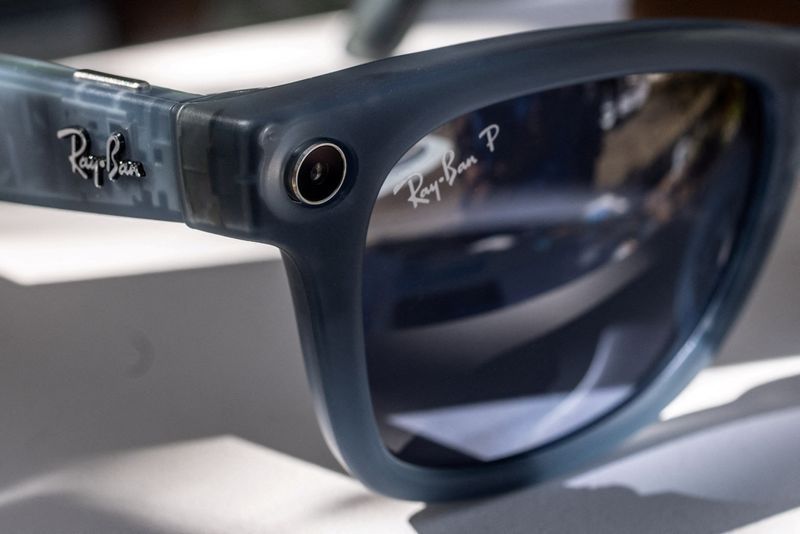
German privacy advocates have escalated their concerns about wearable technology by lodging a formal criminal complaint against Meta and major retailers distributing the company's artificial intelligence-enabled smart glasses in the country. The case, filed with Frankfurt's digital crime prosecution unit ZIT by HateAid, represents the latest regulatory flashpoint for the tech industry in a jurisdiction where personal privacy protections remain exceptionally stringent and culturally significant.
HateAid's grievance specifically targets the Ray-Ban Meta Wayfarer model and contends that the devices violate Germany's federal digital data protection legislation, which explicitly prohibits the manufacture and distribution of communication equipment designed to enable surreptitious recording of people without their knowledge or consent. The organisation named Meta's management alongside EssilorLuxottica subsidiaries and prominent German opticians Fielmann and Apollo-Optik, as well as electronics retailers Mister Spex and MediaMarkt, as parties to the alleged regulatory breach.
Josephine Ballon, managing director of HateAid, articulated the group's central concern with particular emphasis on the ubiquity and invisibility of the threat posed by such technology. The glasses present a fundamental erosion of the ability to move through public and semi-public spaces without risk of being recorded and subsequently having one's image disseminated via internet platforms without consent. This framing moves beyond abstract privacy concerns to address concrete harms experienced by individuals who cannot reasonably expect to control their own visual representation in the digital sphere.
The regulatory context in Germany provides substantial backing for such objections. The Federal Network Agency, known locally as BNetzA, previously issued guidance in late 2023 addressing the emerging smart glasses phenomenon, explicitly stating that connected devices capable of covert audio or video recording operations breach domestic telecommunications law. However, a spokesperson subsequently clarified that the actual possession, importation, or retail sale of smart glasses technology is not categorically forbidden under current law, provided that any recording capabilities remain visually apparent to potential subjects through indicators such as optical signals.
This technical distinction creates a legal grey area that HateAid's complaint seeks to close. The group argues that while the Ray-Ban Meta Wayfarer may technically include a visible light indicator signalling when recording occurs, the practical reality of everyday social interactions renders such indicators insufficiently conspicuous to provide meaningful notice to individuals in proximity to the wearer. When someone wearing smart glasses interacts with others in a coffee shop, on public transport, or in a shop, bystanders cannot reasonably be expected to notice or interpret a small optical indicator, meaning the spirit of the privacy protection law is violated despite potential technical compliance.
The complaint reflects escalating tensions between artificial intelligence innovation and privacy protection frameworks across Europe's most developed economies. Germany, with its historical experiences and constitutional emphasis on human dignity and personal privacy rights, has consistently positioned itself at the forefront of digital regulation, often serving as a testing ground for privacy-protective policies that subsequently influence European Union-wide standards. The German approach differs markedly from regulatory philosophies in other jurisdictions where surveillance technology adoption proceeds with minimal legal impediment.
HateAid has additionally documented an emerging category of harm termed image-based digital violence, a phenomenon the organisation notes increasingly targets women disproportionately. The smart glasses complaint must be understood within this broader context of gendered surveillance and harassment. When recording devices are sufficiently inconspicuous and integrated into everyday consumer products like eyeglasses, they become tools that can facilitate non-consensual intimate imagery, workplace harassment, and other forms of exploitation that digital rights organisations argue warrant preventive regulation.
State-level regulatory actions have already begun in certain German jurisdictions. A privacy protection agency operating in Hamburg initiated legal proceedings in July against the use of smart glasses more broadly, indicating that concerns about the technology extend beyond HateAid's specific complaint and reflect systemic anxiety about surveillance creep across German society and government institutions.
The responses from the companies named in the complaint have thus far been measured. Mister Spex stated it had received no official notification of the complaint while emphasising its commitment to privacy protection standards. Meta, EssilorLuxottica, and other retailers have declined immediate comment, though the silence may mask substantial legal preparation given the severity of criminal complaints in the German system. The Federal Network Agency indicated it is monitoring the smart glasses market closely but noted it is not currently conducting formal investigations into alleged breaches.
For Malaysian and Southeast Asian technology observers, the German case illuminates the diverging regulatory trajectories emerging globally around AI and surveillance technology. While Southeast Asian nations have generally adopted more flexible approaches to surveillance and data collection, growing digital literacy and civil society engagement with privacy issues suggests similar tensions may eventually emerge in the region. The outcome of the German complaint could establish precedents that influence how other developed economies and eventually developing jurisdictions approach wearable recording devices.
The complaint also demonstrates how advocacy groups increasingly wield legal mechanisms to challenge technology rollouts that governments have not yet formally restricted. Rather than waiting for comprehensive new legislation, HateAid deployed existing privacy law frameworks creatively, testing whether provisions designed for earlier technologies can be applied to novel wearables. Should German prosecutors determine that the Ray-Ban smart glasses constitute prohibited surveillance devices, the commercial landscape for AI-enabled eyewear could shift substantially, particularly in privacy-conscious markets.
The case underscores fundamental tensions between technological possibility and social acceptability that persist despite formal legal compliance. Even if the Ray-Ban Meta Wayfarer technically satisfies the letter of German privacy law through visible recording indicators, the practical implementation of such protections may prove inadequate to satisfy the spirit of regulations designed to preserve personal autonomy and dignity in shared social spaces. How German courts ultimately adjudicate this question will reverberate through technology markets well beyond the domestic German context.

