The humanitarian crisis engulfing Gaza has deepened as figures released by the territory's Health Ministry on Thursday reveal that 73,417 Palestinians have been killed since the outbreak of large-scale conflict in October 2023. The grim tally includes 10 additional deaths recorded over the preceding 24-hour period, alongside 25 people wounded during the same timeframe. These latest casualties underscore the persistent violence gripping the blockaded enclave despite an agreement that was supposed to bring an end to active hostilities.
According to Health Ministry officials, Gaza's hospitals received ten bodies and treated 25 injured patients as the reporting period concluded. The ministry's daily statistical compilation forms part of a comprehensive accounting mechanism designed to document the human cost of the protracted conflict. However, ministry statements acknowledge that the precise circumstances surrounding individual casualties remain unclear, a reflection of the chaotic conditions prevailing throughout the territory where infrastructure has collapsed and communication networks remain severely compromised.
The ceasefire arrangement, nominally agreed upon in October 2025, has proven fragile and ineffective in preventing further bloodshed. The Israeli military has continued conducting shelling operations and gunfire across multiple locations throughout Gaza, effectively violating the terms of the purported agreement. This pattern of ceasefire breaches has created a secondary casualty crisis, with the Health Ministry attributing 1,283 deaths directly to violations of the truce framework. An additional 4,248 people have sustained injuries through these breach-related incidents alone, representing a substantial portion of the overall casualty figures.
The broader statistics paint a devastating picture of the conflict's scale. The cumulative toll now stands at 73,417 killed and 174,360 wounded across the entire Gaza population since October 2023. These figures encompass casualties from both initial military operations and the subsequent months of fighting and ceasefire violations. The numbers represent a systematic toll on civilian life that continues unabated despite international calls for restraint and humanitarian access.
A particularly troubling aspect of the current situation involves Palestinians trapped beneath collapsed buildings and lying on Gaza's streets, unable to receive emergency assistance. Ambulance services and civil defence crews report persistent difficulties reaching affected individuals due to ongoing security threats and the deteriorated state of roads and access routes. The Health Ministry has underscored this reality as evidence that the actual casualty count may exceed documented figures, given the inability to reach and account for all victims in real time.
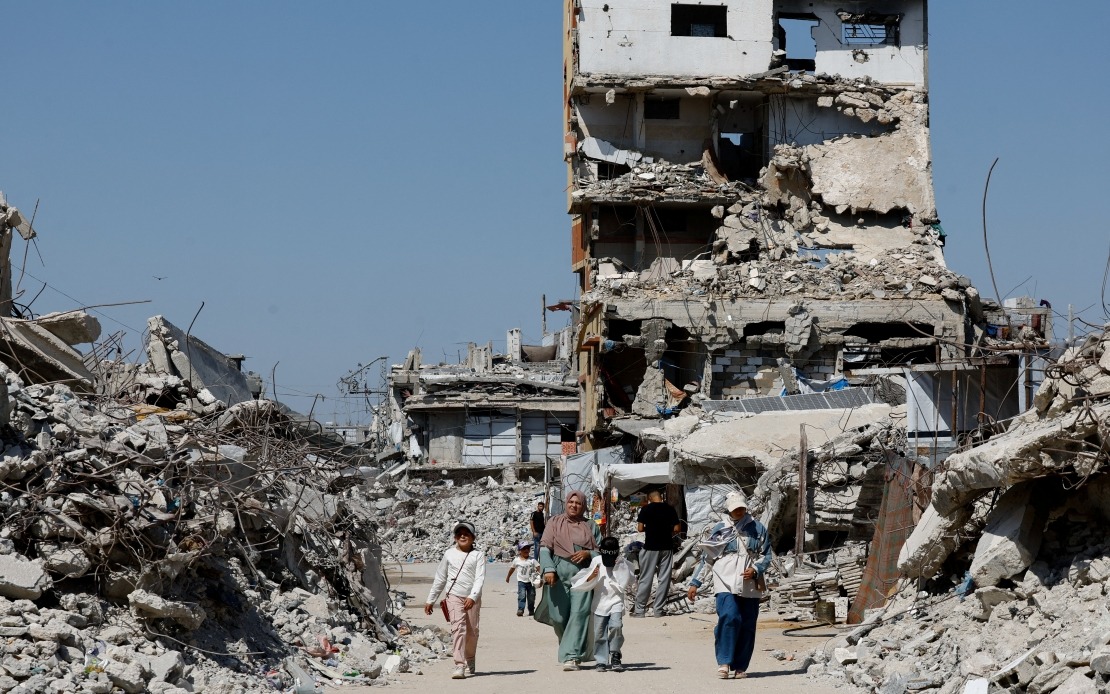
Beyond the immediate human toll, the conflict has wrought catastrophic destruction across Gaza's physical landscape. Approximately 90 per cent of the territory's civilian infrastructure has sustained damage, ranging from residential buildings to hospitals, schools, and vital water and sanitation systems. The United Nations has estimated that full reconstruction of Gaza will require approximately US$70 billion, a figure that underscores the comprehensive nature of the destruction and the immense challenges facing any future recovery effort.
For Malaysian observers and policymakers, the Gaza situation carries several significant implications. As a Muslim-majority nation and active participant in regional and international forums, Malaysia has consistently advocated for Palestinian rights and humanitarian access. The deteriorating conditions in Gaza directly impact Malaysia's foreign policy positioning and its relationships within the Organisation of Islamic Cooperation and the broader Non-Aligned Movement. The failure of ceasefire mechanisms to prevent continued bloodshed raises questions about the efficacy of international agreements and the enforcement mechanisms available to the international community.
The reconstruction challenge presents another dimension relevant to Southeast Asian engagement. Malaysian construction firms, development agencies, and humanitarian organizations may play roles in post-conflict recovery efforts. However, such participation requires stable conditions and clear pathways toward sustainable peace. The current trajectory suggests that meaningful reconstruction remains distant, leaving affected populations in a state of prolonged humanitarian emergency.
The continued carnage also reflects broader instability affecting the Middle East region, with potential ramifications for maritime commerce, regional security arrangements, and the positioning of states within international power dynamics. As a trading nation heavily dependent on global commerce and regional stability, Malaysia maintains strategic interest in resolution of Middle Eastern conflicts.
International humanitarian bodies face mounting pressure to expand operations within Gaza, yet access restrictions and security concerns continue to constrain their effectiveness. Medical personnel working within Gaza's remaining functional hospitals confront impossible circumstances, rationing supplies and making difficult triage decisions amid overwhelming demand. The Health Ministry's continued documentation of casualties serves not merely as statistical record-keeping but as testimony to circumstances that the international community has thus far failed to definitively resolve.

