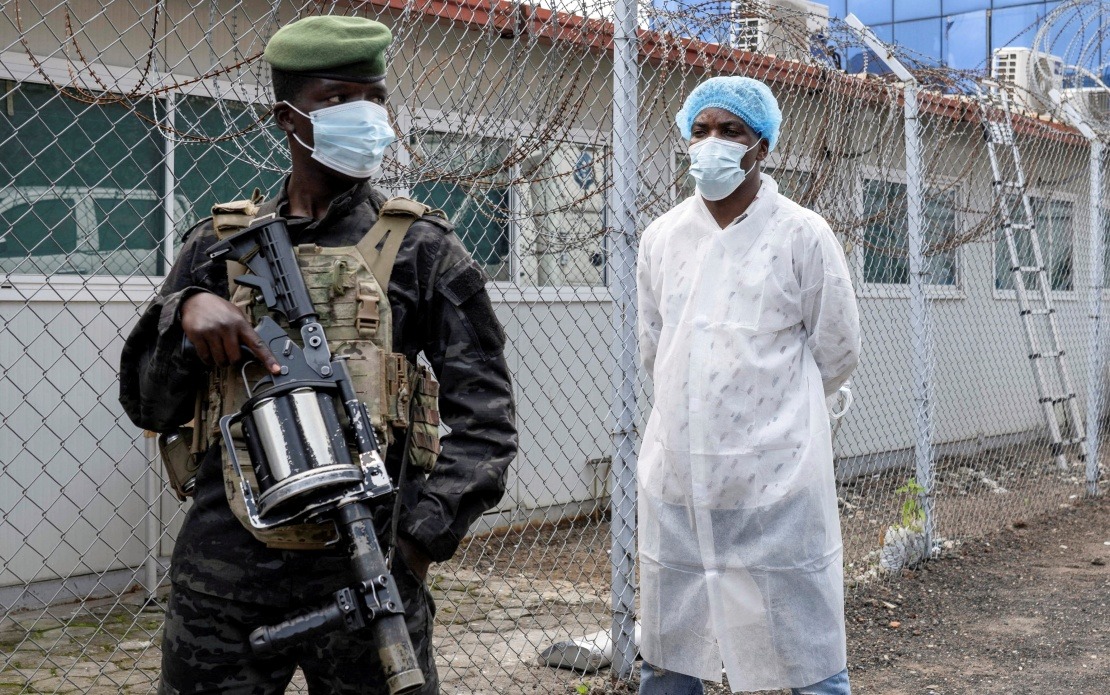
An outbreak of Ebola in the Democratic Republic of Congo has become a public health emergency of alarming proportions, with the UN's International Organisation for Migration warning that deeply rooted cultural practices around death and burial are substantially accelerating the virus's transmission. The death toll has now exceeded 800 confirmed fatalities since the outbreak was declared on May 15, marking a crisis that has grown with devastating speed and threatens broader regional stability across Central Africa.
The Democratic Republic of Congo's Health Ministry reported more than 2,100 confirmed cases of Ebola as of the latest update, with the case fatality rate hovering at 37.5 per cent. This high mortality rate reflects the severity of the virus strain in circulation and the challenges in delivering timely medical intervention to affected populations. The geographical spread has extended across five provinces—Haut-Uele, Ituri, North Kivu, South Kivu and Tshopo—indicating that the outbreak is no longer confined to a single region but has become a multi-provincial emergency demanding coordinated responses across vast territory.
The pace of transmission has accelerated dramatically, with the outbreak expanding by approximately 70 per cent over a two-week period, according to IOM Regional Director Frantz Celestin. The health system is being overwhelmed, with surveillance networks reporting an average of more than 40 new cases documented daily. This exponential growth trajectory suggests that without significant intervention, the situation could deteriorate further, straining already fragile health infrastructure in one of Africa's most challenging operating environments.
Cultural practices surrounding death represent a substantial complication in containment efforts. When Ebola victims pass away, families frequently transport their bodies across considerable distances to home communities for burial according to traditional customs. This movement of remains between provinces and across health zones creates multiple opportunities for the virus to spread to new populations. The IOM documented that 105 bodies were intercepted at border crossings and entry points into different health zones during surveillance operations, illustrating the scale of this hidden transmission pathway that had previously escaped public attention.
Community resistance to safe burial protocols has emerged as a critical obstacle to controlling the outbreak. Celestin highlighted that burial teams responsible for implementing hygiene measures encounter active opposition from residents, and in extreme cases have faced violent attacks. Last month, four Red Cross volunteers working at a cemetery in Bunia, the capital of Ituri province, were seriously injured during funeral violence when a group of young people attempted to force open a coffin, according to local reporting. These incidents underscore how distrust, grief, and cultural convictions can undermine even the most essential public health interventions.
The proportion of deaths occurring within communities rather than in controlled medical settings compounds the challenge. Celestin noted that 60 per cent of Ebola fatalities were happening in community settings, where families have greater opportunity to engage in traditional burial rituals without medical oversight. This pattern reflects difficulties in early detection and surveillance, alongside barriers to accessing treatment services, particularly in remote areas or zones experiencing insecurity. When people die outside formal health systems, containment becomes nearly impossible.
Médecins Sans Frontières has characterised this outbreak as the third-largest and fastest-growing Ebola epidemic ever recorded, having achieved that grim distinction within merely two months. The Bundibugyo virus strain responsible for the outbreak demonstrates concerning transmissibility that has surprised global health observers. For context, the 2014-2016 West African Ebola epidemic took months to reach comparable numbers, suggesting this outbreak is progressing with unusual velocity that defies conventional epidemiological models.
The World Health Organisation has been tracking the geographic expansion with mounting concern, reporting that the number of affected health zones increased from 36 to 42 over a single week. This week-to-week expansion indicates that containment strategies are currently insufficient to prevent the virus from establishing itself in new territories. Each additional health zone represents a new population at risk, new healthcare workers requiring protective equipment and training, and new logistical challenges for coordination and response.
For Southeast Asian observers, this crisis offers important lessons regarding the fragility of disease containment in regions with weak infrastructure and the ways that cultural practices can inadvertently amplify epidemiological risks. Malaysia and its neighbours have invested heavily in pandemic preparedness since COVID-19, yet the DR Congo situation demonstrates that even with international technical support, local context and community cooperation remain foundational. The outbreak highlights how responses must engage respectfully with cultural practices rather than simply imposing external standards, a principle that has broader application across public health emergencies in diverse societies throughout the region.

