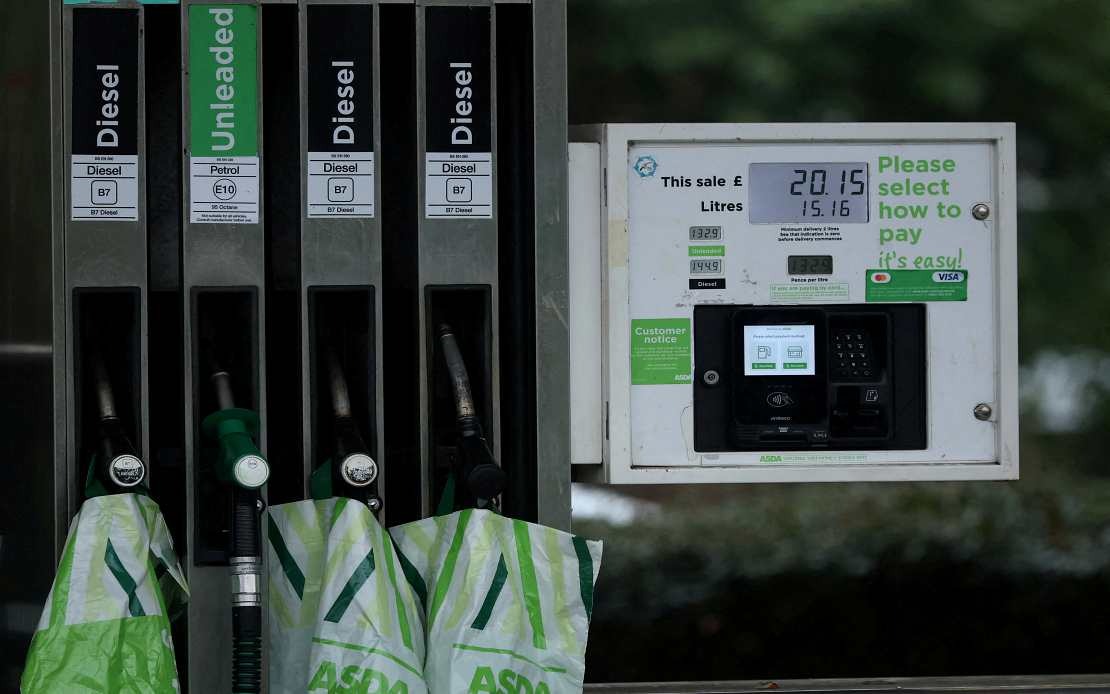
Petrol station operators across the United Kingdom are confronting a sharp spike in fuel theft that underscores the widening strain on household finances as energy prices climb. Since the Iran conflict erupted on February 28, the volume of fuel stolen from UK pumps has grown by 20 per cent over a five-month period, according to data compiled by Forecourt Eye, a company specialising in fuel theft prevention. The monetary impact is even more striking: the rising cost of fuel at the pump means the daily value of stolen petrol and diesel has surged by 48 per cent, reaching an estimated average of £194,000 across the nation's 8,359 petrol stations.
The escalating theft problem reflects two interlocking pressures. First, there is the raw increase in the number of people attempting to leave forecourts without paying, whether through straightforward drive-offs or by claiming they have no means of payment after filling their tanks. Second, the dramatic rise in fuel prices means each incident now represents a significantly larger financial loss to individual operators. Petrol prices climbed to 160 pence per litre by early August, marking a three-and-a-half year peak and representing a jump of roughly 27 pence since before the conflict. Diesel has risen even more sharply, now approximately 37 pence per litre higher than pre-war levels, settling around 179 pence. These increases have amplified the economic consequences of each theft.
Analysis of the data reveals instructive patterns in who is now resorting to fuel theft. First-time offenders account for much of the growth, with incidents rising 23 per cent and the volume of fuel stolen climbing 26 per cent. This suggests that fuel theft is no longer confined to organised criminal networks or repeat offenders, but increasingly involves ordinary drivers facing immediate financial hardship. Repeat offenders showed more modest increases of 17 and 20 per cent respectively, indicating that while habitual criminals persist, the broader shift is toward casual, necessity-driven theft by people struggling with living costs. The data comes from a representative sample of 550 forecourt installations across the country.
For readers in Malaysia and Southeast Asia, this phenomenon offers instructive parallels regarding the fragility of consumer behaviour under inflationary pressure. Malaysia has historically experienced fuel price volatility and subsidy debates, making the UK experience instructive about how rapidly public compliance can erode when essential commodities become unaffordable. The shift from organised crime to ordinary people committing theft signals a breakdown in social norms driven not by criminality but by economic desperation.
Independently operated petrol stations, which form a significant portion of UK forecourts, are bearing the brunt of these losses. Many franchise locations display the branding of major oil corporations such as BP and Shell, yet are owned and operated by smaller, independent businesses with far narrower profit margins than the multinational parent companies. This creates a dangerous perception among some drivers that theft from branded forecourts amounts to victimless crime against faceless corporations. However, operators argue this misconception directly harms small business owners. When a driver departs with £80 to £90 worth of fuel without payment, the loss falls squarely on the independent operator, not the oil company brand displayed on the pump. This dynamic has become a source of genuine concern within the independent retail sector.
The impact extends beyond financial losses. Gordon Balmer, executive director of the Petrol Retailers Association representing independent station operators, has highlighted a disturbing secondary consequence: staff at forecourts are increasingly subjected to verbal abuse and physical aggression. Workers fielding complaints about fuel prices or attempting to address theft incidents face hostility from customers, despite having no control over wholesale prices or corporate policy. The association characterises this trend as employees simply doing their jobs while absorbing pressure they cannot influence. The psychological toll on retail staff compounds the operational and financial challenges facing the sector.
In response, the industry is implementing technological countermeasures. Forecourt Eye has partnered with Facewatch, a crime prevention technology company, to provide free access to incident reporting systems for fuel station operators. The partnership allows forecourt managers to document fuel thefts, shoplifting, and other criminal incidents more systematically, supporting police investigations and creating detailed records. Customers of Forecourt Eye can optionally join Facewatch's live facial recognition network, which alerts participating businesses when individuals with records of previous offences approach their locations. Michelle Henchoz, managing director of Forecourt Eye, emphasises that as criminal activity becomes more sophisticated and organised, retailers require integrated technology platforms that protect both fuel forecourts and attached convenience stores.
The deployment of such technology reflects a shift in how the retail fuel sector approaches crime prevention. Rather than relying primarily on manual monitoring or police response, operators increasingly view technological infrastructure as essential to safeguarding their businesses. Facial recognition networks represent a more assertive stance, though they raise privacy considerations familiar to Malaysian and Southeast Asian policymakers grappling with surveillance technology implementation.
The broader context reveals how geopolitical events transmute into hyperlocal economic pain. The Iran oil crisis, remote from the UK in geographical and political terms, triggers price increases that cascade through the economy and ultimately push ordinary citizens toward illegal behaviour. Energy markets operate as globally interconnected systems where conflicts thousands of miles away directly affect pump prices in provincial English towns. For small business owners on tight margins, these shocks are existential. The rise in fuel theft from 20 per cent to a daily loss of £194,000 represents not merely a crime statistics shift, but evidence of ordinary people rationing their behaviour and compliance under pressure.
Looking forward, the sustainability of current trends remains uncertain. If fuel prices stabilise or decline, theft incidents may moderate. Conversely, if cost-of-living pressures persist while wages stagnate, the normalisation of fuel theft could entrench as a feature of forecourt operations. The experience also highlights the vulnerability of small retailers to macroeconomic shocks they cannot control, and the cascading human consequences when essential commodity prices spike sharply. For policymakers across Southeast Asia evaluating fuel subsidy and price regulation strategies, the UK experience offers a cautionary illustration of social breakdown when affordability thresholds are crossed.

