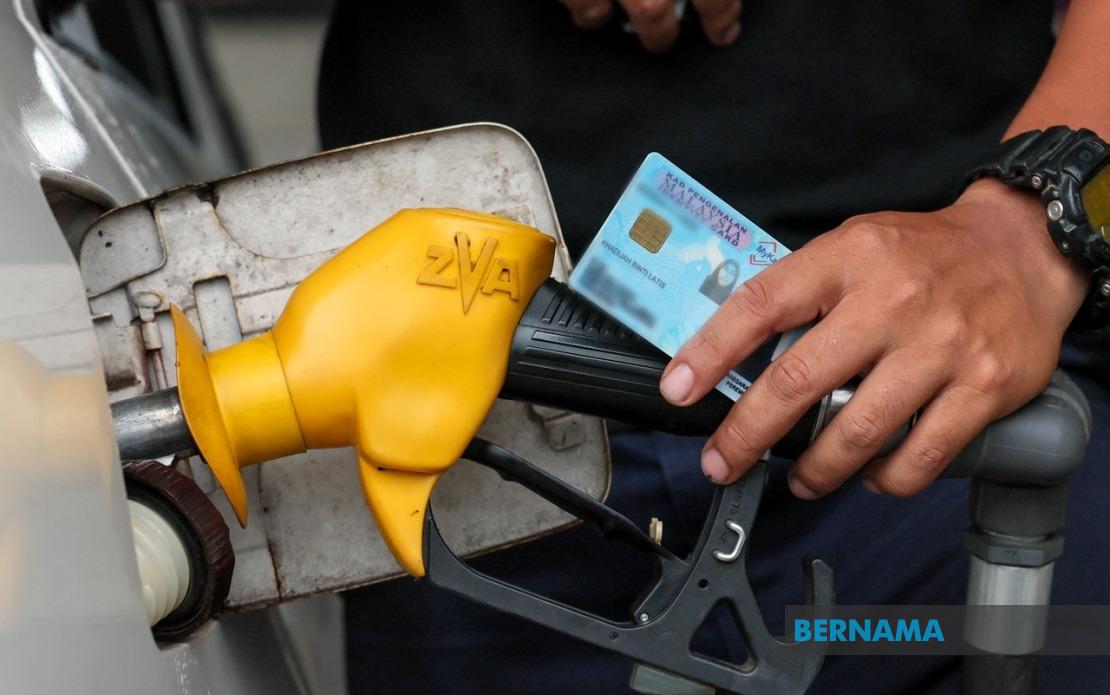
The Malaysian government has moved to ease financial pressures on households and small businesses by expanding fuel assistance quotas effective immediately. Prime Minister Datuk Seri Anwar Ibrahim announced the changes during the 2026 National Day 'Amanat Perdana' address at the Putrajaya International Convention Centre, restoring higher allowances under the BUDI MADANI subsidy programme that had previously been curtailed. The decision to increase RON95 petrol quotas from 200 litres to 300 litres monthly, whilst simultaneously raising diesel allowances from 300 litres to 400 litres, reflects the administration's recalibration of targeted fuel support in response to continuing concerns about living costs among lower and middle-income Malaysians.
The BUDI MADANI initiative represents the government's approach to delivering subsidies more efficiently by tailoring fuel assistance to specific population segments rather than applying blanket price caps. This targeted mechanism allows policymakers to balance fiscal sustainability with the need to protect vulnerable consumers from volatile energy markets. The restoration of higher quotas signals that the administration believes conditions warrant renewed support, suggesting recognition that existing allocations had become insufficient for typical commuting and business patterns. For a nation where private vehicle dependency remains high across urban and rural areas alike, such adjustments carry measurable implications for household budgets and operational costs across the economy.
Among beneficiaries, the announcement has generated considerable goodwill. Furzani Ahmad, a 24-year-old private sector worker, highlights how the expanded quota eases monthly finances by accommodating his 30-kilometre daily commute. His calculation that 300 litres suffices for a month—and sometimes yields surplus—demonstrates that the new threshold aligns reasonably with typical usage patterns for urban commuters. This alignment between quota size and actual requirements reduces the planning uncertainty that existed when allocations fell short, enabling workers to budget more confidently. Darwisy Khairudin, similarly aged, values the restored flexibility, noting that his 20 to 25-kilometre daily journey, combined with occasional assignments requiring additional travel, creates variability that the higher quota accommodates without forcing difficult consumption decisions.
Beyond salaried workers, small business operators have seized upon the increased allowances as meaningful relief for operational pressures. Abdul Manan, a 63-year-old fruit trader relying on diesel vehicles to transport stock from distant suppliers, characterises the diesel increase as stabilising his daily operating costs. His observation that greater fuel allowances reduce logistics expenses—thereby permitting him to maintain competitive pricing rather than passing costs to customers—illustrates how subsidy decisions ripple through supply chains and affect consumer-facing prices. For traders operating on thin margins in perishable goods, fuel availability and cost predictability determine viability; the enhanced quota thus functions as indirect support for retail affordability of essential produce.
The broader economic context underscores the significance of this policy adjustment. Malaysia, like other middle-income nations, faces persistent inflation in energy and transport sectors that disproportionately affects lower-income households. Workers commuting substantial distances and small transporters inherently depend on fuel availability, making subsidy policy a lever affecting both poverty and business competitiveness. By restoring quotas rather than implementing price controls, the government avoids distortions that historically plagued fuel markets—namely, artificial shortages and cross-border smuggling. Targeted quotas tie support to registered beneficiaries, creating a more transparent and auditable distribution mechanism than price caps that functioned anonymously.
The announcement also reflects Jakarta's political economy of managing expectations around subsidies. Fuel support has long been treated as a litmus test of government responsiveness to cost-of-living grievances. By announcing increases—rather than further reductions—during the National Day address, the Prime Minister signals commitment to alleviating household burdens at a symbolically important moment. This timing demonstrates awareness that public sentiment on subsidy policy remains acute, particularly among constituencies dependent on road transport for livelihoods. The decision to increase both petrol and diesel, rather than adjusting only one fuel type, suggests a deliberate effort to demonstrate balance across different user constituencies.
However, the policy raises questions about fiscal sustainability and inflation dynamics. Fuel subsidies represent significant budgetary commitments, and expanding quotas increases government outlay at a time when commodity prices globally remain volatile. Malaysia's fiscal position, whilst improving, does not permit indefinite expansion of subsidy programmes without trade-offs in other spending areas. Policymakers must therefore monitor whether larger quotas drive demand sufficiently to offset savings, or whether the relief genuinely translates into lower household expenses. Additionally, the impact on inflation merits observation: by reducing effective fuel costs, subsidies can suppress prices for transport-dependent goods, but they may also create long-term distortions if markets expect permanent support rather than adjusting to true scarcity values.
Regional comparisons offer useful perspective. Throughout Southeast Asia, fuel subsidies remain politically contentious, with governments balancing fiscal prudence against electoral pressure to protect incomes. Indonesia and Thailand have pursued targeted approaches similar to BUDI MADANI, recognizing that universal price caps prove fiscally unsustainable but that abandoning all support generates severe political backlash. Malaysia's recalibration sits within this regional trajectory toward means-tested assistance, reflecting a pragmatic middle ground that acknowledges both budgetary limits and genuine need among certain populations. The success of such policies depends ultimately on effective targeting and, equally, on public trust that support reaches intended beneficiaries without leakage or corruption.
Looking forward, the sustainability of expanded quotas hinges on global energy trends and Malaysia's own revenue position. Should crude oil prices rise materially, the cost of maintaining higher diesel and petrol allowances could strain public finances, potentially forcing difficult choices between maintaining quota levels or redirecting funds from other priorities. Conversely, if prices decline or remain stable, the enhanced quotas may represent an affordable adjustment that demonstrably improves living standards for workers and traders. The announcement thus represents not merely an administrative tweak but a calculated wager on fiscal conditions and political priorities in the coming years. For ordinary Malaysians already contending with elevated living costs, the restoration of fuller fuel quotas offers tangible monthly relief—but it also signals that policymakers recognise the fragility of household finances in the current economic environment.

