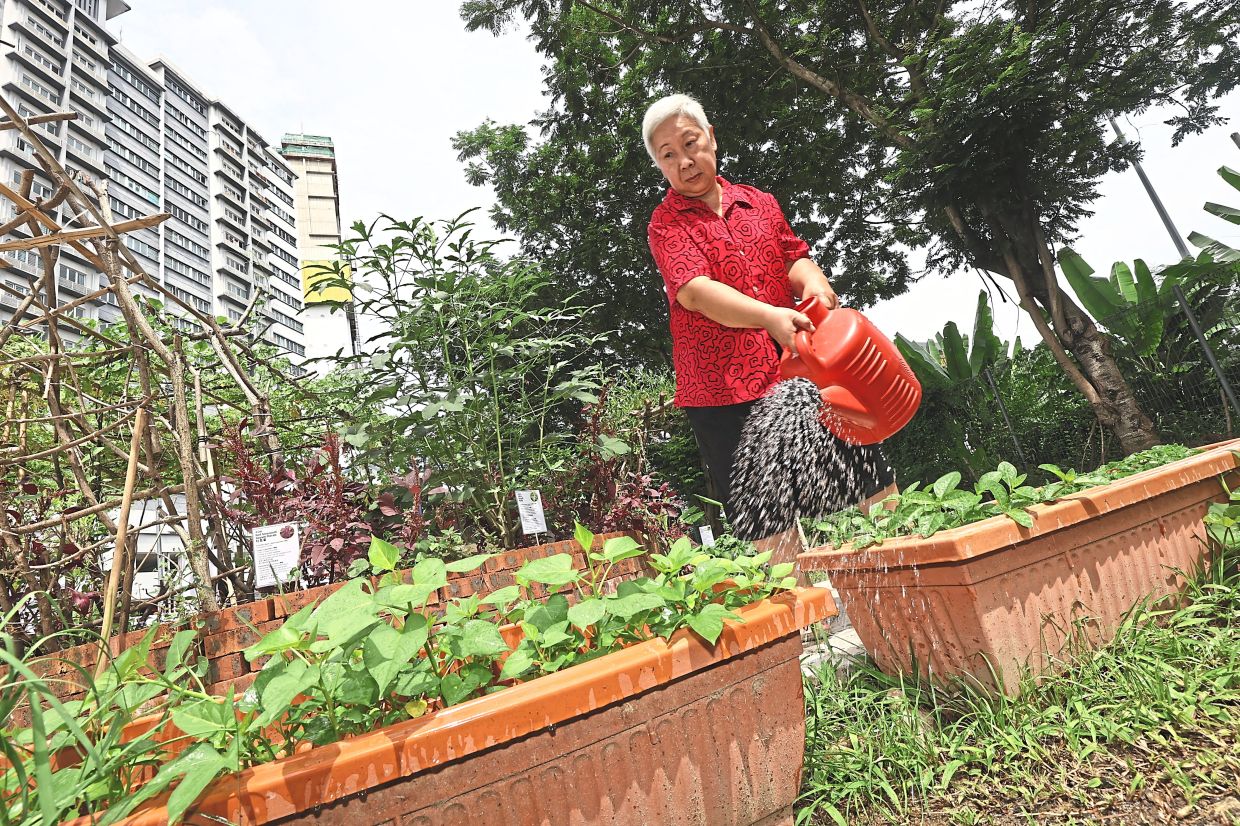
What was once an overgrown wasteland behind 1Razak Mansion in Kuala Lumpur has blossomed into a vibrant community garden, marking a significant shift in how Malaysia's urban planners and social enterprises are addressing the needs of ageing populations. The transformation, completed over the past six months through collaboration between social enterprise PWD Smart FarmAbility, the building's management corporation, and residents themselves, demonstrates the potential for creative urban regeneration projects to address multiple social challenges simultaneously. The official launch of the 1Razak Mansion Food Forest represents more than simply reclaiming neglected space; it reflects a growing recognition that community-driven initiatives can tackle housing estate challenges in ways that conventional development often overlooks.
The initiative carries particular resonance given the demographic composition of the residential complex. Minister in the Prime Minister's Department (Federal Territories) Hannah Yeoh highlighted during the launch that approximately 80% of residents at 1Razak Mansion are senior citizens, a demographic reality that demands thoughtfully designed programmes addressing both their physical and psychological wellbeing. While the building already offers structured exercise programmes such as tai chi classes, Yeoh underscored that mental health support warrants equal emphasis, particularly for residents navigating the psychological challenges of ageing, isolation, and reduced mobility. The food forest emerges as a response to this identified gap, offering something that traditional recreational facilities may not provide: purposeful daily activity rooted in tangible, productive engagement with nature.
For Alice Fernandez, a 64-year-old resident who has become a regular visitor to the newly transformed space, the garden's value extends across multiple dimensions of personal and community wellbeing. She articulates how the project addresses practical household economics for residents living on fixed retirement incomes, allowing them to harvest fresh vegetables, herbs, and fruits directly from communal beds rather than purchasing them at market prices. Beyond the immediate food security benefits, Fernandez emphasises the psychological reprieve the space provides—a verdant counterpoint to the confined domesticity that might otherwise characterise the lives of elderly residents with limited mobility or energy for activities beyond their residential units. The garden's transformation from an unsightly, underutilised corner near the garbage disposal facilities into an aesthetically pleasing destination has simultaneously altered foot traffic patterns, encouraging residents to venture outdoors and engage in gentle ambient movement that contrasts with the more structured, formal nature of scheduled exercise classes.
Thieeben Sivabalasingam, a 38-year-old resident who worked behind the scenes as a logistics coordinator during the construction phase, offers perspective on the project's physical realisation. His account of witnessing materials delivered piece by piece—fences, soil amendments, and infrastructure—and returning to find each component thoughtfully integrated into the evolving landscape underscores the meticulous planning and community labour that underpinned the initiative. Standing in the completed garden alongside his three-year-old son, Sivabalasingam articulates a generational benefit that extends beyond immediate practical outcomes: the project furnishes elderly residents with purpose and anticipation, structures to their days that provide psychological scaffolding. The notion that residents require not merely sustenance but meaningful, forward-looking activities addresses an often-overlooked dimension of aged care in contemporary Malaysia, where retirement frequently precipitates a loss of social structure and purposefulness that can profoundly impact mental health trajectories.
The intergenerational appeal of the initiative became evident during the official launch, when Jenny Wong, 70, and her husband KC Wong, 76, travelled from the neighbouring Razak City Residences to witness the completed project. Their attendance was not merely ceremonial; both expressed enthusiasm about cultivating similar initiatives within their own residential community, recognising the garden as an exemplar of community-directed activity that simultaneously supports environmental stewardship. KC Wong's observation that retirement has left both of them with considerable discretionary time they wish to channel into productive community engagement reflects a broader phenomenon among Malaysia's growing population of active older adults who possess capacity and motivation to contribute meaningfully to their residential environments. The couple's advocacy for similar projects in adjacent communities suggests that successful models may catalyse broader replication across urban housing estates facing demographic transitions toward older populations.
Dr Billy Tang Chee Seng, the 60-year-old founder and social entrepreneur behind PWD Smart FarmAbility, positions the food forest as foundational infrastructure for a substantially more ambitious vision of community education and skill development. His articulation of future plans reveals an understanding that sustainable social innovation must build capacity and knowledge alongside immediate material benefits. The proposed construction of a kitchen hub within the garden's grounds would enable residents to progress from cultivation through harvest to preparation and consumption, creating a complete food production and preparation cycle that educates participants about nutrition, food safety, and cooking methodologies using ingredients they have themselves grown. Such educational scaffolding proves particularly valuable for senior populations potentially disconnected from contemporary agricultural practices or younger residents—grandchildren and other family members visiting residents—who have grown increasingly distant from understanding food provenance and production.
The microscope programme outlined by Tang targets younger community members, embedding horticultural science within accessible equipment and structured learning environments. This pedagogical approach recognises that food forests serve multiple constituencies simultaneously: elderly residents seeking daily activity and affordable nutritious produce, middle-aged residents interested in environmental engagement and community development, and younger family members whose understanding of ecological systems and sustainable food production may be limited by predominantly urban childhoods. By creating layered educational opportunities across age cohorts, the initiative maximises community penetration and social impact, ensuring that benefits accrue not simply to those immediately tending plants but to everyone circulating through the space. This multi-generational engagement model proves particularly valuable in Malaysian residential contexts where extended family members frequently visit older relatives.
The food forest project must be contextualised within broader Malaysian conversations regarding aged care infrastructure, community resilience, and sustainable urban development. Malaysia's rapidly ageing population—projected to reach 7 million individuals aged 60 and above by 2030 according to government demographers—will increasingly concentrate in urban housing complexes where family structures and traditional multigenerational households are becoming less prevalent. Initiatives like the 1Razak Mansion Food Forest demonstrate that physical environments and structured community programmes can partially compensate for social structural changes, providing elderly residents with purposeful engagement, peer interaction, and genuine economic benefit. Rather than positioning aged care as exclusively medical or welfare-dependent, the project reconceives older residents as active participants in productive community activities that enhance their own wellbeing while simultaneously contributing to food security and environmental management.
The social enterprise model adopted through PWD Smart FarmAbility similarly reflects shifting approaches to community development in Malaysia, where statutory welfare provision increasingly shares responsibility with non-governmental entities, private sector collaborators, and resident participation. The project's success depended fundamentally on management corporation support and resident engagement; top-down planning alone would have failed to generate the community buy-in and ongoing stewardship essential for sustaining the garden long-term. This collaborative architecture mirrors emerging best practices in international aged care and community development contexts, where residents transition from passive recipients of services to active stakeholders in designing and maintaining their residential environments. For Malaysian policymakers and urban planners overseeing increasingly complex housing estates with aging populations, the 1Razak Mansion model offers a replicable template demonstrating that abandoned spaces can become vehicles for community strengthening when creative partnerships align resident needs with organizational capacity and environmental opportunity.
Looking forward, the food forest's trajectory will likely influence approaches to community development across similar residential complexes throughout the Klang Valley and beyond. The project's relatively modest resource requirements—primarily land, basic agricultural materials, and coordinating labour—make replication feasible for housing estates facing demographic challenges and underutilised common spaces. However, sustained success will depend on consistent engagement from both residents and supporting organisations, suggesting that scaling similar initiatives will require institutional capacity-building and potentially government policy frameworks that incentivise and resource such community-directed programming. The 1Razak Mansion example demonstrates that addressing Malaysia's aged care challenge need not depend exclusively on expensive institutional facilities or medical interventions; thoughtfully designed environmental and social interventions can substantially improve quality of life, reduce social isolation, and build community cohesion simultaneously, suggesting a model increasingly relevant as Malaysia's demographic structure continues its inexorable shift toward an older, more urbanised population.

