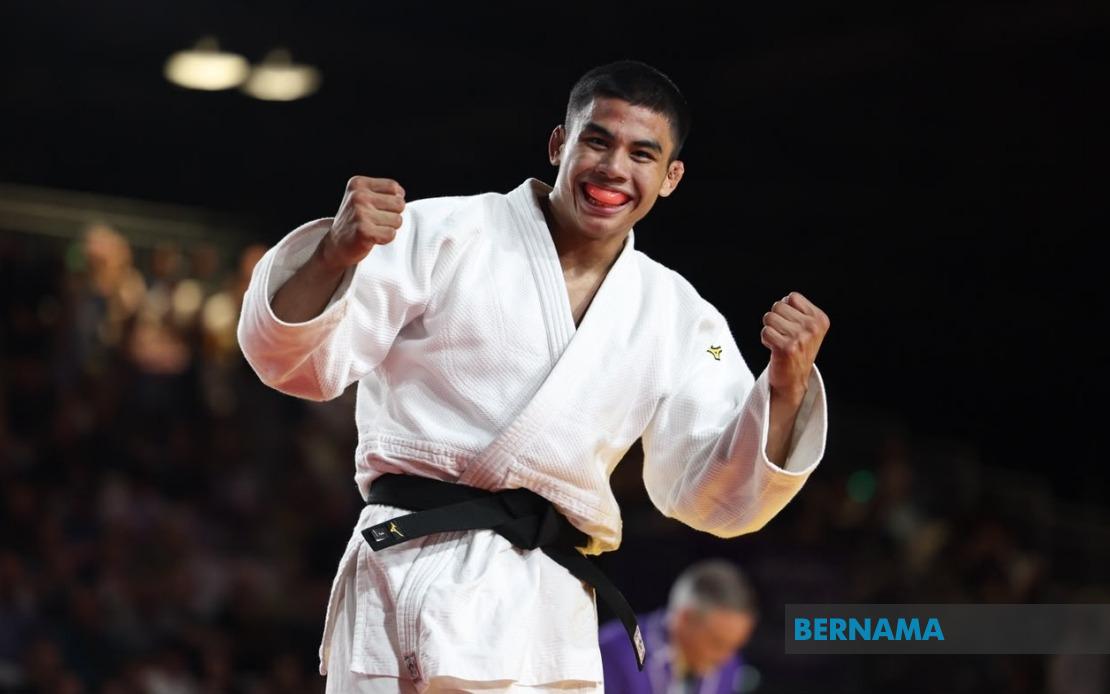
Amir Daniel Abdul Majeed etched his name into Malaysian sporting history at Glasgow 2026 when he claimed the men's under-81 kilogramme gold medal in judo, defeating South Africa's Timothy Meuwsen in a tightly contested final at the Scottish Event Campus. The 21-year-old from Penang has become the country's first judoka to secure Commonwealth Games gold, delivering Malaysia's eighth medal of the Games. Coming after a bronze medal finish in the under-73kg category at Birmingham 2022, this victory represents a significant progression in his athletic career and a watershed moment for Malaysian judo on the Commonwealth stage.
The roots of Amir Daniel's extraordinary resolve, however, trace back much further than his recent triumph. His mother, Yeoh Suatkhim, recalls a formative moment when her young son was four years old and possessed a persistent thumb-sucking habit. Rather than resorting to conventional interventions, she employed a simple but effective motivation: she promised to purchase a storybook he desperately wanted on the condition that he stopped the behaviour. The strategy worked with remarkable immediacy. Within a single day, Amir Daniel abandoned the habit entirely, driven solely by his desire for that storybook. Such incidents, while seemingly minor, revealed a fundamental characteristic that would define his later achievements—an unwavering commitment to accomplishing whatever he set his mind to achieve.
Yeoh has observed that this quality of determination, established in childhood, matured into an integral component of her son's personality throughout his development. Unlike many children who might require extended coaxing or multiple incentives, Amir Daniel demonstrated an almost singular focus when pursuing his goals. This psychological trait would prove invaluable when channelled into structured athletic training, where discipline and mental fortitude separate merely competent athletes from champions. His mother recognised early that such intrinsic motivation was rare and required proper nurturing to flourish.
Amir Daniel's introduction to judo occurred at age five, when he came under the tutelage of national coach Md Nashriq Md Nassir, who continues to guide his development to the present day. Beyond the technical instruction on the mat, Md Nashriq has assumed an expanded role within the family structure, becoming a trusted authority figure whose influence extends to academic performance and personal discipline. Yeoh describes a deliberate system whereby major examinations trigger consultations between herself and the coach, culminating in formal agreements that Amir Daniel commits to honouring. This collaborative approach to shaping the athlete's holistic development underscores a philosophy that sporting excellence must coexist with educational achievement rather than replacing it.
The strength of Amir Daniel's commitment to these agreements with his coach reveals the psychological bond that has developed across their working relationship. Once he pledges to Md Nashriq, his mother emphasises, he will not break that promise. This reliability reflects both the coach's ability to inspire genuine respect and the athlete's own integrity in honouring obligations. For Malaysian coaches working with promising young talent, this exemplifies how structured mentorship, when built on mutual trust and clear expectations, can transcend conventional training dynamics.
Yeoh's approach to parenting and child development predates Amir Daniel's arrival. She had previously employed similar strategies with her eldest child, Nur Yasmeen, exposing both children to diverse sporting and educational opportunities from an early age. This philosophy rests on the conviction that structured engagement in meaningful activities—whether athletic, academic, or creative—furnishes young people with valuable experiences whilst maintaining their focus. Rather than allowing children to drift through their formative years without direction, deliberate exposure to varied pursuits cultivates resilience, adaptability, and often reveals genuine passions that might otherwise remain dormant.
Amir Daniel's progression from bronze at Birmingham 2022 to gold at Glasgow 2026 demonstrates the tangible benefits of sustained, intelligently designed athletic development. The step up in achievement over a four-year period reflects not merely improved technique but enhanced mental conditioning and strategic understanding of competition. His victory over Meuwsen signals that Malaysian judo has developed an athlete capable of performing under the highest pressure on an international stage, suggesting the sport may be positioned for renewed prominence within the country's sporting landscape.
For Malaysian readers, particularly parents and young athletes, Amir Daniel's journey illustrates several interconnected truths about achievement. First, exceptional performance emerges from foundations established in childhood through consistent reinforcement of discipline and commitment. Second, individual drive must align with expert guidance—Md Nashriq's coaching has been as essential as Amir Daniel's determination. Third, athletic ambition should never eclipse educational development; the two must proceed in tandem. Finally, the example of a Southeast Asian athlete succeeding at the Commonwealth level provides inspiration for the region's emerging judo competitors.
Yeoh has articulated ambitious aspirations for her son's future, viewing the Glasgow triumph not as a final destination but as a springboard toward even loftier objectives. Chief among these is competition at the Olympic Games, the pinnacle of amateur athletics. She envisages a trajectory where Olympic participation becomes achievable through the same methodology that produced Commonwealth gold: disciplined training, academic commitment, and support for fellow athletes within Malaysia's judo community. This vision reflects a mature understanding that individual success gains meaning when it contributes to broader institutional development within one's sport.
The implications of Amir Daniel's achievement extend beyond personal accolade or national medal count. Malaysia's judo federation can reference this victory when seeking increased funding and resources, demonstrating that investment in systematic athlete development produces internationally competitive results. Young judokas throughout the country now possess a contemporary Malaysian role model competing at elite levels, potentially inspiring the next generation to pursue the sport seriously. Additionally, the visible integration of coaching excellence, family support, and personal integrity in Amir Daniel's story offers a template applicable across Malaysian sports, suggesting that success requires alignment across multiple domains rather than isolated technical excellence.
As Amir Daniel contemplates his next chapters, whether in Olympic preparation or other endeavours, the values instilled through his storybook motivation, his coach's mentorship, and his family's belief in balanced development will likely continue guiding his decisions. For a Malaysian sporting public often lamenting inconsistent international performance, his Glasgow 2026 gold medal represents not merely a fleeting celebration but evidence that systematic, holistic athlete development remains achievable within the region's sporting infrastructure.

