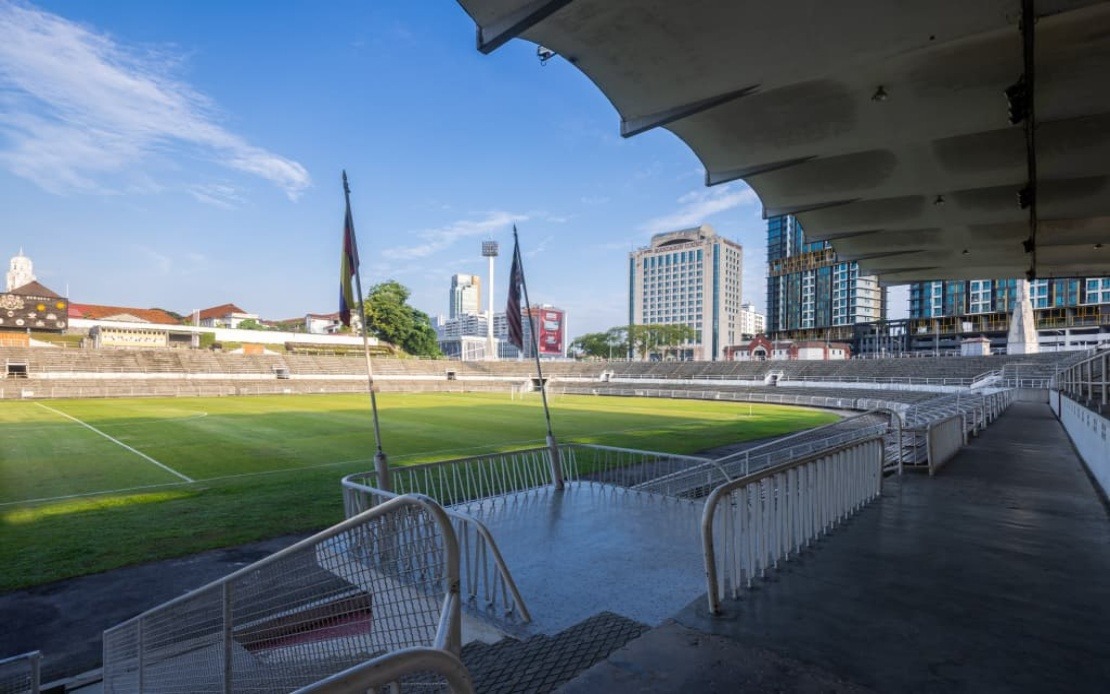
Nearly seven decades have elapsed since Tunku Abdul Rahman Putra Al-Haj delivered the nation's founding cry of "Merdeka!" seven times at Stadium Merdeka on August 31, 1957—a moment that signalled both the termination of British colonial dominion and the commencement of Malaysia's journey as an independent sovereign state. The resonance of that declaration continues to reverberate through contemporary Malaysia, yet the physical spaces chosen to commemorate this pivotal anniversary have undergone significant transformation, moving beyond the iconic stadium to embrace newer symbolic locations that embody the nation's ongoing development trajectory.
Today, Dataran Putrajaya has emerged as the primary location for commemorating National Day at the national level, representing a geographical and symbolic shift from the stadium where it all began. This transition extends beyond mere logistical convenience; it encapsulates Malaysia's evolution from a newly liberated nation seeking to establish its foundations to a developing country pursuing administrative modernisation and urban sophistication. The administrative capital, established in 1995 on land formerly designated as Prang Besar, has progressively assumed greater prominence in hosting national celebrations, with Putrajaya now designated as the venue for the next three consecutive years through 2027.
The changing landscape of National Day venues tells a compelling story of Malaysia's rapid advancement and institutional development. Prior to Putrajaya's inaugural hosting in 2003 under the "Keranamu Malaysia" theme, celebrations had primarily remained anchored to Stadium Merdeka or occurred at Dataran Merdeka in central Kuala Lumpur. That first Putrajaya celebration marked a watershed moment, introducing an alternative narrative about how the nation could honour its past whilst simultaneously showcasing its future ambitions. Over the two decades since, Putrajaya has hosted the national-level celebration on nine occasions—2003, 2005, 2018, 2019, 2020, 2021, 2023, 2024, and 2025—making it nearly as significant a venue as Stadium Merdeka in contemporary commemorations.
However, this venue migration raises profound questions about how contemporary Malaysians, particularly those born decades after independence, understand and internalise the nation's independence struggle. Does celebrating in a futuristic administrative centre diminish the visceral historical connection that Stadium Merdeka provides? Scholars and academic experts have grappled with this tension, recognising that the transition need not represent a loss of historical consciousness. According to Prof Dr Sarjit Singh Gill, Chairman of the National Unity and Progressive Society Cluster at the Malaysian Professors Council and Professor of Anthropology and Sociology at Universiti Putra Malaysia, the dual significance of these venues should be understood as complementary rather than contradictory.
Prof Sarjit emphasises that Stadium Merdeka generates profound emotional resonance, particularly among older Malaysians aged seventy, eighty, and above, who retain living memories or inherited narratives of the independence period. The stadium embodies historical continuity, a tangible connection to the exact moment when the nation was born. Conversely, Putrajaya represents a contemporary vision—a purpose-built "smart city in a garden" reflecting Malaysia's aspirations toward modern governance and technological integration. Rather than viewing these locations as competing symbols, he advocates for celebrating at both venues as a pedagogical strategy, allowing successive generations to grasp both the historical foundations of national identity and the practical manifestations of Malaysia's modernisation journey.
To preserve patriotic sentiment among younger, digitally-native Malaysians, Prof Sarjit identifies two indispensable elements that must feature prominently in every National Day observance. First, celebrations must explicitly acknowledge and honour the sacrifices and diplomatic achievements of past leaders who secured independence through negotiation and consensus rather than armed conflict—a distinctive pathway that shapes Malaysia's political culture. Second, consistent emphasis must be placed on Malaysia's racial and religious pluralism, celebrating unity-in-diversity as a foundational principle. Prof Sarjit, reflecting on his own participation in the 1990 "Berjaya" (Success) themed parade, underscores that sustained youth engagement remains crucial for cultivating genuine, enduring patriotic consciousness.
Beyond symbolic considerations, practical factors substantially influence Putrajaya's recurring selection for national celebrations. The Event Management and Innovation Unit within the Ministry of Communications' Management Services Division highlights that Putrajaya's accessibility infrastructure significantly advantages it as a venue. The Federal administrative capital benefits from direct connections to the Mass Rapid Transit network, water taxi services, and dedicated shuttle bus operations—transportation alternatives that facilitate the movement of massive crowds without requiring universal reliance on private vehicles. This logistical sophistication becomes increasingly essential as national celebrations attract hundreds of thousands of participants, making efficient mobility management a critical operational requirement.
The thematic coherence connecting past to present further justifies this venue evolution. The 2026 National Day and Malaysia Day celebrations carry the overarching theme "Malaysia MADANI: Kesejahteraan Dinikmati" (Malaysia MADANI: Well-being Enjoyed), deliberately illustrating the continuity between Malaysia's historical struggle for independence and contemporary efforts to translate that hard-won sovereignty into tangible improvements in citizens' lives through sustained national development and enhanced prosperity. This thematic progression reflects sophisticated thinking about how to communicate national narratives across generational divides.
Recognising that younger Malaysians may relate to celebrations through creative and technological innovation rather than historical documentation alone, organisers have deliberately incorporated contemporary performance elements designed for broad appeal. The 2025 celebration programme features performances such as "Gema Inovasi MADANI" (Echoes of MADANI Innovation), blending traditional and contemporary musical forms through "Rentak MADANI, Paluan Tradisi" (MADANI Rhythms, Traditional Beats), alongside large-scale visual spectacles involving 1,500 schoolchildren in coordinated "Human Graphic" formations. These productions acknowledge that patriotism for digital-age audiences often requires sensory immersion and technological sophistication rather than mere rhetorical recitation.
Personal testimony from younger Malaysians reveals how these modernised celebrations continue generating emotional connection and patriotic consciousness. Muhammad Nasrul Nasir, a thirty-year-old Administrative Assistant in the Finance division of the Federal Territories Department, describes his attendance at last year's Putrajaya celebration as profoundly memorable, particularly when witnessing skydiving performances. Significantly, his engagement has evolved beyond spectatorship; this year he has transitioned to active participation by marching in the parade as a representative of his employing agency. His account demonstrates that Putrajaya celebrations can indeed catalyse meaningful patriotic experiences and inspire deeper connection to national narratives, particularly when combined with family attendance and communal atmosphere.
The evolution from Stadium Merdeka to Putrajaya ultimately reflects Malaysia's maturation as a nation. Stadium Merdeka remains irreplaceable as the genesis point, the location indelibly imprinted with the drama of independence's declaration. Yet Putrajaya embodies something equally important: evidence that independence was merely the beginning, that the nation has progressed sufficiently to construct entirely new centres of administrative power and cultural significance. For Malaysian readers and Southeast Asian observers, this transition exemplifies how nations balance reverence for historical foundations with commitment to contemporary development—a challenge confronting many countries in the region navigating post-colonial trajectories.

