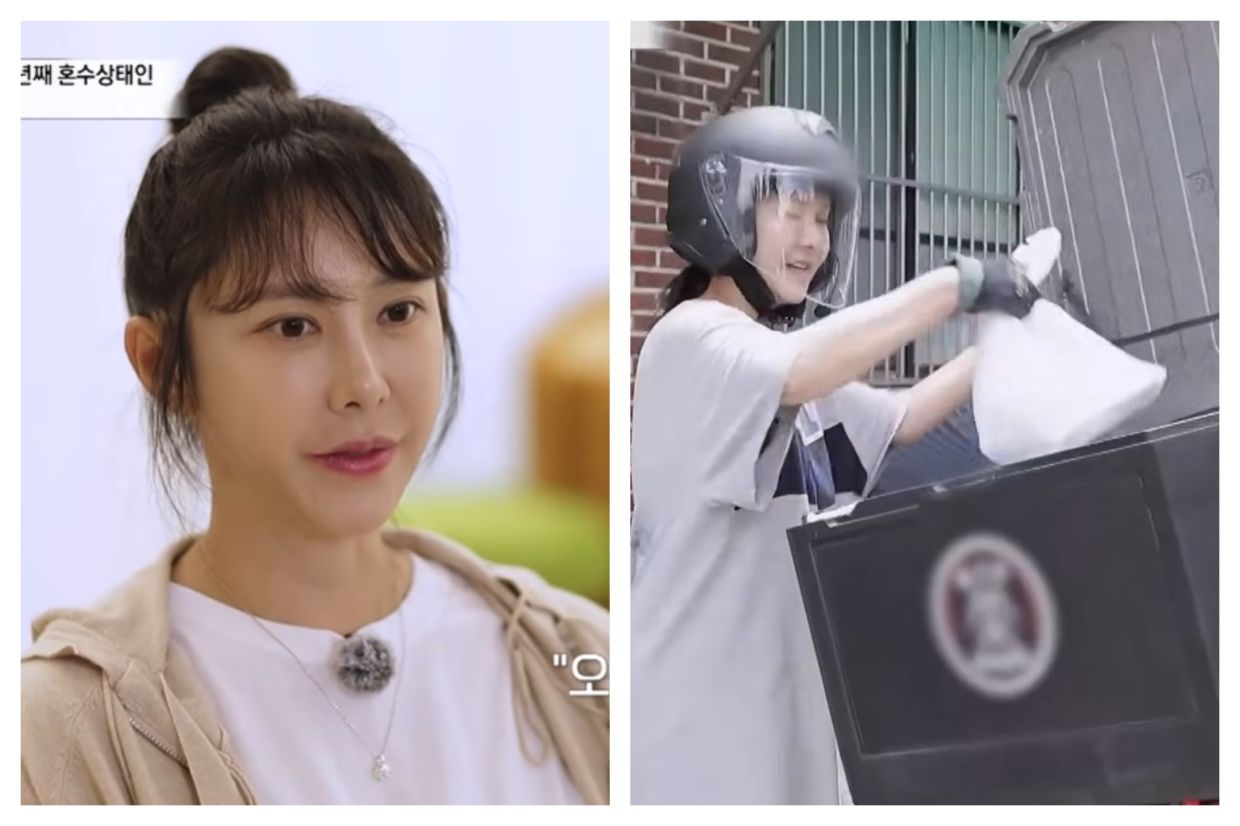
South Korean actress Kim Se-in has constructed an entirely different life far removed from the glare of television cameras and film sets, now supporting herself through manual labour and gig work while maintaining an unconventional household of rescue animals. The 43-year-old, who stepped away from acting 13 years ago, currently divides her time between part-time warehouse employment and food delivery services, supplemented by occasional work in commercials, television dramas and films that provide irregular income streams. Beyond her working hours, she has embraced the role of caretaker for 15 rescued creatures—abandoned dogs, rabbits and chickens—reflecting a personal philosophy centred on compassion for vulnerable beings.
Kim's trajectory illustrates the unpredictable nature of celebrity careers in South Korea and the financial pressures that often drive entertainment industry decisions. Growing up in material comfort, her family's circumstances shifted dramatically during the 1997 Asian financial crisis, which devastated regional economies and triggered widespread hardship across Asia. Her household descended into cramped, impoverished living conditions without basic amenities such as bathroom facilities, transforming her childhood aspirations and forcing premature maturation. This experience motivated her to pursue entertainment as a potential escape route, leading to her acting debut in a 2004 film before gaining wider recognition through a 2011 sitcom that established her as a recognisable face in Korean television.
The entertainment industry, however, proved far more corrupting than liberating. Kim disclosed that her former agency subjected her to systematic exploitation and harassment, with management deliberately luring her into nightclub environments and subjecting her to ongoing abuse. The institutional pressure extended to her artistic choices, pushing her toward roles requiring nudity not for creative expression but as a mechanism for generating income. She acknowledged accepting these exploitative conditions out of desperation to accumulate the tens of millions of won necessary to alleviate her family's financial devastation. Her candid revelations about industry coercion resonate with broader conversations about workplace abuse within South Korea's entertainment sector, where power imbalances between agencies and performers have historically enabled predatory behaviour.
Family tragedy accelerated Kim's departure from the industry and redirected her energies toward caregiving responsibilities. Her father died of a heart attack two years prior to her public disclosures, removing a family member but intensifying her sense of obligation toward remaining relatives. Her mother remains institutionalised in a prolonged comatose state after suffering a subarachnoid hemorrhage—a severe cerebral condition involving bleeding in the cranial space between the brain and surrounding tissues—a situation lasting 15 years and requiring continuous medical support and personal attention. These circumstances transformed Kim from a self-supporting entertainer into a multi-role caregiver balancing employment with family obligations that demand emotional and financial resources.
Her transition from entertainment to warehouse and delivery work represents not failure but pragmatic recalibration. These occupations provide steady, albeit modest, income without the psychological toll and exploitation endemic to Korean showbusiness. Warehouse positions and food delivery roles offer flexibility crucial for someone managing extensive caregiving responsibilities and animal welfare commitments. Unlike acting, which demands availability for unpredictable filming schedules and industry networking obligations, gig work permits Kim to structure her hours around familial needs and personal values. The apparent downward mobility masks a reclamation of agency and autonomy that celebrity status never provided.
Kim's story intersects with broader Southeast Asian questions about social support systems and care economics. Many regional societies—including Malaysia—share similar structural challenges where families bear primary responsibility for aging and disabled relatives without comprehensive public safety nets. The financial burden of long-term medical care, coupled with inadequate government assistance, forces family members into desperate economic decisions. Kim's situation illustrates how quickly individual and familial circumstances can reverse, how systemic economic crises reverberate across decades, and how vulnerable individuals become targets for exploitation when desperation outweighs caution. Her choice to work multiple jobs rather than abandon family members reflects cultural values emphasising filial piety, yet also exposes the injustice of systems requiring such sacrificial choices.
The rescued animals inhabiting Kim's home constitute perhaps the most revealing aspect of her post-entertainment identity. Her commitment to caring for 15 abandoned creatures alongside family members demonstrates a philosophical consistency—she extends the protective responsibility she feels toward her family to society's most marginalised beings. This choice reveals someone reconstructing meaning outside hierarchical entertainment systems, finding purpose through direct caregiving rather than performance for external audiences. Her animals do not require her to suppress authentic self-expression or accept humiliation; they respond to practical care and affection. In this sense, her warehouse work and delivery routes, combined with animal husbandry, form a coherent ethical worldview grounded in responsibility rather than commercial calculation.
Kim's willingness to publicly discuss her circumstances represents courageous transparency uncommon among former Korean celebrities, who often maintain carefully curated public images emphasising continued success or graceful retirement. Her candid acknowledgement of economic struggle, industry abuse, and caregiving burden contradicts entertainment industry mythology suggesting that stardom guarantees perpetual security and respect. By speaking openly about accepting exploitative roles driven by desperation, she implicitly critiques industry structures that systematise such coercion. Her narrative validates experiences of countless entertainment workers whose careers end in obscurity and financial precarity, challenging narratives celebrating only those who achieve lasting prominence or seamless post-entertainment transitions.
The implications of Kim's experience extend beyond individual biography toward institutional accountability. South Korean entertainment agencies have faced increasing scrutiny for exploitative labour practices, but systemic reform remains incomplete. Kim's story demonstrates that abuse consequences extend beyond the period of active employment, reshaping entire post-career trajectories and life possibilities. Workers who reject or escape abusive situations often face career termination that leaves them underqualified for alternative employment and psychologically scarred. Her transition to warehouse and delivery work, while maintaining dignity, represents a constrained set of options available to former entertainers lacking advanced education or professional networks outside the industry. Regional societies contemplating entertainment sector reform must acknowledge these long-term consequences for workers who exit the industry, intentionally or forcibly.
Looking forward, Kim's commitment to sustaining her unconventional family—biological relatives and rescue animals alike—through modest employment raises questions about social responsibility and collective welfare. Her situation suggests that individual determination, while admirable, cannot substitute for comprehensive social support addressing long-term medical care, disability assistance, and economic security. Southeast Asian governments, including Malaysia's, should consider her example when designing social safety nets that prevent families from depending entirely on individual members' capacity for sacrifice. Kim has chosen to bear her burden with apparent equanimity and even purpose, but her choice should not become a template exempting societies from responsibility toward vulnerable populations.

