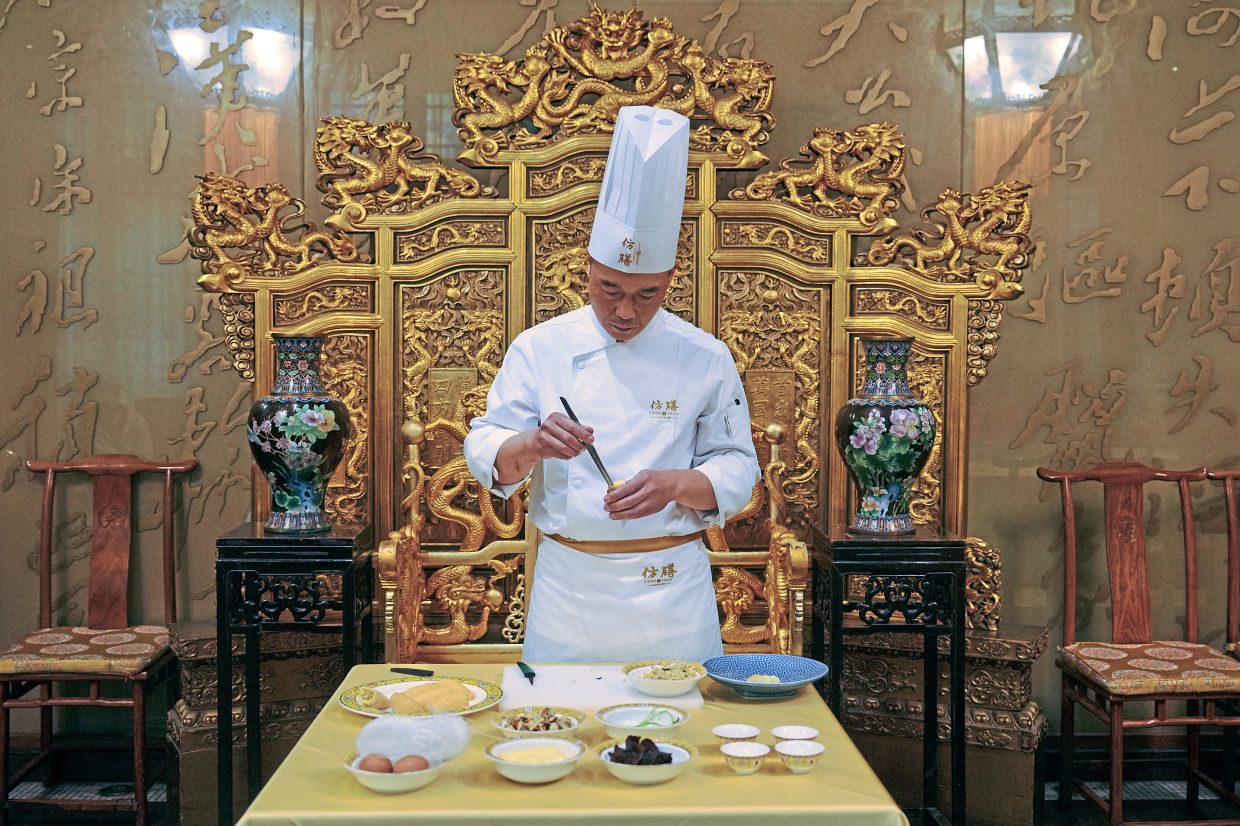
A pastry materialised on Empress Dowager Cixi's breakfast table after she dreamed of it—or so the legend goes. When the imperial kitchen delivered the delicacy the next morning, she was so enchanted that she bestowed silver upon the chef responsible. The dish, originally called a minced pork pancake, earned a new name: dream pastry. Today, nearly a century after imperial rule ended in China, that very pastry still graces tables in Beijing, prepared by chefs who trace their knowledge back through unbroken lineages to the final days of the Qing Dynasty.
Fangshan Restaurant, established in 1925 at Beihai Park by former palace cooks, represents one of the world's most unusual culinary museums. Rather than display food behind glass, it serves meticulously recreated imperial dishes to diners seeking connection with China's dynastic past. The restaurant's name itself—meaning to imitate imperial cuisine—acknowledges its mission to resurrect and preserve a gastronomic tradition that once represented the pinnacle of Chinese food culture. Though other Beijing establishments now offer versions of imperial fare, Fangshan remains the authoritative practitioner, with the Palace Museum itself safeguarding related artefacts including pastry moulds and ceremonial dining implements from the Qing court.
Imperial Chinese cuisine extended far beyond mere sustenance; it constituted an elaborate system of political ritual and cultural expression. The emperor's daily meals and the grand banquets held throughout the year followed prescribed protocols that reinforced hierarchical relationships and transmitted values of loyalty and respect. During formal banquets, the Qing emperor would present wine or choice foods to princes and officials, who were obligated to perform obeisance and acknowledge the sovereign's benevolence before consuming anything. These moments functioned as theatrical demonstrations of power, transforming the act of eating into political theatre. Sacrificial meals operated under separate but equally stringent rules, with ceremonies at the Palace of Earthly Tranquillity featuring prominently in the imperial calendar.
One such ritual involved the consumption of specially prepared fatty pork, boiled without any seasoning whatsoever. This austere preparation was not an oversight but rather a deliberate choice laden with symbolic meaning. After the ceremonial portion, the meat was distributed among attendees, and receiving this unseasoned portion constituted a considerable honour. The absence of flavouring itself communicated reverence—scholars trace this practice back through Chinese classical texts, where unseasoned broths called grand stew appeared in sacrificial contexts. According to academic analysis, the blandness evoked an imagined antiquity and simpler era, allowing ritual participants to symbolically honour cultural origins and demonstrate humility before heaven.
Pastries occupied a position of particular importance within the imperial culinary hierarchy, commanding their own dedicated institutional department within the palace. The Qing court maintained an entire corps of specialists whose sole responsibility involved creating increasingly elaborate sweets and baked goods. Zhou Tong, a contemporary pastry chef at Fangshan, has inherited recipes and techniques from this tradition, including Cixi's dream pastry and delicate steamed corn buns. When customers order these dishes, servers narrate their historical provenance, transforming consumption into an educational experience. Patrons report that knowing the stories enhances their appreciation—they are not simply eating dessert but rather participating in history, however briefly and symbolically.
The transmission of imperial pastry-making knowledge occurs through an apprenticeship system that emphasises personal mentorship over written instruction or formal certification. Zhou learned from a master who himself studied under an earlier practitioner, creating an unbroken chain extending back to the final imperial kitchens. This methodology prioritises embodied knowledge—the feel of dough, the subtle judgement required to achieve proper texture, the intuition developed only through years of repetition. Modern apprentices must unlearn conveniences taught in contemporary culinary schools, surrendering electric mixers and food processors in favour of labour-intensive hand processes. Ingredients like beans are pulverised using traditional sieves, while specific flours are worked in custom-made copper vessels rather than stainless steel. The deliberate rejection of mechanisation reflects a conviction that machines cannot replicate the delicate graininess and sandy mouthfeel that characterise authentic imperial pastries.
During peak seasons, Fangshan produces more than two hundred pea flour cakes daily, suggesting that modern diners hunger for these historical confections despite their labour-intensive production. Fan Liangliang, now an executive chef, initially resisted the retraining necessary to work in the imperial style after arriving as a kitchen apprentice. He had to discard efficient techniques learned at culinary school and embrace deliberate slowness instead. One technique, called Nizihuo, exemplifies this commitment to elaboration: ingredients such as fish, shrimp or chicken are minced into smooth paste, then painstakingly reshaped into decorative forms—frogs, birds, blossoms—that transformed each plate into a miniature sculpture. This aesthetic dimension reflected the imperial dining philosophy: every dish required innovation, visual beauty, nutritional balance, and inherent worthiness for presentation before the emperor.
Modern adaptation has become unavoidable as certain historical ingredients have disappeared from supply chains or fallen into disuse. Rare components like bear paws, which once appeared on imperial tables, no longer feature in Fangshan's repertoire. Rather than abandon historical recipes entirely, contemporary practitioners modify them while attempting to preserve their essential spirit and cultural significance. This pragmatic approach acknowledges that culinary traditions must evolve to survive, yet maintains fidelity to underlying principles. The challenge resembles architectural restoration: how much can be changed before authenticity is compromised? Fangshan's chefs answer by focusing on technique, flavour profile, and historical narrative rather than rigid ingredient replication.
The cultural meanings embedded within Chinese cuisine extend beyond taste and nutrition into realms of politics, aesthetics and personal expression. A classical poet's verses describing cold noodles made with pagoda-tree leaves functioned not as simple food description but rather as political allegory—the modest dish became a metaphor for the poet's thwarted ambitions and unfulfilled loyalty to the emperor. Throughout Chinese history, what people chose to eat, how they prepared it, and which dishes they elevated to celebrated status all communicated something about their values and aspirations. Preserving culinary heritage therefore requires taking seriously not merely recipes and techniques but the entire historical context in which dishes emerged and the meanings they carried for their original consumers. Present-day practitioners shape memory itself when they decide which traditions deserve preservation and which can be forgotten.
Fangshan's approach to imperial cuisine reflects a deliberate fusion of Manchu and Han culinary traditions, acknowledging that Qing gastronomy represented a cultural synthesis rather than a purely Han expression. The Manchu rulers who established the dynasty maintained their own foodways while gradually incorporating Han Chinese culinary sophistication, creating something genuinely hybrid. This blending of cultures through food mirrors broader historical processes of conquest, assimilation and negotiated coexistence. Modern chefs recognise that authenticity for imperial cuisine means honouring this multicultural dimension rather than privileging one tradition over another. As China continues its global rise, restaurants like Fangshan serve as ambassadors for a culinary heritage that predates the modern nation-state—reminders that sophistication and excellence in food culture do not depend on contemporary technology but rather on sustained commitment to craft, meaning, and respect for tradition.

