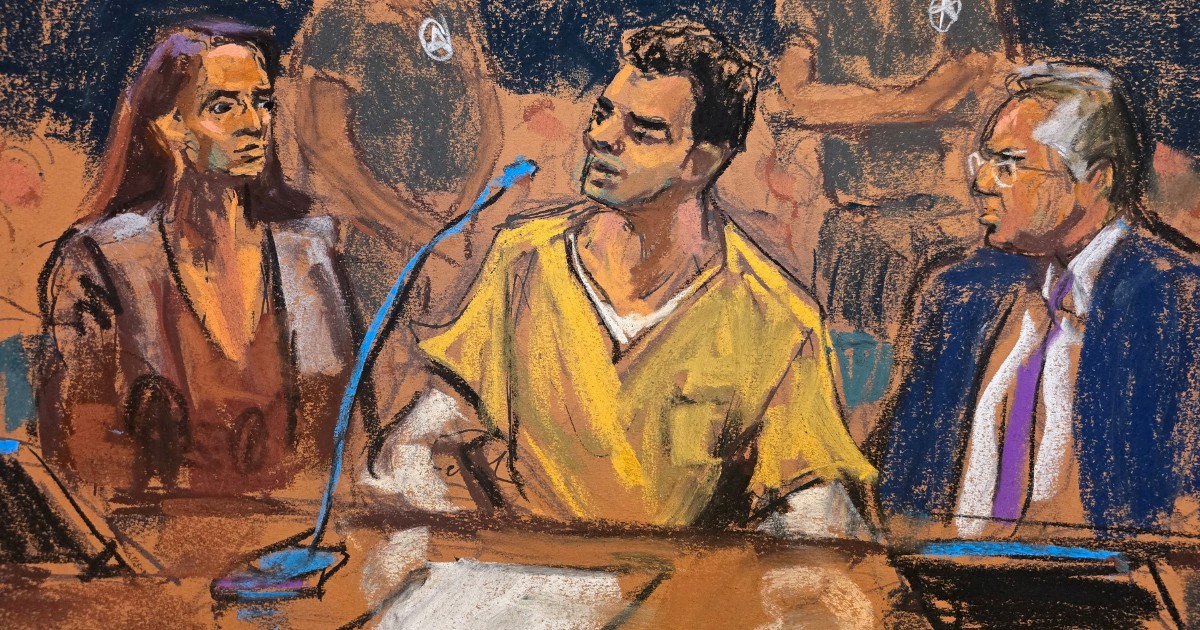
A defendant charged with murdering a prominent health insurance executive has made a striking courtroom statement admitting to the shooting whilst framing his actions as a protest against systemic healthcare failures in the United States. The appearance marked a significant development in a case that has captured national attention, as the accused provided his own perspective on what motivated an apparent act of violence against a corporate figure widely seen as emblematic of problems within American health insurance.
The defendant's account presents a stark transformation narrative: a person whose life deteriorated following a serious spinal injury, leading to mounting frustration with an insurance system he characterises as indifferent and obstructive. Medical records appear to confirm a significant back condition, which the defence argues contributed to his psychological state and worldview. This medical dimension distinguishes the case from typical crime narratives, introducing questions about the intersection of personal suffering, healthcare access, and grievance against institutional systems.
The claim that the shooting was intended as a statement rather than an act of personal revenge adds complexity to understanding motive. By framing the killing as an attempt to address broader healthcare dysfunction, the defendant positions himself as motivated by principle rather than individual animosity. This narrative—whether ultimately persuasive to courts or the public—reflects genuine anxieties within American society about insurance industry practices and their human costs.
The targeted victim held a senior position within a major health insurance organisation, making him a symbol of corporate healthcare in ways that have resonated with public commentary. In the days following the incident, social media revealed deeply polarised reactions, with some viewing the executive as personally responsible for denial-of-care decisions that harm patients, whilst others condemned the violence as fundamentally indefensible regardless of systemic critiques. This division illustrates the emotional intensity surrounding healthcare access in the American context.
The defendant's background as described in media accounts portrayed him as an educated individual without prior criminal history—a profile that unsettled many observers expecting a different profile entirely. Employment records and personal accounts from associates suggested a functionally normal life trajectory disrupted by health complications. The progression from unremarkable citizen to person accused of capital murder within a relatively short timeframe has prompted commentary about how desperation, pain, and ideological conviction can precipitate violent action in unexpected individuals.
From a Malaysian and Southeast Asian perspective, this case illuminates the profound differences in healthcare systems across the developed world. Whilst Malaysia's healthcare system faces criticism regarding quality and resource allocation, the privatised insurance-based American model operates under entirely different structural constraints. The intensity of public anger directed toward insurance companies—and in this extreme instance, toward individuals working within such companies—reflects accumulated frustration with a system that ties essential medical care to profit-generating insurance mechanisms.
The healthcare context matters significantly for understanding regional implications. Southeast Asian countries, including Malaysia, have gradually expanded universal healthcare access, creating different relationships between citizens, insurers, and medical providers. The incident abroad serves as a reminder of what happens when healthcare systems become so fraught with conflict that they generate such extreme reactions. Policy makers across the region should note that public confidence in healthcare delivery depends partly on perceived fairness in access and coverage decisions.
Legal proceedings will determine whether the defendant's motivation—however psychologically genuine—carries weight in America's criminal justice system. Most jurisdictions do not accept abstract ideological commitment as a defence to murder, yet understanding stated motivations remains relevant to comprehending how modern healthcare systems generate conflict. The courtroom presentation, whether strategic or authentic, documents one person's comprehensive rejection of healthcare system legitimacy.
The case also intersects with broader American political discourse about healthcare reform. Progressive critics of the insurance industry have seized on the incident to argue that systemic healthcare dysfunction requires urgent legislative attention. Conservative commentators have emphasised that violence represents an unacceptable response regardless of policy disagreements. This polarised response mirrors deeper divides about whether healthcare qualifies as a social right or a market commodity—a question that Southeast Asian countries have addressed through different policy frameworks.
Medial evidence regarding the defendant's back condition will likely feature prominently in sentencing proceedings, should conviction occur. American courts increasingly recognise chronic pain as a serious medical and psychological condition, though this recognition does not necessarily mitigate responsibility for violent acts. The intersection of documented suffering with admitted violence creates difficult circumstances for judges asked to calibrate appropriate punishment.
For Malaysian readers observing this American case, the broader lesson extends beyond individual criminal responsibility. The incident exposes vulnerabilities within healthcare systems where institutional decision-making about coverage directly affects survival and quality of life, and where individuals feel sufficiently betrayed by those institutions that they contemplate extreme responses. Malaysia's policymakers can reflect on what distinguishes healthcare environments that generate violent backlash from those that maintain public confidence despite inevitable shortcomings.
The defendant's courtroom statement, whether ultimately affecting the legal outcome or not, has already influenced public narrative. By articulating his grievances with specificity and connecting personal suffering to systemic critique, he has given voice to healthcare frustrations held by millions of Americans who did not resort to violence. Whether this narrative proves sympathetic to juries remains to be determined, but the case itself has become part of ongoing American conversation about whether the healthcare system itself bears responsibility for the desperation it generates.

