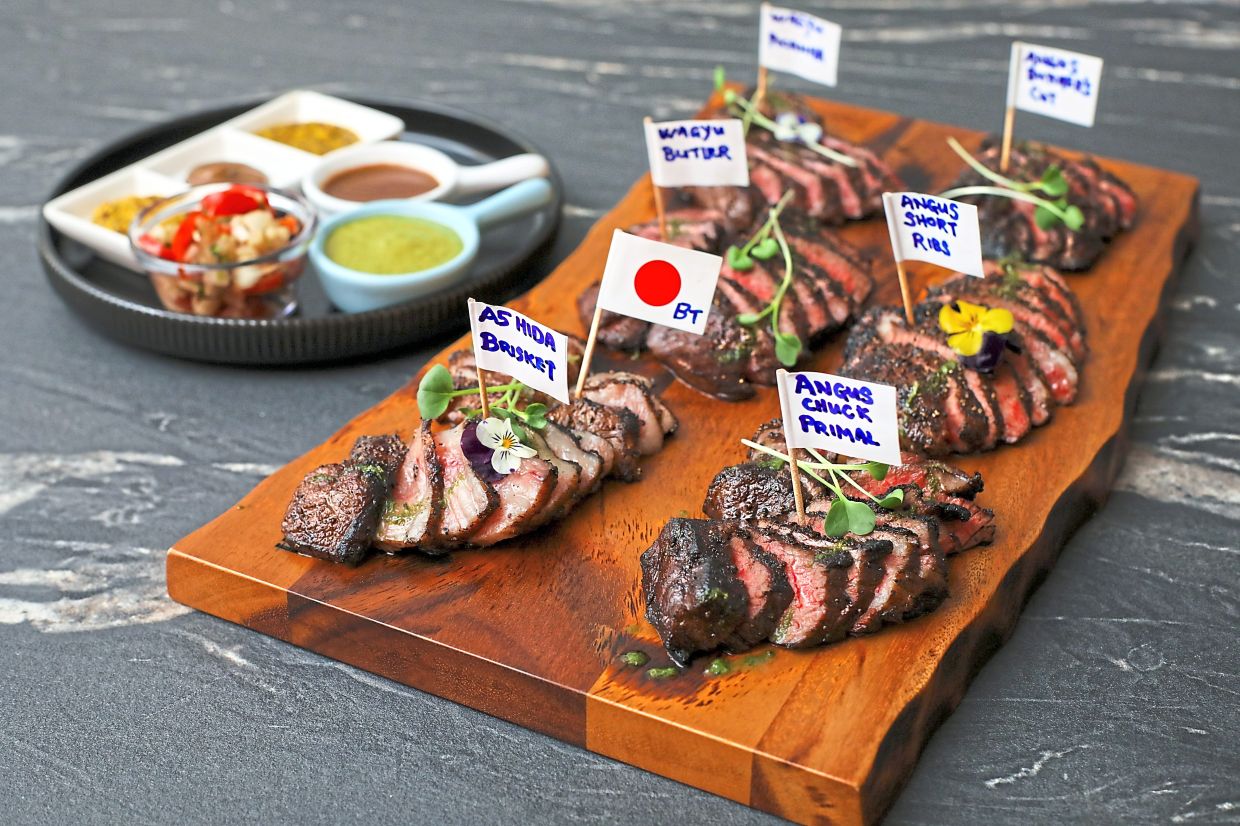
Petaling Jaya's Meat Feds represents a quiet revolution in Malaysia's beef-obsessed culinary scene. At the restaurant, chef Yenni Law has built an entire concept around secondary beef cuts—earning Malaysia Book of Records recognition for featuring 20 different cuts on a single menu, a feat achieved with co-founder Shelly Saw earlier this year. Yet Law's meticulous approach to her craft, carefully separating sinew from fat during butchering, reveals the technical sophistication that secondary cuts demand. This precision stands in stark contrast to the casual dismissal these portions have historically received from Malaysian chefs and diners alike.
Malaysia's beef market has long been dominated by a predictable trinity of premium cuts: striploin, tenderloin, and ribeye. These prized portions command premium prices and have monopolised menus at high-end establishments across the Klang Valley and beyond. Malaysians themselves rank as Southeast Asia's largest beef consumers, yet this appetite has remained narrowly focused on what the industry considers prime meat. The mathematics of cattle production tell a revealing story: prime cuts represent merely 8 to 10 percent of a cow's total usable yield, while secondary cuts account for the remaining 80 to 90 percent. This imbalance has historically consigned secondary portions—flat iron from the shoulder, flank from abdominal muscles, rump from the hindquarters, hanging tender from the diaphragm, and numerous others—to anonymity. Ground into minced meat, processed into burger patties, or transformed into sausages, these cuts rarely reach discerning diners in their intended form.
The momentum shift beginning to ripple through Malaysia's dining landscape stems partly from deliberate market intervention. Meat & Livestock Australia, which regulates meat standards for Australian and international markets, has orchestrated educational seminars, masterclasses, and industry events designed to reposition secondary cuts as culinary stars rather than afterthoughts. Meat distributors like Lucky Frozen Sdn Bhd have similarly invested in chef engagement programmes. At these gatherings, secondary cuts receive the spotlight treatment, prepared and presented as elegant steaks capable of commanding respect alongside traditional prime options. Law herself has attended these educational sessions, bringing her entire team to learn trimming techniques and processing methods from industry experts. This targeted approach represents sophisticated market penetration—one that history suggests can fundamentally reshape culinary preferences across entire regions.
The parallel to Norway's successful salmon campaign in 1980s Japan illuminates the strategy's potential. When the Norwegian Minister of Fisheries launched that initiative, Japanese chefs largely dismissed salmon as unsuitable for their cuisine. Decades of coordinated promotion and chef education transformed salmon into Japan's most popular sushi topping. Similarly, Malaysia's secondary beef movement gains credibility and momentum through structured education rather than organic discovery. Valeska V, Meat & Livestock Australia's regional manager for Southeast Asia, articulates this philosophy clearly: as chefs and consumers become more sophisticated, they increasingly embrace alternatives beyond the obvious prime cuts. These educational initiatives create space for professional chefs to experiment, to understand technique, and to recognise flavour potential where none previously seemed apparent.
Economic pressures, however, provide the movement's most compelling catalyst. Secondary cuts cost 20 to 60 percent less than prime cuts—a difference measured in hundreds of ringgit per serving. In an era when global oil crises have pressured beef supplies and prime cut prices have surged approximately 30 percent while secondary cuts have risen only 10 percent, this financial reality cannot be ignored. Desmond Chong, head chef of woodfire grill restaurant Ignis KL, now features three to four secondary cuts on his menu partly due to necessity and partly by choice. The pricing pressure has forced many chefs to reconsider their beef strategies, but beyond economics lies genuine culinary interest.
These secondary portions deliver texturally and flavourfully distinct experiences that challenge the assumption that tenderness represents the sole measure of beef quality. At Law's restaurant, diners encounter butcher's cut, chuck primal, brisket, picanha, and short rib in succession, each offering unique bovine intensity and varying degrees of bite, chew, and bounce. At Ignis, charcoal-fired flat iron steaks and short ribs emerge with beautifully charred exteriors and silken mouthfeels that rival prime cuts without the opulence. These aren't inferior substitutes masquerading as premium options—they represent genuinely different eating experiences. James See, business development director at Lucky Frozen Sdn Bhd, frames this diversity as essential resilience: utilising the entire carcass and finding value across different cuts makes the market less vulnerable to beef inflation and global supply shocks.
Yet the learning curve remains steep. Secondary cuts typically contain substantially more sinew, silver skin, and intramuscular fat than prime portions, demanding expertise that most Malaysian chefs have never required. The challenge extends beyond knife skills to understanding cooking methodologies tailored to these cuts' specific characteristics. Law's candid admission—that practice remains essential, that distinguishing fat from sinew requires constant visual assessment—underscores why secondary cuts haven't simply replaced prime options. The culinary establishment, trained over decades to prioritise tender, easily prepared prime cuts, must systematically retrain itself.
Malaysia's position as a significant beef consumer in a globally tightening market creates particular urgency around this transition. The movement isn't merely trendy nostalgia or artificial foodie invention—it reflects genuine economic pressure, sophisticated marketing, and emerging chef sophistication. Restaurants like Meat Feds demonstrate that secondary cuts warrant dedicated focus and expertise rather than casual incorporation into existing menus. The momentum evident in the Klang Valley, where mid-range and high-end establishments increasingly feature secondary options, suggests the transition will accelerate rather than plateau.
This evolution carries implications beyond restaurant kitchens. As Malaysian chefs embrace secondary beef cuts, they signal to consumers that quality and sophistication need not depend on premium pricing or traditional hierarchies. The educational component proves equally significant: customers dining at progressive restaurants encounter unfamiliar cuts explained through chef expertise and technique. This interaction gradually normalises secondary cuts, transforming them from invisible ingredients into conscious culinary choices. Such shifts in consumer consciousness, once established, prove remarkably durable.
The narrative of secondary beef cuts in Malaysia ultimately reflects broader patterns in global food culture: the recognition that sustainability, economic efficiency, and culinary creativity needn't conflict. As international supply chains strain and pricing pressure intensifies, markets often discover that their preconceptions about value and quality have been unnecessarily narrow. Malaysia's chefs stand at an inflection point—where practical necessity meets genuine flavour discovery, where marketing campaigns provide the initial push but chef innovation sustains the movement. Whether this represents a lasting transformation or temporary trend remains to be seen, but the momentum gathering in Malaysian restaurant kitchens suggests something more fundamental: a recalibration of what premium beef dining might encompass.

