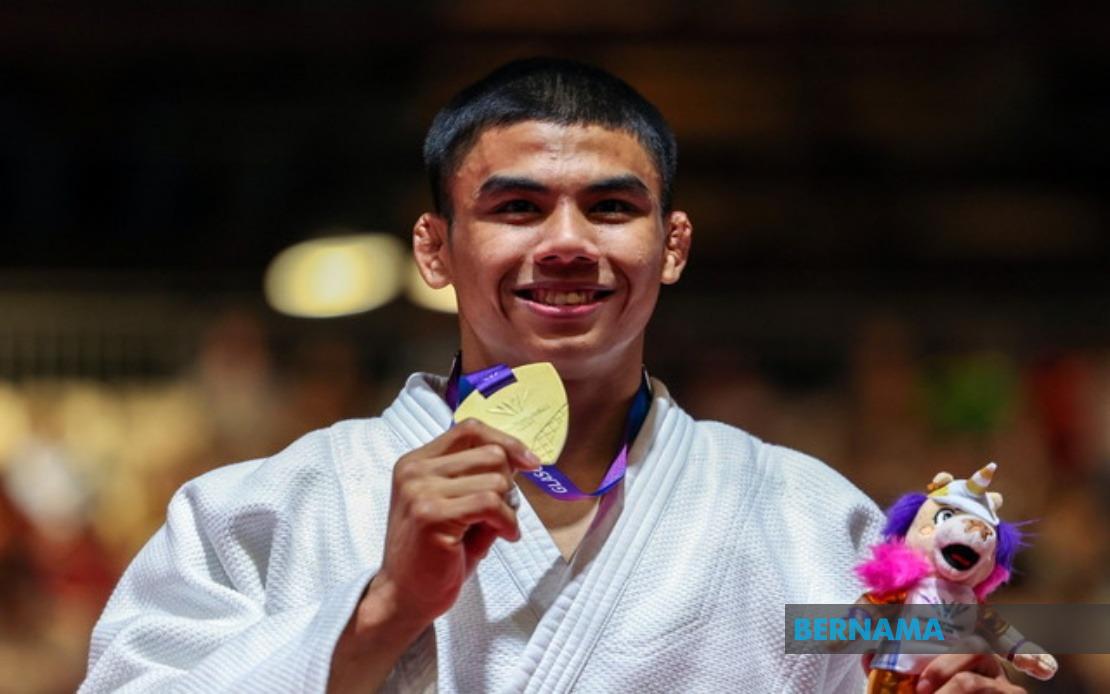
The transition from elite athlete to mentor presents an entirely different psychological landscape, and Commonwealth Games gold medallist Amir Daniel Abdul Majeed has discovered firsthand just how much more demanding leadership can be than individual performance. The 21-year-old judoka, currently serving as assistant coach of the Penang judo squad competing at SUKMA Selangor 2026, has found that stepping away from direct competition paradoxically introduces greater anxiety than the fierce physical confrontation he previously experienced on the mat.
What makes this shift particularly challenging for Amir is the emotional investment accumulated over years of watching young athletes develop from novices into serious contenders. Having risen through the sport himself and previously competed alongside many of the current squad members, he now occupies a unique vantage point from which to observe their growth. The relationship has fundamentally altered—he is no longer a peer but a guide responsible for shaping their technical and tactical approaches to the sport. This recalibration of relationships, paired with the weight of expectation attached to his guidance, creates a tension absent from his previous career focused solely on personal achievement.
The numerical scope of his responsibility underscores the magnitude of the transition. Whereas he once concentrated solely on managing his own performance during individual bouts, Amir now oversees thirteen athletes, each with distinct needs, learning styles, and competitive trajectories. This expanded sphere of influence carries substantially heavier accountability. A coaching decision that fails to deliver immediate results can ripple through an entire roster, whereas a personal tactical miscalculation on the mat affected only one competitor. Despite acknowledging this burden, Amir has discovered that witnessing tangible progress in his athletes provides profound satisfaction that differs entirely from his previous personal victories.
The Penang judo contingent delivered a respectable showing across the three-day SUKMA Selangor 2026 competition, securing three gold medals alongside one silver and five bronze. This medal distribution placed Penang level with Johor in the overall medal standings, a testament to both the squad's competitive depth and Amir's contributions to their preparation. Such results validate the transition strategy, suggesting that his knowledge and experience translate effectively into coaching contexts even at this relatively early stage of his mentoring career.
Parallel to his coaching commitments, Amir awaits official confirmation regarding his personal participation in the Aichi-Nagoya 2026 Asian Games scheduled in Japan. With the selection meeting scheduled for this week, he stands at a critical juncture in his career where simultaneous advancement as both athlete and coach remains within reach. The timing presents both opportunity and complexity, as maintaining peak competitive condition while managing coaching responsibilities requires meticulous time management and strategic prioritization.
Amir's assessment of the competitive landscape at the Asian Games reflects a realism about quality levels across different international venues. He recognizes that Japanese judo maintains exceptionally high technical and tactical standards, creating an environment substantially more demanding than domestic or regional competition. Rather than viewing this daunting prospect as prohibitive, he interprets Asian Games participation as instrumental toward his broader ambitions, particularly his long-term Olympic aspirations that extend well beyond the Aichi-Nagoya cycle.
The strategic value of Asian Games exposure extends to his preparation for SEA Games Malaysia 2027, which will be hosted domestically. Competing in Japan would afford accumulated experience against international opposition, building the combat knowledge and psychological resilience necessary for peak performance on home soil. Each bout against higher-calibre opponents generates data about technical and tactical gaps requiring remediation, creating a developmental pathway far more comprehensive than training-based preparation alone could provide.
For Malaysian judo broadly, Amir's dual trajectory as emerging coach and still-active competitor offers institutional advantages. The sport benefits when accomplished athletes transition systematically into mentoring roles, carrying institutional knowledge and competitive credibility that younger players instinctively respect. His generation's involvement in coaching simultaneously addresses continuity concerns while maintaining competitive viability at the highest levels, preventing the familiar pattern where athletes disappear entirely from the sporting structure following retirement from competition.
The coaching pressure Amir describes reflects a broader reality affecting athlete-coaches throughout Southeast Asian sport. The psychological demands of responsibility for others frequently exceed the self-directed stress of individual competition, yet this dimension of athletic development remains underappreciated in most national sporting systems. Recognition that managing thirteen athletes requires fundamentally different mental resilience than managing oneself could improve support structures and expectations placed on transitioning athletes entering mentoring roles.
Looking forward, the intersection of Amir's coaching responsibilities and competitive aspirations will substantially shape Malaysian judo's trajectory. His performance at the Asian Games will generate immediate results, while his effectiveness developing Penang's next generation of judokas will influence the sport's institutional health across a multi-year horizon. The coming weeks will determine whether simultaneous advancement as coach and competitor remains viable, or whether the pressure dynamics he describes necessitate prioritizing one trajectory over the other.

