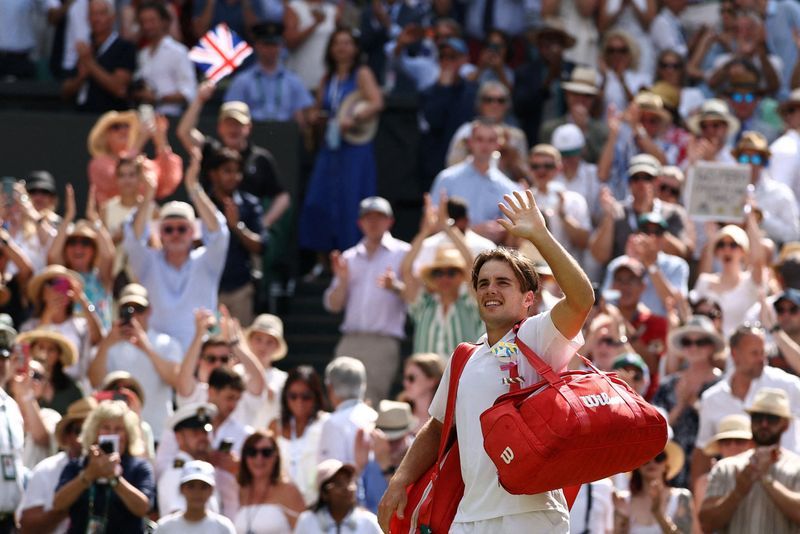
Arthur Fery's unexpected journey to the semi-finals of Wimbledon has rewritten what seemed possible for a British player ranked 114th in the world. The 23-year-old, who had planned a leisurely Greek vacation with friends this week, instead found himself navigating one of tennis's most gruelling tournaments during a London heatwave. His adventure came to an end on Friday when German star Alexander Zverev defeated him in straight sets, but not before Fery had achieved something that no wildcard had managed in 25 years—reaching the last four of the men's singles draw at the grasscourt major.
The trajectory of Fery's fortnight underscores just how improbable his run truly was. Before arriving at Wimbledon, the French-born British player had won only two matches combined across all Grand Slam tournaments in his career. Yet he methodically dismantled five opponents in succession, each victory pushing him deeper into territory he had never inhabited before. The contrast between his modest career record and his performance on the courts of the All England Club could hardly be starker, and it speaks to the unpredictable nature of professional tennis where momentum and home-crowd support can transform a player's output.
The public backing Fery received throughout his run appeared instrumental in sustaining his remarkable campaign. Queen Camilla and Princess Kate attended matches to watch him play, underscoring the cultural significance of a homegrown player excelling at the sport's most prestigious grass-court venue. The England football team, still riding high from their World Cup campaign, recorded a video message of encouragement. This cascade of support extended even to Fery's own circle—he recalled with amusement that one friend who travelled to Greece ahead of schedule, apparently expecting Fery to lose, returned just two days later having switched allegiances to become a vocal supporter.
Fery's rise through the draw has already begun reshaping his professional prospects. His ranking is anticipated to climb sharply into the mid-30s, a transformation that will unlock opportunities he had previously only aspired to. Access to tour-level events at the highest echelon of competition is no longer a distant dream but an imminent reality. For a player who has spent his career climbing incrementally through the professional ranks, this acceleration promises to fundamentally alter the trajectory of his career and the types of tournaments he will be eligible to enter.
The implications of this breakthrough extend beyond mere ranking points and tournament eligibility. Fery acknowledged the psychological and practical adjustments that now lie ahead. The shift from fighting for qualification slots to competing against the world's elite represents a substantial leap, one that carries both promise and peril. He will need to navigate elevated expectations from sponsors, media outlets, fellow competitors, and himself—all while attempting to replicate the form that carried him so far at Wimbledon.
Fery's immediate focus centres on mental and physical recuperation. The intensity of playing multiple matches in succession on grass during summer heat demands thorough recovery before embarking on the North American hardcourt season. This rest period will allow him to process the whirlwind of events over the past two weeks, consolidate lessons learned, and prepare mentally for a drastically different challenge ahead. The US Open at Flushing Meadows looms as a significant milestone—it will mark his debut at that particular Grand Slam venue as Britain's new top-ranked male player.
The transition from a 114th-ranked player to one genuine Slam semi-finalist carries tangible financial rewards alongside the intangible gains. Fery earned £900,000 in prize money for reaching the semi-finals, a sum that substantially exceeds what he might have anticipated earning across multiple tournaments. Whether deployed towards the originally planned Greek getaway or directed toward his professional infrastructure—coaching, physical conditioning, or travel logistics—these earnings provide crucial resources to support his continued development.
For the British tennis landscape more broadly, Fery's achievement offers genuine inspiration and raises questions about untapped talent within the domestic ranks. His success emerged from relative obscurity, suggesting that other homegrown players operating outside the elite tier might similarly possess untapped potential. The fairytale narrative also revitalizes public interest in tennis at a time when British success stories have been intermittent, potentially channelling more resources and attention toward the grassroots development pipeline.
Looking ahead, Fery faces the considerable challenge of converting this Wimbledon breakthrough into sustained success at elite level. History suggests that wildcard runs, however spectacular, do not always translate into permanent establishment among the world's best players. However, Fery possesses advantages that many fairytale semi-finalists lack: he remains young at 23, still developing physically and technically, and he has now proven he can compete against top-tier opposition. The confidence gained from beating multiple rivals on one of tennis's biggest stages cannot be underestimated as he prepares for the rigours of regular tour competition.

