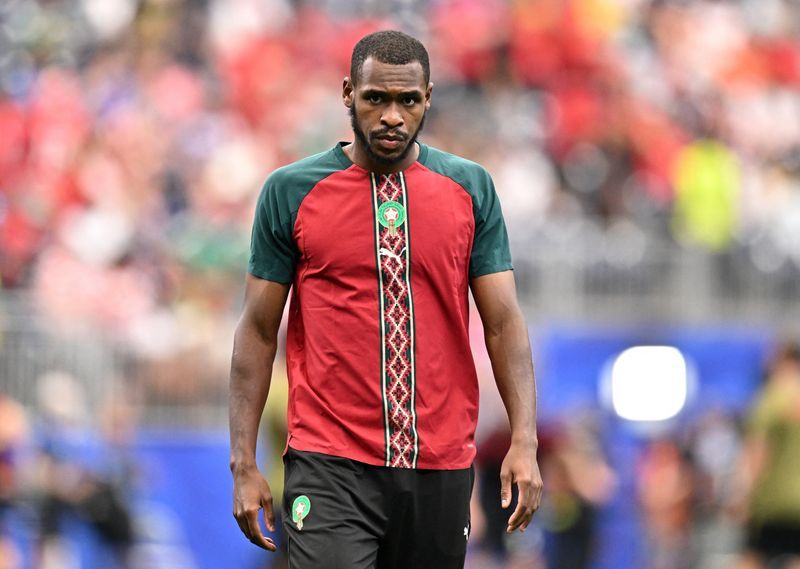
In one of football's most ironic subplots, Morocco's Issa Diop will face the formidable attacking prowess of Kylian Mbappé in Thursday's World Cup quarter-final, a matchup that epitomises the 29-year-old defender's extraordinary journey from staunch French patriot to his adopted nation's linchpin. The contest in Boston will pit Diop against the very country whose colours he once insisted were his only destiny, adding layers of intrigue to an encounter that transcends mere sporting competition.
Diop's early career was defined by unwavering commitment to France. Born in Toulouse to a Senegalese father and Moroccan mother, he possessed genuine pathways to three international sides, yet his conviction never wavered. When representing France's Under-21 setup seven years ago, he articulated his position with striking clarity to Canal Plus, declaring that abandoning France for another nation would constitute betrayal of the values instilled by his birthplace. His words suggested finality—a young man certain of his identity and priorities in a sport where international loyalty remains paramount.
Yet Morocco and Senegal refused to accept his rejection. Both nations persistently courted the talented defender, recognising his potential to strengthen their back lines. For years, their overtures fell on deaf ears, reinforcing perceptions that Diop viewed such recruitment efforts as beneath his station or fundamentally incompatible with his self-conception as a Frenchman first. This period of steadfast refusal became part of his identity, establishing him as the player who had chosen his homeland over the siren call of African football.
The reversal came abruptly in March when Diop agreed to represent Morocco, a decision that triggered considerable backlash on social media. Critics questioned his sincerity, his earlier proclamations about hypocrisy seeming to ring hollow as he donned the red jersey. The timing appeared opportunistic to some observers—a player unable to secure meaningful involvement with France suddenly embracing African football when competitive opportunity beckoned. The contradiction between his previous statements and current actions provided ammunition for those sceptical of his motivations.
Coach Mohamed Ouahbi's perspective offered a counternarrative to the cynicism. The manager suggested that Diop's lifestyle choices—his frequent visits to Morocco, his engagement with Moroccan culture beyond football—indicated genuine integration rather than opportunistic commitment. Ouahbi framed the recruitment as affirming what had always existed beneath the surface, arguing that Diop's earlier statements reflected youth and circumstance rather than absolute truth. This characterisation attempted to rehabilitate Diop's image within Morocco's sporting community.
The defensive reinforcement arrived at a critical moment. Morocco faced genuine vulnerabilities following captain Romain Saiss's departure in January and Nayef Aguerd's March injury, leaving significant gaps in the centre of defence. These departures transformed Morocco's requirement for a quality defender from preference into necessity. Diop's eight seasons in English football—divided between West Ham United and Fulham—provided Premier League experience that elevated his practical value beyond symbolic considerations.
Making his debut in a March friendly against Ecuador, Diop quickly established himself as the preferred central defensive partner for Crystal Palace's Chadi Riad. The pairing appeared functional and cohesive, suggesting that despite the turbulent circumstances of his recruitment, Diop possessed the technical competence to perform at tournament level. His integration proceeded more smoothly than many anticipated, suggesting that questions about his commitment might have been premature.
The Netherlands encounter in the round of 32 provided Diop an opportunity for redemption that extended far beyond tactical contribution. In the ninety-first minute, with Morocco's World Cup campaign seemingly concluding, Diop rose above Dutch defenders to meet Chemsdine Talbi's cross with a powerful header that forced extra time. His goal rescued his team from elimination, delivering the kind of dramatic intervention that transforms a player's tournament narrative. Suddenly, questions about motivation or divided loyalties seemed less relevant than tangible delivery under pressure.
Diop himself appeared bemused by his attacking contribution, acknowledging the irregularity of his presence in the penalty area during match-concluding moments. His modest recollection—"I don't know what I was doing there"—underscored both the chaotic nature of dying moments in football and the element of fortune that sometimes determines World Cup progression. Yet whether by design or accident, he had become a figure around whom Morocco's unlikely tournament run now revolved.
Thursday's encounter with France presents an entirely different challenge. Defensive duties will demand his complete focus, with Mbappé's elite athleticism and finishing requiring unyielding concentration. No longer will Diop have the luxury of forays into attacking areas; his role will be precisely defined within Morocco's structural requirements. The match will test whether his previous statements about hypocrisy and allegiance have genuine meaning, or whether this represents a temporary professional arrangement.
For Malaysian and Southeast Asian observers, Diop's trajectory carries particular resonance. The region contains numerous players managing complex international identities across multiple potential allegiances. His journey—from stubborn adherence to one identity toward pragmatic acceptance of another—reflects the authentic negotiations that professionals in our region navigate regularly. Whether Diop represents genuine transformation or evolved self-interest remains genuinely ambiguous, a complexity that resonates beyond France and Morocco.
Morocco seeks a second consecutive World Cup semi-final appearance, an achievement that would cement this tournament among Africa's most successful efforts. Diop's contribution—both defensive and unexpected attacking—will prove instrumental to whether that ambition materialises. His redemption from recruitment controversy to tournament hero within months suggests that in football, as in other domains, current performance ultimately supersedes historical contradiction.

