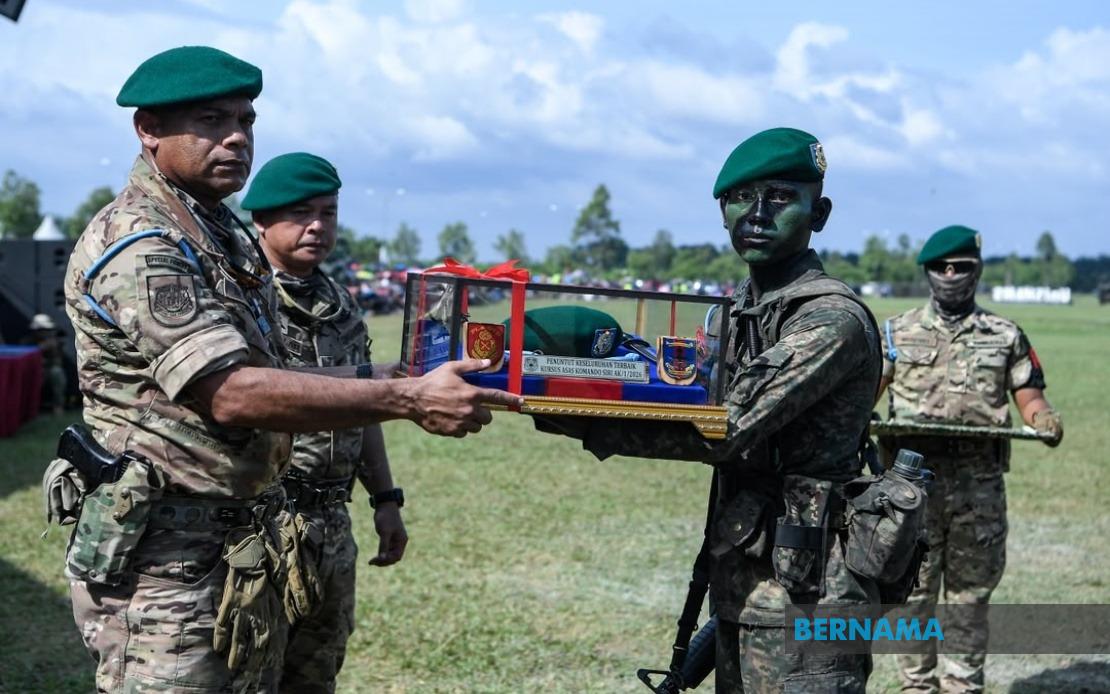
Second Lieutenant Muhammad Fadli Jamalluddin's path to becoming Malaysia's Best Overall Commando Trainee was neither straightforward nor assured. The 24-year-old officer from Ampang, Kuala Lumpur, had already experienced one major setback before enrolling in the Basic Commando Course Series AK/1/26, yet he returned with renewed determination to earn the prestigious green beret that marks entry into Malaysia's elite special forces.
Having initially faltered during the Basic Commando Course Series 3/2024, Muhammad Fadli could easily have accepted defeat or pursued a less demanding military specialisation. Instead, the setback crystallised his commitment to achieving one of the most challenging distinctions in the Malaysian military hierarchy. His decision to attempt the course again reflected both personal drive and a calculated understanding of what such an achievement would represent for his career and family.
Muhammad Fadli's military journey began long before his enrolment at the Special Warfare Training Centre (PULPAK) in Baling. His aspirations to serve in the armed forces took root during his secondary schooling, eventually leading him to pursue formal military education at the National Defence University of Malaysia (UPNM). Upon completion of his studies, he commissioned into the Royal Malay Regiment in 2024, positioning himself within one of Malaysia's most storied military units. As the third of five siblings, he carried familial expectations alongside his personal ambitions, particularly a desire to make his father proud.
The motivation to join the 21st Special Service Group (21 GGK), Malaysia's principal commando unit, crystallised during his final year of military training. Rather than accept a conventional officer posting, Muhammad Fadli recognised that having committed to an army career, he should pursue its most demanding variant. The commando path represented not merely a career option but a statement about his commitment to military service and to pushing the boundaries of personal capability.
This second attempt at the gruelling three-month course nearly ended in disappointment once more. During the eighth week of training, Muhammad Fadli failed one of the critical assessment exercises, placing him at risk of complete course elimination and the prospect of repeating the entire programme from the beginning. The psychological impact of this moment—arriving after he had already endured more than 100 kilometres of sustained endurance marching and weeks of intensive physical and mental conditioning—proved profound. Muhammad Fadli has spoken candidly about the emotional toll this near-failure inflicted, describing tears of frustration at the prospect of losing months of sacrifice to a single setback.
What distinguished Muhammad Fadli's response was his refusal to accept well-meaning advice from those around him to abandon the attempt. Recognising that the commando course represents perhaps the most extreme test of human resilience available within the Malaysian military system, many colleagues and mentors counselled him that repeating such a demanding programme would impose unsustainable costs. Yet Muhammad Fadli reframed failure as a pedagogical opportunity rather than a terminal verdict, choosing instead to extract lessons from his shortcomings and apply renewed effort toward eventual success.
The three-month training curriculum that Muhammad Fadli ultimately conquered integrates land and sea operations of uncompromising intensity. Trainees face not only severe physical demands that exceed what most soldiers experience throughout their service, but equally demanding psychological pressures. The commando qualification demands that officers develop beyond conventional officer training, requiring the synthesis of physical prowess with tactical acuity. Special operations frequently necessitate careful advance planning and sound decision-making under conditions of extreme stress, factors that the training programme methodically develops through repeated exposure to challenging scenarios.
Muhammad Fadli holds a Bachelor's degree in Global Policing and Intelligence with Honours from UPNM, providing him with intellectual foundations appropriate to special operations planning and execution. His academic background, combined with his demonstrated perseverance through the commando training crucible, positions him well for future postings within Malaysia's intelligence and special operations community, where such operational and analytical skills converge.
The Basic Commando Course Series AK/1/26 culminated with the successful graduation of five officers and 33 other ranks on July 11 at Universiti Sultan Abdul Halim Mu'adzam Shah (UniSHAMS) in Kuala Ketil. The significance of the course completion ceremony extended beyond routine military pageantry, as the presentation of the Best Overall Trainee award by Colonel Nordin Abu, Commandant of PULPAK, acknowledged both Muhammad Fadli's individual achievement and the transformative nature of Malaysia's commando training system.
Perhaps most poignantly, Muhammad Fadli's father, who suffered a stroke more than a year prior to the training course, remained unable to attend the graduation ceremony. Yet the officer has publicly framed his achievement as a gift to his parents and extended family, hoping that news of his commando qualification and top trainee honours would provide his father with strength and pride. In this framing, Muhammad Fadli's persistence transcends individual accomplishment, becoming an expression of familial bonds and the ways military service can embody filial devotion.
The trajectory from initial failure through perseverance to distinction represents a meaningful narrative within Malaysia's military culture, where commando training serves as a defining crucible for officers destined for leadership roles in special operations. Muhammad Fadli's journey demonstrates that setbacks within such elite training systems need not prove determinative, provided individuals possess the psychological resilience and motivational clarity to process failure as a catalyst for improvement rather than as evidence of inherent limitation. His example may encourage future trainees confronting moments of doubt during equally demanding military programmes.

