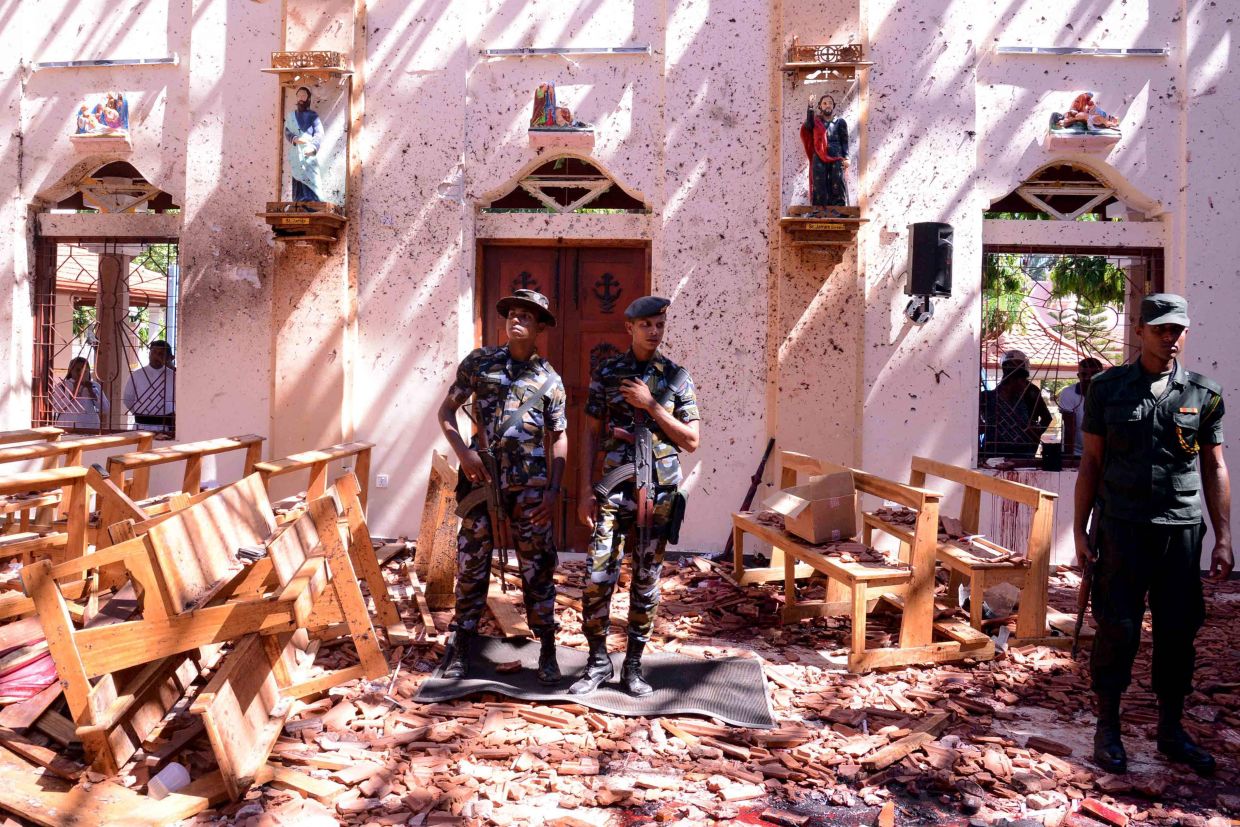
Suresh Sallay occupies an unusual place in Sri Lankan public life. A retired major general with impeccable credentials as a counterterrorism expert, the Muslim military officer has lectured at the Pentagon and addressed the United Nations on the dangers of social media-driven radicalisation and extremism. Yet in February, this same figure was arrested under anti-terrorism legislation and accused by his own government of orchestrating the deadliest attack against civilians in Sri Lanka's modern history—a dramatic reversal that exposes deep fractures within the island's security establishment and raises troubling questions about the official investigation into the devastating 2019 Easter bombings.
The attacks on April 21, 2019, remain seared into Sri Lankan national memory. A series of coordinated suicide bombings targeting three luxury hotels and three churches across the country left 279 dead and more than 500 wounded. The victims included 45 foreigners—tourists from Australia, Britain, China, Denmark, the Netherlands, Japan, and the United States—making it a tragedy that reverberated far beyond the island's shores. The initial government account blamed the attacks on Islamist militants inspired by the Islamic State group, a narrative that seemed straightforward at the time. Yet nearly five years later, investigators and senior officials are telling a far more sinister story, one in which the bombings may have been orchestrated by elements within the state apparatus itself.
Sallay's meteoric rise within Sri Lankan defence and intelligence circles made him an unlikely figure to face such accusations. A career military officer, he had served in Sri Lankan diplomatic missions in France and Malaysia, studied at India's prestigious National Defence College and Madras University, and earned qualifications from Britain's University of Bradford. His 2003 address to the Pentagon, titled "Suicide Terrorism and its Impact," established him as a serious analyst of militant violence. More recently, at UN headquarters in 2023, he spoke eloquently about how social media and digital platforms had become instruments of radicalisation, warning that "a number of attacks, including in Sri Lanka, have demonstrated the power of social media and digital platforms in radicalisation, extremism, and terrorism." His personal background—a Muslim married to a Buddhist woman, with a Catholic mother who has appealed to Pope Francis for his release—embodied the religious pluralism that most Colombo policymakers claimed to cherish.
What makes the charges against Sallay so explosive is not merely that a counterterrorism expert stands accused of abetting terrorism, but rather what the allegations suggest about the attack itself. Public Security Minister Ananda Wijepala told parliament in June that Sallay was the "mastermind" who "conspired with and strategically directed Islamic extremists until they carried out the attacks." According to Wijepala's account, Sallay met with Muslim men just three weeks before the bombings to gather intelligence on target locations. If true, this account transforms the Easter attacks from a spontaneous militant operation into a carefully orchestrated intelligence operation—one in which operatives within the state itself may have enabled or facilitated the violence.
The pivot from the original narrative began with uncomfortable questions that emerged in the months following the bombings. Indian intelligence services had allegedly warned Sri Lankan authorities weeks in advance about a potential attack, yet these warnings went largely unheeded, raising questions about either catastrophic negligence or deliberate inaction. Court documents and government inquiries have since exposed connections between the bombers and at least two state intelligence agencies, suggesting that security personnel knew more about the planned attacks than they initially admitted. These revelations set investigators on a new trajectory: rather than pursuing a straightforward terrorism case, they began exploring whether the attacks had been allowed to proceed—or even facilitated—by powerful figures within the state.
The political context surrounding these questions is crucial to understanding the allegations against Sallay. In 2019, Gotabaya Rajapaksa was running for president on a hardline platform centred on crushing Islamist extremism and restoring national security. He had gained prominence as the military chief overseeing Sri Lanka's bloody victory over Tamil separatists in 2009, and his campaign capitalised heavily on nationalist sentiment. According to court investigators quoted in legal proceedings, the Easter bombings provided a perfect political opportunity for Rajapaksa to position himself as the indispensable strongman capable of defeating terrorism. Within months of the attacks, he won the election in a landslide.
Critics, including British journalist investigations aired on Channel 4 in 2023, have alleged that the Easter attacks were deliberately permitted to occur to generate the security crisis Rajapaksa needed to win power. Whether Sallay orchestrated this or merely facilitated it remains unclear. What is documented is that Rajapaksa administrations appointed Sallay as head of the State Intelligence Service after his 2019 election victory—the first military officer to hold the position. Yet the relationship between Sallay and the Rajapaksas was more complex than simple patronage. Rajapaksa-era governments have publicly acknowledged that during the 1983-2009 civil war, the state recruited and financed jihadist operatives specifically to gather intelligence on Tamil rebel movements. The official position has long been that these militants eventually escaped state control and carried out independent attacks. Now Sallay stands accused of managing a similar operation that spiralled into mass bloodshed.
The arrest of Sallay himself suggests that this narrative—beneficial to the Rajapaksas during the 2019-2022 period of their dominance—has become politically expendable. In 2020, Sallay ordered the arrest of Hejaaz Hizbullah, a Muslim human rights lawyer, accusing him of being the "mastermind" of the Easter bombings. Hizbullah languished in detention for 22 months before authorities released him without charge, unable to produce evidence. The case became a symbol of arbitrary state power and religious discrimination, damaging the credibility of investigators and the intelligence services. Now the same accusation that destroyed Hizbullah's life has been redirected at Sallay himself, suggesting that whoever controls Sri Lanka's security apparatus is willing to sacrifice even senior figures when political winds shift.
Sallay remains uncharged as of his scheduled court hearing on July 10, and he categorically denies any involvement in the bombings. His detention without formal charges, combined with the shifting narratives surrounding the Easter attacks, has troubled international observers watching Sri Lanka's troubled post-conflict transition. The case raises profoundly disturbing questions about institutional accountability in Sri Lankan security agencies. Either the bombings represent a catastrophic intelligence failure so severe that Sallay must be scapegoated for it, or they represent a deliberate security operation gone hideously wrong—in which case the entire investigative process risks becoming politicised theatre.
For Malaysia and other Southeast Asian nations, the Sallay case offers sobering lessons about the intersection of counterterrorism operations and state power. Sri Lanka's experience demonstrates how the fight against genuine security threats can become a cover for political manipulation, how intelligence services can enable the very violence they claim to combat, and how skilled professionals become expendable once their political usefulness expires. As regional governments pursue increasingly aggressive counterterrorism strategies, the Sallay case serves as a cautionary reminder that institutional checks, transparency, and the rule of law remain essential to preventing security operations from becoming tools of authoritarian power consolidation.

