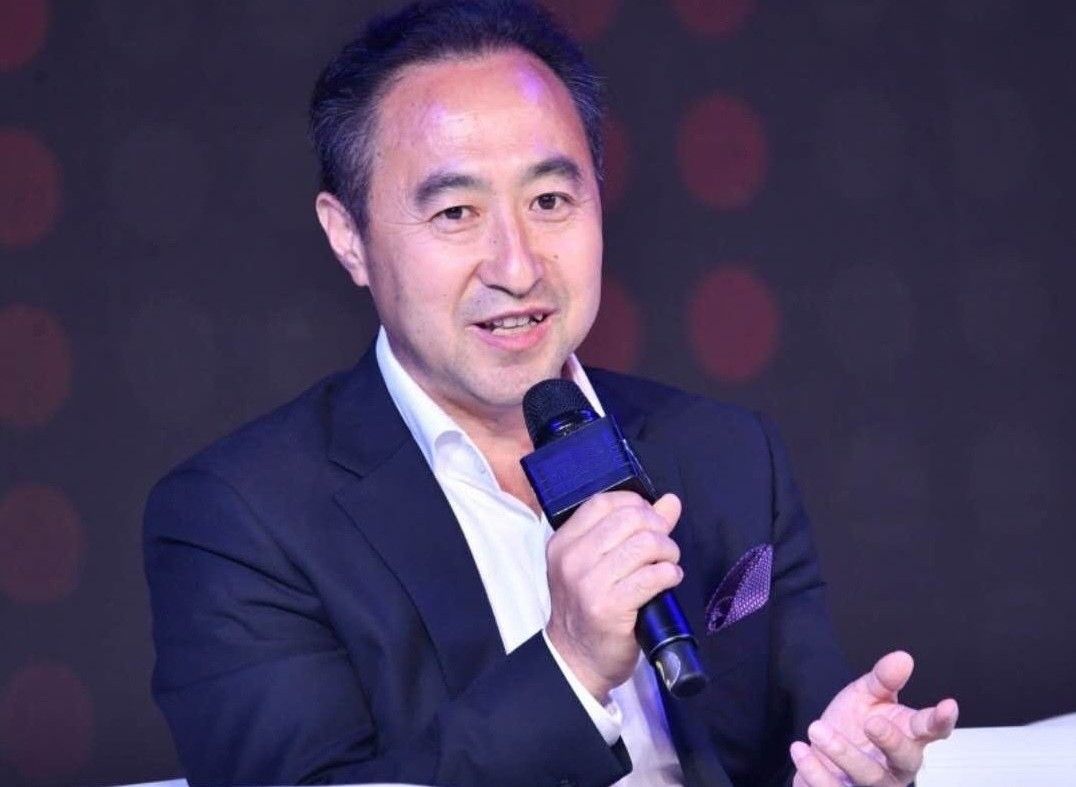
CJ Wang's journey from schoolteacher to billionaire entrepreneur mirrors the ambitious aspirations that have defined China's economic transformation over three decades. The 55-year-old Shandong native abandoned a stable career in education to pursue a childhood memory—the tedious process of grinding soybeans by hand using his uncle's stone mill—ultimately creating a fortune valued at US$10.4 billion. His story reflects a distinctly modern entrepreneurial arc, one in which personal experience, engineering expertise, and strategic vision converge to reshape entire product categories across continents.
Wang's formative years in Yantai exposed him to the rhythms of traditional Chinese domestic life, where soy milk and youtiao formed the backbone of millions of breakfast tables. After completing his electrical engineering degree at Beijing Jiaotong University, family expectations nudged him toward academia, a respectable path that countless Chinese professionals have followed. Yet Wang harboured different ambitions. In a recent interview with Time magazine—his first substantial engagement with international media—he explained how familial convention initially shaped his trajectory before his entrepreneurial instincts reasserted themselves. That internal tension between duty and ambition would ultimately resolve itself in 1994 when he made the decisive break from teaching.
The invention that launched his ascent emerged from both nostalgia and pragmatism. Wang recognised that Chinese breakfast culture would endure, making soy milk preparation a perpetual household necessity. His electric soy milk maker, though crude by contemporary standards, represented a quantum leap in convenience for millions of families performing this daily ritual. That same year, he established Joyoung, positioning the brand as a purveyor of accessible, dependable home appliances designed for the mass market. The company's trajectory proved meteoric within China. By 2004, Joyoung had shifted over one million soy milk makers, establishing itself as the category leader and gradually expanding into complementary kitchen appliances including blenders and rice cookers.
For more than two decades, Wang methodically built Joyoung into China's dominant appliance manufacturer, eventually securing a listing on the Shenzhen Stock Exchange. However, the company remained virtually anonymous beyond mainland Asia, lacking the brand recognition necessary to compete in developed Western markets. Rather than attempting to construct a foothold in America through organic growth, Wang recognised the strategic logic of acquisition. SharkNinja, an established player already commanding customer loyalty through its vacuum cleaners and blenders, represented precisely the platform he sought. The American company possessed strong products, growth potential, and—crucially—experienced leadership in CEO Mark Barrocas, whom Wang persuaded to remain at the helm.
Wang's analytical assessment of SharkNinja extended beyond surface-level metrics. He identified structural weaknesses that his Chinese operational expertise could remedy: a product portfolio lacking breadth; a sales architecture anchored to antiquated television infomercial campaigns without meaningful social media integration or extensive distribution channels; and manufacturing vulnerabilities stemming from over-reliance on a narrow supplier base. These bottlenecks, visible to any seasoned industrialist, represented opportunities for transformation. In 2017, Wang's private equity vehicle acquired a controlling stake, subsequently consolidating SharkNinja under JS Global Lifestyle Co., which commenced Hong Kong trading in 2019.
The synergies Wang orchestrated proved remarkably effective. Drawing upon Joyoung's expertise in supply chain optimization and product innovation, he methodically expanded SharkNinja's offerings while simultaneously professionalizing its distribution networks and digital marketing capabilities. The company invested substantially in proprietary research and development, reducing dependence on external suppliers and accelerating innovation cycles. This recalibration positioned SharkNinja to capitalize on emerging social media dynamics, particularly TikTok's influence over consumer purchasing decisions. The resultant product innovations achieved viral status with remarkable consistency, transforming SharkNinja from a modest American appliance maker into a multibillion-dollar enterprise.
SharkNinja's organisational structure reflects Wang's segmented brand strategy. The Shark division specialises in cleaning and personal care products, leveraging the brand's established reputation for powerful vacuum cleaners. Ninja, conversely, dominates the kitchen appliance sector, capitalising on rising consumer interest in convenient food preparation technologies. This bifurcated approach allowed each brand to cultivate distinct market identities while benefiting from unified operational infrastructure and supply chain capabilities. The strategic clarity proved instrumental in SharkNinja's explosive growth trajectory.
Wang's financial stake in his enterprise remains substantial. Following SharkNinja's 2023 transition to New York Stock Exchange trading through direct listing, Wang retained approximately 35 percent ownership as of May 2026 filings, while simultaneously maintaining a 52 percent stake in JS Global Lifestyle Co. These holdings collectively generate his estimated US$10.4 billion fortune according to the Bloomberg Billionaires Index. His compensation as SharkNinja's chairman further underscores his commercial success—Hong Kong financial disclosures revealed total remuneration exceeding HK$520 million (US$66.3 million) during 2024, positioning him among the territory's highest-paid corporate directors.
Despite commanding one of Asia's most valuable appliance conglomerates, Wang maintains a deliberately circumspect public profile. Time magazine characterised him as soft-spoken and characteristically reticent about personal matters. He divulges little regarding his private life beyond mentioning golf and Macallan whisky as leisure pursuits. This discretionary approach to public visibility reflects both personal temperament and strategic calculation. Wang recognised that geopolitical tensions between Washington and Beijing, combined with heightened scrutiny of Chinese investment flows into America, necessitate proactive narrative management regarding his background and business interests. His recent decision to grant international media access represents a conscious effort to preempt speculation and establish an authoritative account of his entrepreneurial journey.
For Malaysian and Southeast Asian observers, Wang's trajectory illuminates several dimensions of contemporary Asian capitalism. His success demonstrates how entrepreneurs from modest provincial backgrounds can leverage engineering expertise and operational discipline to achieve global prominence. The Joyoung-to-SharkNinja evolution showcases the escalating sophistication of Chinese business acquisitions in developed markets, moving beyond simple capital deployment toward genuine operational integration and value creation. Furthermore, Wang's emphasis on supply chain optimization, product innovation, and digital marketing resonates with regional manufacturers seeking to compete beyond geography-dependent advantages. His approach—combining proven operational expertise with existing market platforms—offers a replicable template for ambitious Asian entrepreneurs contemplating international expansion.

