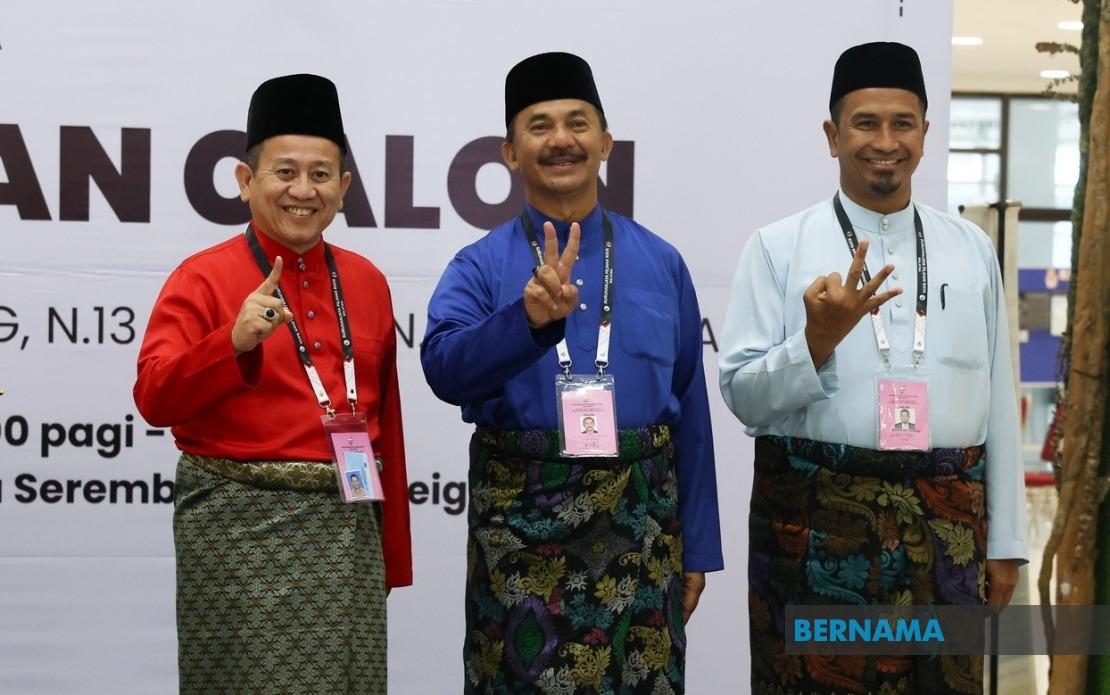
Negeri Sembilan's upcoming state election is shaping up as a generational crossroads, with political parties across the spectrum fielding unprecedented numbers of fresh candidates to contest the 36 State Legislative Assembly seats. This blend of untested newcomers and seasoned incumbents reflects broader efforts by Malaysia's major coalitions to balance continuity with renewal, offering voters a more diverse range of choices than previous electoral cycles. The nomination process has crystallized a competitive landscape where established names remain prominent but no longer dominate the candidate pool as comprehensively as in past elections.
Pakatan Harapan's approach demonstrates the most aggressive generational turnover among the major blocs. The coalition is presenting 24 new faces out of its full slate of 36 candidates contesting all available seats, a move that signals confidence in emerging political talent while maintaining strategic continuity through experienced operators. This rejuvenation strategy coexists with the retention of high-profile figures whose presence anchors the campaign narratively. Datuk Seri Aminuddin Harun, the PH chairman in Negeri Sembilan, exemplifies this dual approach by shifting constituencies rather than retiring, moving from defending Sekamat to contesting Linggi, suggesting internal organizational calculations about competitive positioning.
Among PH's established candidates is DAP Secretary-General and Transport Minister Anthony Loke, whose defence of the Chennah seat provides the coalition with ministerial-level representation on the campaign trail. Loke's continued presence underscores PH's strategy of deploying national figures to buttress local campaigns and maintain media visibility. His involvement signals to voters that the coalition views Negeri Sembilan as strategically important enough to warrant attention from senior national leadership, a messaging tool unavailable to competitors lacking comparable ministerial depth.
Barisan Nasional has adopted a more conservative regeneration strategy, fielding 13 new candidates from a reduced slate of 25 total candidates. This approach reflects BN's more selective engagement with the Negeri Sembilan contest, likely influenced by calculations about resource deployment and competitive viability in specific constituencies. The coalition retains key power brokers through incumbency, with Datuk Seri Mohamad Hasan, UMNO's deputy president and Foreign Minister, defending the Rantau DUN seat as a linchpin of BN's campaign infrastructure. His continued presence provides the coalition with ministerial credibility and organizational heft.
BN's candidacy reshuffles reveal nuanced strategic repositioning within the coalition's ranks. Datuk Ismail Lasim's decision to contest Juasseh rather than defend the Senaling seat he previously won suggests internal assessments of shifting voter preferences or opportunities for tactical advantage in specific constituencies. Similarly, BN Negeri Sembilan Chairman Datuk Seri Jalaluddin Alias remains in contention at Pertang, maintaining leadership continuity through personal electoral involvement. These moves indicate BN is not simply recycling past configurations but actively recalibrating its approach based on recent electoral performance and demographic shifts.
Perikatan Nasional's participation across 11 seats through its various component parties introduces additional complexity to the contest. The coalition deploys candidates through PAS, Gerakan, Wawasan, and MIPP, creating a more fragmented representation than either PH or BN but potentially allowing for strategic vote splitting in specific constituencies. This multi-party approach within a broader coalition framework reflects PN's structural peculiarities and its continuing efforts to establish electoral viability in state-level contests across Malaysia's federalized political system.
Bersatu's independent candidacy using its own logo, rather than the PN banner deployed in the 2023 state election, represents a significant strategic pivot with implications for coalition dynamics. By fielding 24 candidates under its own identity, Bersatu signals organizational independence and tests its standalone electoral appeal in Negeri Sembilan. Datuk Tun Faisal Ismail Aziz's inclusion as a new face demonstrates the party's commitment to generational renewal, while Hanifah Abu Bakar's retention at Labu provides organizational ballast. This dual candidacy approach allows Bersatu to hedge against both Perikatan Nasional's performance and PH's potential dominance.
The fragmentation of the candidate pool extends beyond the major coalitions, with smaller parties and independent candidates enriching the democratic terrain. Parti Berjasa, Parti Orang Asli Malaysia (ASLI), Parti Sosialis Malaysia (PSM), and four independent candidates collectively challenge the two-coalition framework, even if their individual electoral prospects appear limited. This diversity, while unlikely to determine overall outcomes, provides voters with options extending beyond conventional partisan boundaries and reflects Malaysia's evolving political pluralism at the state level.
Demographic analysis of the candidate pool reveals generational diversity alongside gender representation questions. At 70 years old, PH's Datuk Abd Latiff A Tambi represents the elder statesman category, while Bersatu's Leevineshwaraan Murugan at 23 embodies the youngest generation of political aspirants. This 47-year age span within a single candidate pool illustrates the breadth of generational experience now contesting Negeri Sembilan seats, though meaningful assessment of whether new candidates are proportionally represented across gender, ethnic, and socioeconomic dimensions requires deeper analysis beyond nomination numbers.
The total of 103 confirmed candidates representing various parties and independent candidacies underscores the competitive intensity of the Negeri Sembilan contest. This figure suggests an average of nearly three candidates per seat, indicating meaningful three-way or multi-way contests in numerous constituencies rather than binary PH-BN competitions characteristic of earlier electoral cycles. Such fragmentation potentially increases the strategic importance of vote efficiency, coalition mechanics at the ground level, and grassroots organization relative to national campaign dynamics. Malaysian voters in Negeri Sembilan consequently face more complex electoral arithmetic than in previous state elections, where two-coalition dominance frequently produced straightforward voter choices.
The Electoral Commission's scheduling of early voting for July 28 with polling day on August 1 compresses the campaign timeline, potentially advantaging well-organized, resource-rich coalitions capable of rapid messaging deployment while creating challenges for smaller parties with limited organizational infrastructure. The abbreviated campaign period may amplify the importance of pre-nomination positioning, local constituency work, and grassroots networks relative to the national-level campaign apparatus that dominates media attention. For Negeri Sembilan voters evaluating 103 candidates across diverse parties, the condensed timeframe offers limited opportunity for deep candidate evaluation, likely driving decisions toward familiar party brands and established figures rather than deeper assessment of new faces.
The new candidate influx across major coalitions reflects national-level factional dynamics, generational leadership transitions, and strategic responses to previous electoral outcomes. PH's aggressive newcomer strategy may signal confidence following 2023 performance gains, while BN's more measured approach suggests defensive positioning and internal consolidation. Bersatu's logo switch and independent candidacy demonstrate organizational volatility within the broader PN framework. Together, these candidacy patterns indicate that Negeri Sembilan's state election functions as a testing ground for different political strategies and coalition mechanics that may prove applicable elsewhere in Malaysia's ongoing political reorganization.

