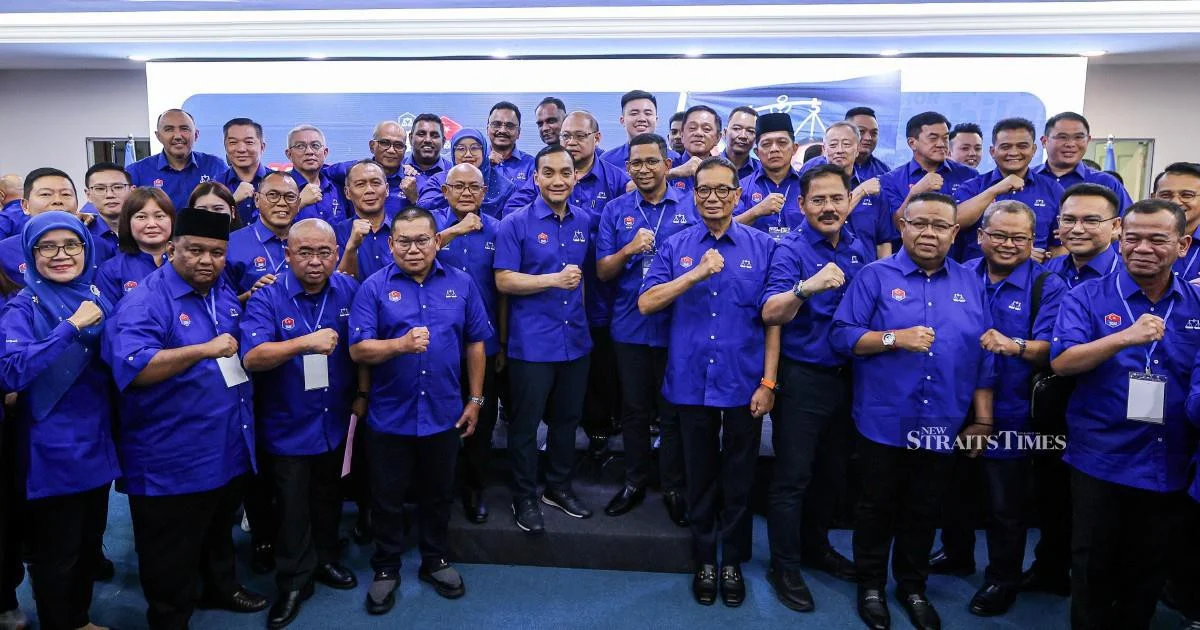
Johor's Barisan Nasional coalition is banking on a wave of new political talent to secure victory in the state election scheduled for July 11, with recently appointed candidates from the component parties declaring their readiness to mount an aggressive ground campaign across the southern state. The fresh batch of candidates represents a deliberate strategic shift as BN seeks to reinvigorate its electoral appeal and reverse any perceived erosion of support in the crucial peninsula state, which has long served as a critical power base for the national coalition.
The introduction of new faces signals BN's recognition that political dynamics in Johor have shifted, and the coalition must adapt its approach to resonate with voters who may have become disengaged from traditional politics or are open to fresh leadership. These candidates come from BN's various component parties—UMNO, MCA, and MIC—each bringing distinct perspectives and community networks that the coalition hopes will broaden its electoral reach beyond conventional strongholds.
The July 11 election represents a significant test of BN's recovery narrative following its dramatic collapse in the 2018 general election, when the coalition lost federal power for the first time in Malaysia's modern history. Although BN has regained momentum in recent by-elections and state contests, maintaining control of Johor—a state long considered an UMNO fortress—remains essential to demonstrating that the coalition remains capable of winning major electoral contests.
For Malaysian political observers and Southeast Asian analysts tracking regime resilience in Southeast Asia's monarchies, this election carries broader implications. BN's performance will indicate whether traditional political machinery, bolstered by institutional advantages and newly energised candidates, can overcome the voter volatility that has characterised Malaysian politics since 2018. The outcome will also signal whether the coalition has successfully repositioned itself as a modern, reform-minded force or whether entrenched perceptions of governance challenges continue to weigh on its electoral fortunes.
Johor specifically presents a complex electoral landscape. The state comprises 56 state constituencies spread across diverse populations ranging from urban centres like Johor Baru to rural agricultural areas and plantation regions. Each demographic segment presents distinct challenges and opportunities for the new BN candidates, who must navigate not only opposition parties but also potential intra-coalition tensions and varying community expectations across different constituencies.
The commitment voiced by these new candidates reflects confidence within BN's ranks, yet it also masks underlying uncertainties about whether fresh faces alone can overcome deeper structural challenges. Voter concerns about corruption, economic management, and the pace of reform continue to influence electoral decisions. The new candidates, unburdened by extensive legislative records, potentially benefit from the assumption of innocence regarding past governance decisions, though they must simultaneously establish credibility and demonstrate substantive policy platforms.
Beyond the immediate electoral contest, this infusion of new talent into Johor's political arena could reshape the state's medium-term governance trajectory. If elected, these candidates would form the next generation of state legislators and potentially future ministers, influencing policy directions on issues ranging from education and healthcare to infrastructure development and economic diversification in one of Malaysia's most economically vital states.
The coalition's strategy of deploying new candidates also reflects demographic considerations. Younger politicians may appeal more effectively to voters under 40, a demographic cohort that has demonstrated higher propensity to vote for alternative political forces in recent elections. By presenting fresh, presumably more contemporary political voices, BN appears to be attempting to bridge the generational gap that has sometimes characterised perceptions of the coalition as an establishment of aging, traditional power brokers.
Regional political observers will watch whether this approach proves effective in reversing opposition gains in urban constituencies, where younger, more educated voters have shown stronger support for reform-oriented parties. The performance of BN's new candidates in these urban areas will be particularly instructive for understanding the viability of the coalition's broader revival strategy across Malaysia.
The Johor state election will also test the unity of BN's component parties in channelling resources, campaign machinery, and voter mobilisation efforts toward shared electoral objectives. Component parties sometimes harbour competing interests regarding candidate selection and resource allocation, and managing these internal dynamics while maintaining cohesion remains an ongoing challenge for the coalition's leadership.
Internal BN dynamics notwithstanding, the new candidates have publicly committed to intensive grassroots engagement, a recognition that electoral victory in contemporary Malaysia requires not simply institutional machinery but genuine community interaction and responsiveness to constituent concerns. This emphasis on ground-level engagement represents an implicit acknowledgment of how Malaysian politics has transformed since the pre-2018 era, when top-down campaign strategies proved insufficient to retain voter loyalty.
Looking ahead to July 11, the extent to which these new BN candidates succeed will depend substantially on whether they can translate their campaign promises into sustained voter enthusiasm, whether the coalition's central leadership provides adequate support and resources, and ultimately whether the Malaysian electorate believes the coalition's narrative of renewal and effective governance. For Johor voters and Malaysian political watchers alike, the coming weeks will reveal whether fresh faces and renewed energy can translate into electoral victory for a coalition seeking to reinstate itself as Malaysia's natural governing force.

