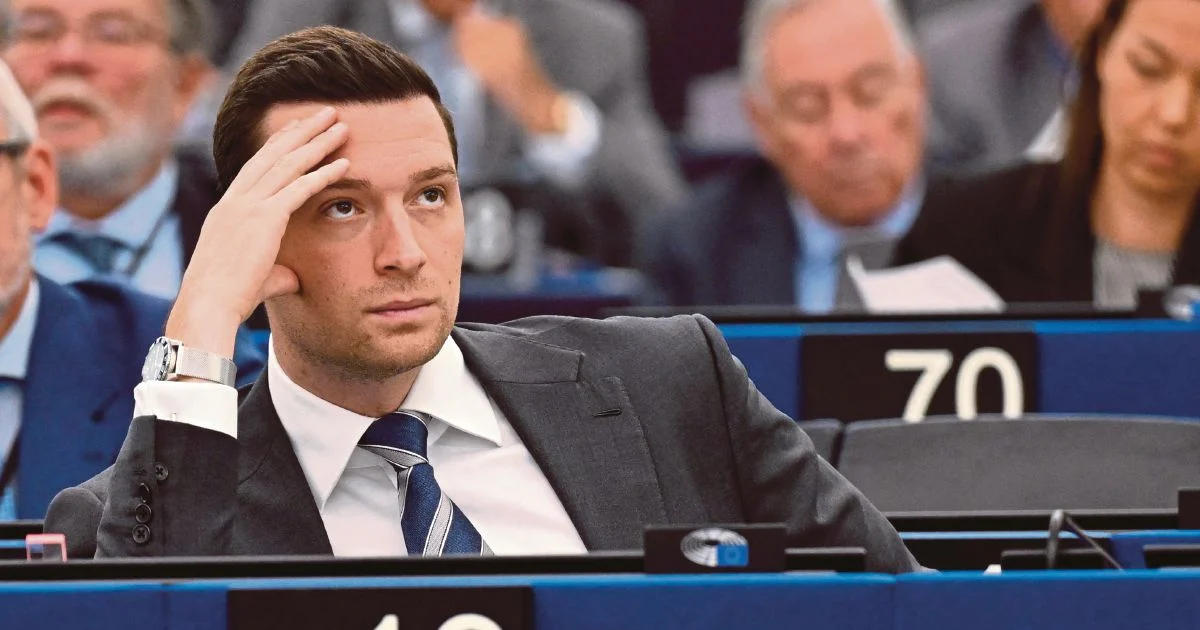
France's anti-corruption authorities have opened an investigation into accusations that Jordan Bardella, the far-right National Rally's presumed presidential contender, may have been improperly employed as an assistant in the European Parliament, widening scrutiny around a figure widely expected to lead his party in future electoral contests. The watchdog's decision to pursue the matter marks an intensification of political tension surrounding Bardella, whose party has vehemently dismissed the allegations as baseless and designed to damage his rising profile.
The charges centre on whether Bardella's appointment as a parliamentary assistant in Brussels constituted genuine employment or a fictitious arrangement designed to circumvent employment regulations. Such allegations carry significant weight in France, where payroll fraud involving European institutions has become a recurring political scandal. The investigation underscores how questionable hiring practices—whether by individual politicians or their staffs—continue to provoke public concern and regulatory intervention across European democracies.
Bardella's National Rally has mounted a robust defence, categorically denying that their prominent figure engaged in any irregularities. Party officials characterise the allegations as a politically motivated attack intended to undermine confidence in their leadership ahead of anticipated electoral contests. This defensive posture reflects the high stakes involved, as Bardella has emerged as a central figure within French far-right politics and is frequently discussed as a potential future presidential candidate.
The investigation by the anti-corruption watchdog represents a crucial turning point for French politics, where questions about financial propriety and ethical conduct at EU institutions have repeatedly dominated headlines. Prior scandals involving disputed parliamentary employment arrangements have resulted in criminal prosecutions and imprisonment of political figures, establishing precedents that carry weight in the current inquiry. The watchdog's decision signals that authorities intend to apply the same rigorous standards regardless of political affiliation.
For Malaysian and Southeast Asian observers, the episode illustrates broader patterns visible across democratic societies regarding governance standards and political accountability. Like several nations in the region, France grapples with public expectations that elected officials and their representatives must meet exacting ethical benchmarks. The investigation demonstrates institutional mechanisms—independent watchdogs, transparent procedures, and public scrutiny—that attempt to enforce such standards, even against high-profile political figures.
The timing of the investigation carries immediate implications for French political dynamics. Parliamentary elections loom as a significant checkpoint for national politics, and questions about Bardella's conduct may influence voter perception and party strategy in the months ahead. European Parliament employment matters have historically generated substantial media attention and public debate, potentially amplifying the reputational consequences of such investigations.
Institutional safeguards within the European Parliament itself have been strengthened in recent years specifically to prevent the kind of irregular employment arrangements these allegations involve. Enhanced transparency requirements, stricter documentation standards, and more rigorous oversight have been implemented following previous scandals. Consequently, contemporary investigations operate within a framework of improved institutional controls compared to investigations that might have proceeded even five years earlier.
The watchdog's formal decision to investigate rather than dismiss the matter suggests that initial evidence met thresholds warranting further examination. Investigators will likely examine employment contracts, parliamentary work records, time-tracking systems, and witness testimony to determine whether Bardella's role involved substantive duties or represented a nominal arrangement. Such investigations typically require months to complete and demand meticulous documentation analysis.
Regional readers should note that the matter reflects established patterns within European governance where questions about institutional propriety periodically dominate political discourse. Comparable investigations have affected politicians across the ideological spectrum in France and other European nations, though outcomes have varied significantly depending on specific circumstances and evidence quality. The investigation's ultimate conclusion remains uncertain, and formal findings will carry implications extending beyond individual reputational considerations.
French public opinion regarding political ethics has become increasingly stringent over the past decade, particularly following multiple scandals involving both mainstream and populist parties. This evolving standard means that investigators and prosecutors increasingly operate within an environment where voters demand scrupulous adherence to regulations. For Bardella's political future, the investigation's outcome could substantially influence his viability as a presidential candidate or the broader electoral performance of his National Rally party.
The investigation also highlights ongoing tensions between the National Assembly and European Parliament regarding supervision of parliamentary staff and employment procedures. Coordination between French authorities and EU institutions adds complexity to the inquiry, potentially requiring examination of records held across multiple jurisdictions and institutional systems. Such cross-border investigations demand careful coordination to ensure evidence integrity and procedural compliance.
Looking forward, the investigation's resolution will likely establish precedents relevant to future cases involving European Parliament employment arrangements. Whether authorities ultimately substantiate the allegations against Bardella or determine them unfounded, the public and political consequences will extend beyond the immediate situation. French governance observers will monitor whether the investigation proceeds expeditiously or faces procedural obstacles, as timeliness in such matters carries its own political significance for public confidence in institutional impartiality.

