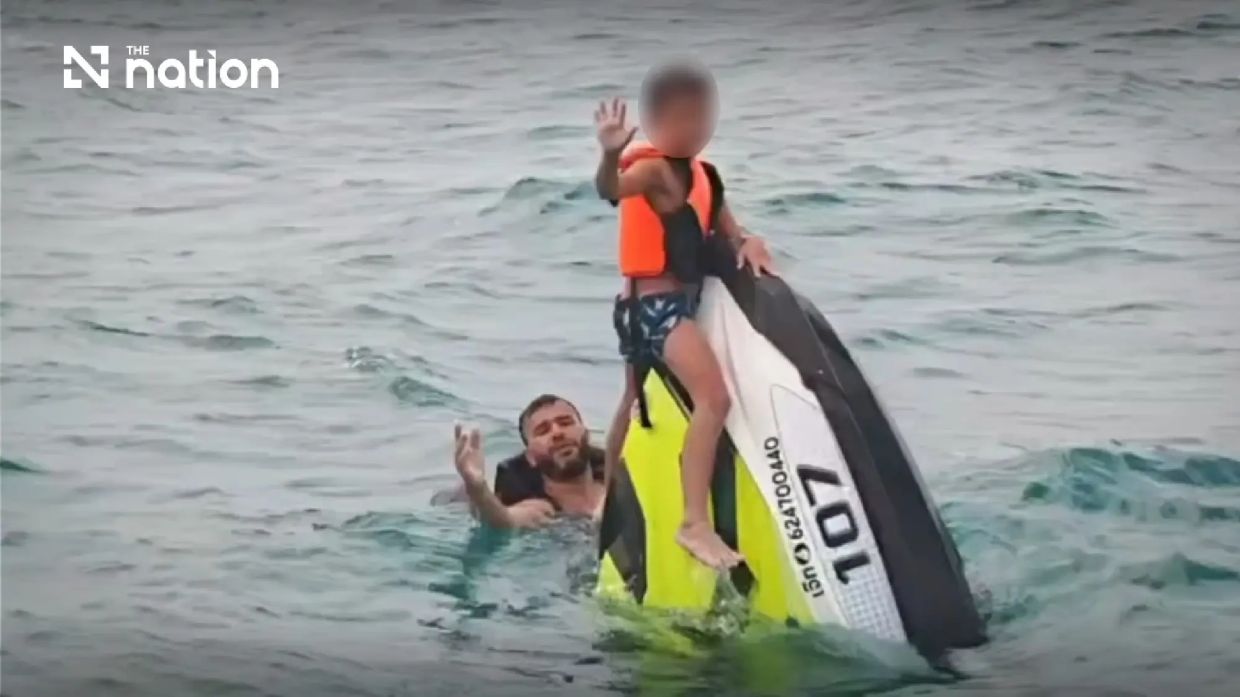
A harrowing maritime ordeal unfolded off Koh Samui when a French family—a father in his fifties accompanied by his two young sons, aged five and seven—spent more than 16 hours stranded at sea after their rented jet ski overturned. The trio was eventually located and brought to safety on Friday morning, with local authorities confirming that all three received medical attention before being cleared to resume their holiday in Thailand.
The incident began when the father rented a jet ski from an operator on the popular Gulf of Thailand resort island around 5pm on Thursday. What should have been a brief recreational excursion quickly turned into a survival situation when the watercraft capsized just 15 minutes into the outing. The family found themselves battling the elements throughout the night, clinging to the overturned vessel while battling exhaustion and the ingestion of seawater. Amorn Chomchoey, a local government official overseeing the rescue response, reported that the family presented severe signs of fatigue when discovered, with the two children appearing particularly pale and distressed from their extended exposure.
The rescue operation was initiated when the rental operator raised alarm bells after the family failed to return at the agreed time. This prompt action by the business operator proved crucial to the family's survival, as it triggered a coordinated response from local rescue teams and provincial authorities. Search and rescue personnel worked through the night, eventually locating the family approximately 16 hours after their departure. The moment of discovery came around 10am on Friday morning, with footage released by the Koh Samui district office showing the trio still clinging to the overturned jet ski—one boy perched on the craft's remaining visible section while his father floated nearby, both wearing life jackets.
The circumstances surrounding the capsizing remain under investigation by local authorities. Officials are attempting to determine what factors led to the jet ski overturning after such a brief period of operation. The father initially claimed to authorities that he possessed considerable experience operating jet skis, suggesting mechanical failure or environmental conditions might have been responsible. However, the rental operator presented a contrasting account to local media, indicating that the family may have ventured beyond the designated operational area specified in their rental agreement. This discrepancy has become central to the ongoing inquiry, as operators typically designate specific zones to keep renters in safer, shallower waters monitored by staff.
The rescue sequence itself was captured on video, providing insight into the tense retrieval operation. Rescue personnel can be heard urging the family to remain calm while confirming survival prospects to colleagues. One child was carefully transferred onto a rescue boat, while the father received water and further assistance to board safely. Both children exhibited shock from their ordeal, though immediate medical intervention was available. Upon reaching shore, all three family members were transported to a local hospital for thorough medical evaluation, with medical professionals focusing on complications from prolonged saltwater exposure and exhaustion.
Fortunately, the medical assessments proved favourable for all three survivors. Local health officials reported that aside from dehydration, exhaustion, and the effects of prolonged seawater ingestion, the family sustained no serious injuries requiring extended hospitalisation. They were discharged shortly after initial assessment and observation. Remarkably, rather than cutting short their Thailand vacation, the French family opted to remain in the kingdom and continue their holiday plans, a testament to their resilience following the frightening experience.
The incident highlights ongoing safety concerns surrounding water sports operations in Thailand's popular tourist destinations. Koh Samui, nestled in the Gulf of Thailand, ranks among the nation's premier island destinations, drawing millions of international visitors annually who seek its renowned beaches, comprehensive resort infrastructure, and family-friendly environment. The island's generally calm waters and extensive tourism infrastructure have made it particularly attractive to families with young children, yet incidents involving rental watercraft persist. Operators and authorities face continuous pressure to balance accessibility and commercial interests with rigorous safety protocols.
Jet ski rental operations function throughout Thailand's resort regions with varying degrees of regulatory oversight and safety standardisation. While many operators maintain legitimate licenses and insurance, enforcement of operational boundaries and equipment maintenance standards can be inconsistent. The incident involving this French family underscores the importance of clear communication between operators and renters regarding permitted zones, equipment limitations, and emergency procedures. Rental agreements frequently include spatial restrictions designed to keep users in zones where rescue response can be deployed quickly—violations of these boundaries expose renters to significantly elevated risk.
For international tourists navigating Thailand's water sports landscape, this incident offers cautionary lessons regarding due diligence before engaging with rental services. Verifying operator credentials, understanding contractual restrictions, confirming that safety equipment is properly maintained and fitted, and clarifying emergency protocols constitute essential precautions. The involvement of young children intensifies the stakes, requiring parents to exercise heightened caution when evaluating activity providers. This family's survival ultimately depended on multiple factors aligning favourably: properly functioning life jackets, the rental operator's attentiveness in raising alarms, coordinated rescue response, and relatively calm conditions that permitted rescue personnel to locate them.
Thailand's tourism sector remains vital to the nation's economy, generating substantial employment and foreign exchange revenue across regions like the Southern provinces where Koh Samui operates. Maintaining safety standards directly impacts destination reputation and tourist confidence, particularly among family travellers who represent significant spending demographics. Authorities continue strengthening oversight mechanisms, though resource constraints and the sheer volume of tourist activities create implementation challenges. The rescue of this French family, while ultimately successful, serves as a reminder that even in well-established tourist destinations, maritime activities carry inherent risks requiring constant vigilance from both operators and participants.

