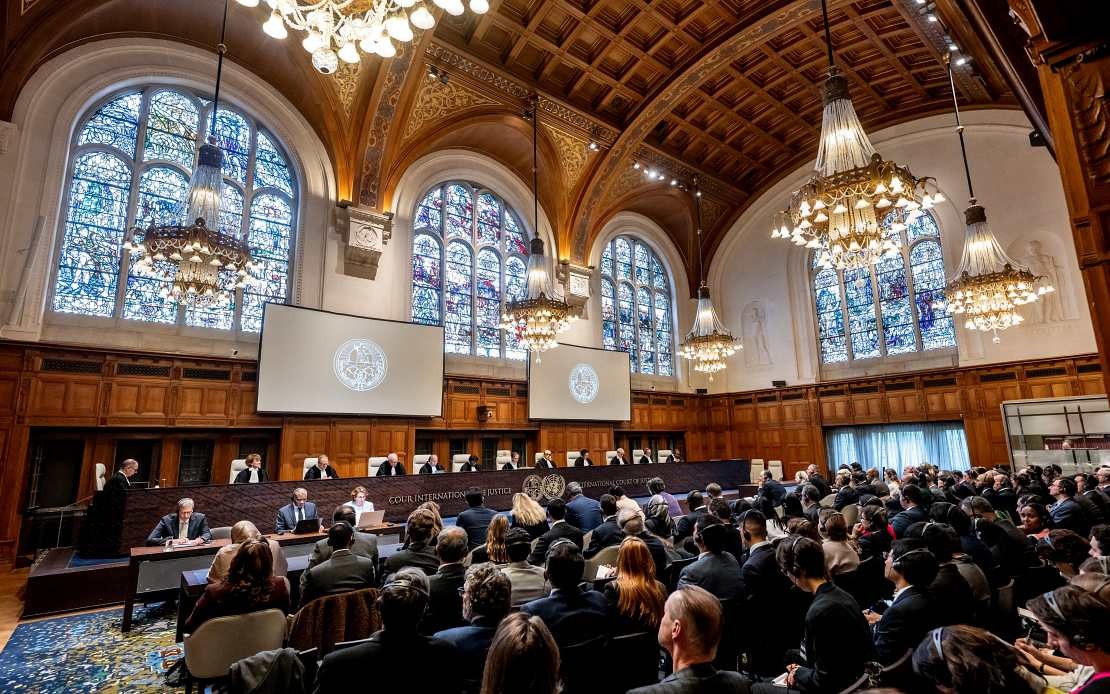
France has doubled down on its support for the International Criminal Court in response to mounting pressure from Washington, with Paris making clear that it views the tribunal as essential to global justice rather than a threat to democratic nations. Foreign Ministry spokesman Pascal Confavreux articulated the French position on Thursday, emphasising that the ICC's mandate to hold individuals accountable for the world's gravest crimes does not encroach upon the sovereignty of member states or pose risks to their governance.
The French government's robust restatement of confidence in the Hague-based institution came directly after US Secretary of State Marco Rubio launched a sweeping critique of the court's legitimacy and authority. Rubio has signalled that the Trump administration intends to pursue an aggressive diplomatic strategy aimed at persuading other nations to exit the ICC framework, while simultaneously instructing the State Department to develop initiatives designed to constrain what Washington characterises as the court's overreach into American affairs.
Confavreux's remarks underscored a fundamental distinction in how Paris and Washington perceive the ICC's function within the international legal architecture. The French official emphasised that because the court prosecutes individuals accused of genocide, war crimes, crimes against humanity, and aggression—rather than placing entire governments on trial—it operates within appropriate boundaries that respect state autonomy. This argument directly counters the American position that the institution's investigation and prosecution powers inherently threaten national decision-making authority.
The dispute reflects deeper ideological differences between the two Atlantic allies regarding multilateral institutions and accountability mechanisms. While France views international courts as vital safeguards against atrocities and essential components of rules-based global governance, the current American administration appears to regard such bodies with considerable scepticism, fearing they could constrain American policy flexibility or expose American officials to legal jeopardy. This philosophical divergence mirrors broader transatlantic tensions over the architecture of international law and who should ultimately determine national interests.
France also used the occasion to condemn what it characterised as a troubling pattern of intimidation directed at the court's personnel and operations. Confavreux stated unequivocally that threats and attacks against ICC staff members, judges, and others engaged in the institution's work were completely unacceptable and concerning. This criticism appears aimed not only at rhetorical American hostility but potentially at other actors who have sought to undermine the court through more aggressive means, including authoritarian regimes facing investigation or accountability proceedings.
The structural composition of international criminal justice remains a point of tension in global diplomacy. The ICC, established in 2002 through the Rome Statute, operates from The Hague and represents one of humanity's most ambitious attempts to create a permanent venue for prosecuting perpetrators of mass atrocities. The United States, notably, has never ratified the Rome Statute and therefore maintains no formal membership in the institution, though it has historically exercised considerable influence over its operations and funding.
France's unwavering commitment to the court contrasts sharply with the hesitation or outright hostility expressed by several major powers. As a founding member and consistent financial contributor, Paris has positioned itself as a defender of international justice mechanisms at a time when such support faces significant political headwinds. The French stance carries particular weight given France's permanent seat on the UN Security Council and its status as a leading Western democracy, lending credibility to arguments that ICC membership remains compatible with national sovereignty and democratic governance.
For Southeast Asian nations watching this diplomatic confrontation unfold, France's position carries important implications. Many regional countries have grappled with questions about ICC membership, balancing desires to support international accountability with concerns about potential investigations into their own conduct or that of regional actors. The Franco-American dispute illuminates these tensions, demonstrating that even wealthy democracies disagree fundamentally on whether international criminal courts strengthen or undermine national autonomy. This may embolden some Southeast Asian governments to maintain independent positions on the ICC rather than gravitating toward either the American or European pole.
The timing of this controversy also reflects shifting global dynamics regarding the legitimacy and effectiveness of liberal international institutions. As American enthusiasm for multilateralism has waned in recent years, countries must navigate competing visions of international order. France's forceful reaffirmation of ICC support suggests that European powers intend to preserve and strengthen these mechanisms regardless of American participation or approval, potentially creating a parallel system of international governance centred on different principles and membership.
The American campaign to discourage ICC membership among other nations, if successful, could significantly weaken the court's reach and credibility. However, the enthusiastic French response suggests that Washington will encounter considerable resistance from traditional allies and that efforts to delegitimise the institution may prove more difficult than the State Department anticipates. The dispute is likely to intensify as Washington pursues its agenda and European nations, led by France, mobilise to defend the court's independence and authority against external pressure aimed at constraining its investigations or prosecutorial decisions.

