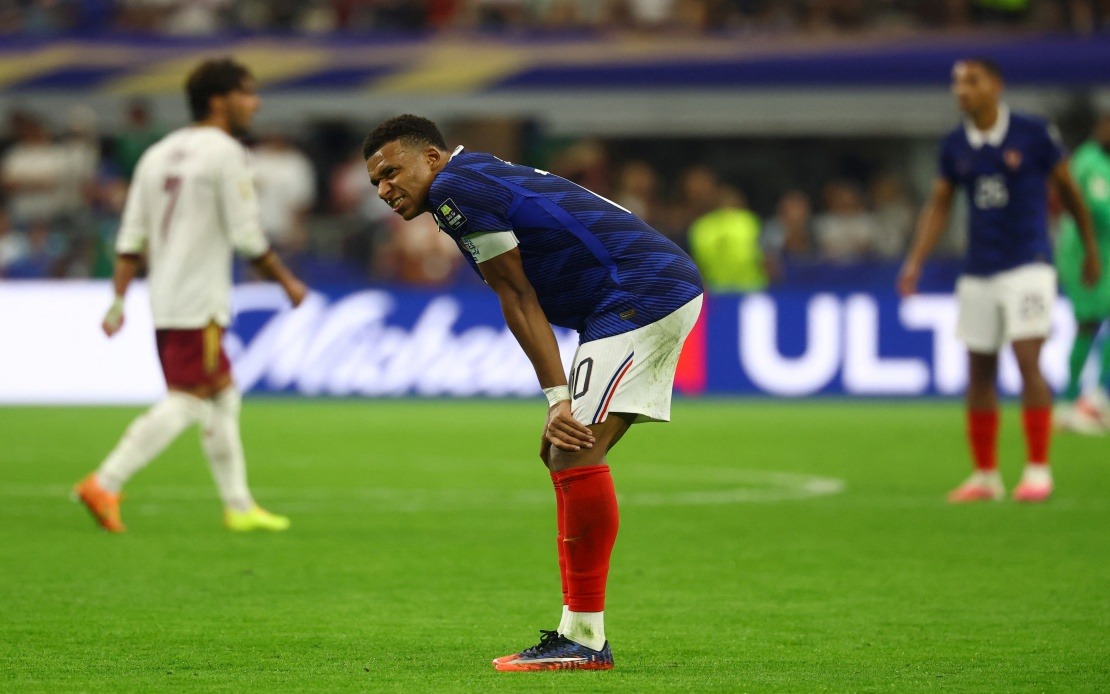
France's World Cup hopes ended in disappointment on Tuesday evening when Spain defeated the tournament hosts 2-0 in the semifinal, an outcome that sparked unrest across multiple cities. The aftermath saw law enforcement responding to widespread disturbances, resulting in more than 160 arrests as crowds expressed frustration over the elimination. The scale of the policing operation underscored how deeply invested French society had become in the tournament, and the tensions that can emerge when national pride collides with sporting defeat.
The capital bore the brunt of the disorder, with the Paris Police Prefecture confirming that 141 individuals faced detention across the broader Paris region in connection with Tuesday evening's incidents. These figures encompassed a variety of disturbances that unfolded as news of Spain's victory spread through the city. Most of those arrested faced charges related to the deployment of firework mortars that authorities alleged were directed at police officers and personnel from emergency services. The use of such devices represented a particularly serious concern for law enforcement, as firework mortars can cause significant injury and reflect a more confrontational approach to public disorder than spontaneous gatherings might otherwise entail.
Lyon, France's third-largest city, emerged as a secondary flashpoint for unrest. Place Bellecour, the city's most expansive public square, had served as a focal point for supporters wanting to watch the semifinal on large screens. When Spain secured victory, the crowd's initial disappointment gave way to organized disruption as smaller contingents within the gathering began engaging in confrontational behaviour. These breakaway groups targeted police with various projectiles, including fireworks, prompting riot police to intervene decisively. Authorities in Lyon reported approximately 20 arrests stemming from these disturbances, a notably lower figure than Paris but still indicative of significant disorder.
What distinguished the Lyon incidents was the demographic profile of those detained. Young people born between 2002 and 2011 comprised the bulk of those arrested, suggesting that much of the unrest was driven by teenagers and individuals in their early twenties. This generational composition raises questions about how youthful supporters channel disappointment and whether sporting events serve as flashpoints for broader social tensions among younger cohorts. The ages of the detainees also presented law enforcement with particular challenges, as juveniles typically require different processing and legal handling procedures compared to adults.
Despite the scale of arrests and the confrontational nature of some incidents, authorities emphasized that the disturbances did not result in serious physical harm. The Paris Police Prefecture stated explicitly that no significant injuries were reported across the capital region. This outcome reflected both the restraint exercised by many participants and the professional response of security personnel in managing volatile situations without escalating them toward greater violence. In Lyon, similarly, local authorities confirmed that neither injuries nor substantial property damage had occurred, suggesting that the unrest, while disruptive, remained largely contained in terms of its physical consequences.
The use of firework mortars as weapons represented an escalation in the nature of the disorder compared to typical post-match disturbances. Such devices, often used in celebratory contexts during major public events, had been repurposed as tools for confronting police. This weaponization reflects a troubling trend observed in various European cities during major sporting events, where organized groups deliberately prepare for potential clashes with authorities. The fact that security services in both Paris and Lyon identified this pattern suggests that intelligence preparation had occurred prior to the match, indicating that concerns about post-match behaviour had been anticipated.
From a broader European perspective, France's experience echoes wider patterns of civil unrest following major sporting defeats. Football matches, particularly World Cup encounters where national pride intersects with global competition, carry emotional weight that extends far beyond the sporting arena itself. The scale of arrests and the geographic distribution across multiple cities indicate that disappointment was channeled through organized groups rather than spontaneous emotional outbursts, a distinction that carries implications for how societies manage sports-related tensions.
For Malaysia and other Southeast Asian nations observing these developments, the incidents offer instructive lessons about managing large public gatherings and maintaining order during emotionally charged events. The Malaysian authorities, should the national football team advance to similar stages in future tournaments, might benefit from studying how French security services coordinated responses across multiple locations. The emphasis on preventing the use of improvised weapons and the deployment of riot police at strategic locations represented considered approaches to crowd management that balanced security requirements with the rights of supporters to gather and express emotion.
The broader context of France's tournament exit cannot be separated from the security implications that followed. Spain's advancement came at the cost of social disorder in the host nation, a reminder that hosting major tournaments carries risks beyond the sporting competition itself. French authorities demonstrated capacity to respond swiftly to emerging disorder, yet the volume of arrests suggests that prevention through pre-event measures might have been equally important. As football's global governance structures continue to expand and intensify major tournaments, the relationship between sporting outcomes and urban security will remain a critical consideration for host nations across the world.

