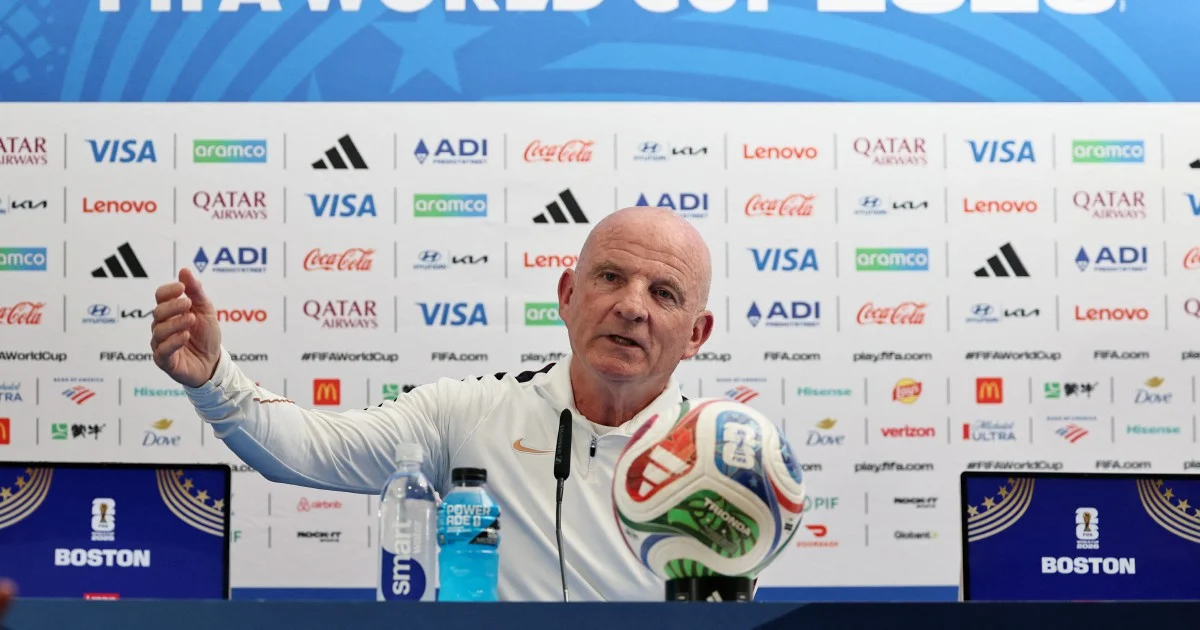
France will look to clinch top spot in their World Cup Group I when they face an equally formidable Norway side on Friday, with assistant coach Guy Stephan stressing that winning the group carries significant logistical advantages beyond mere bragging rights. Speaking from Boston on Thursday in the absence of manager Didier Deschamps, who has returned home following his mother's funeral, Stephan outlined how the group standings will fundamentally shape France's tournament movement and operational efficiency in the coming weeks.
The infrastructure implications of group placement have become a crucial consideration for the defending 2018 champions. Topping the group would allow France to remain based in the northeastern United States through to the quarter-final stage, maintaining their current operational hub and minimizing disruption to team cohesion and training rhythms. By contrast, finishing as runners-up would force the squad into extended travel across the continental expanse, requiring journeys to cities including Dallas, Miami and Atlanta—a scenario that compounds fatigue and logistical complexity during the tournament's most demanding phase.
Beyond distance, Stephan highlighted that environmental factors amplify the practical advantage of group leadership. The temperature variations across different American regions would impose additional physical and psychological demands on the players if they were forced to chase matches across multiple climates. Maintaining a stable base in the cooler northeastern corridor offers conditioning continuity that becomes increasingly valuable as the tournament progresses and matches intensify. "First place is best," Stephan stated plainly, reducing the tactical and strategic calculus to its simplest form.
France's position entering the crucial fixture is decidedly favourable. The team has already secured progression alongside Norway after both nations won their opening two matches with emphatic performances. With six points accumulated from two games, France needs merely a draw against their Scandinavian opponents to guarantee group leadership thanks to a superior goal difference margin. This mathematical advantage transforms Friday's encounter from a must-win scenario into an opportunity to manage rest and rotation while still achieving the primary objective.
However, Stephan revealed that France will face personnel challenges in their quest. Central defender William Saliba has been ruled out entirely, forcing tactical adjustments in the backline at a critical juncture. More concerning, striker Marcus Thuram is managing a calf injury that could complicate selection decisions for a forward line that has been central to France's attacking dominance. These absences potentially compromise France's capacity to dominate the contest and secure the kind of convincing victory that would send psychological messages to rival teams.
The institutional structure surrounding the French delegation has been tested by Deschamps's absence. Stephan, stepping into the spotlight as temporary spokesperson, has maintained regular telephonic contact with the manager despite geographical separation. However, Friday would represent minimal contact between the two, with the funeral proceedings demanding Deschamps's full attention and emotional presence. Despite this constraint, Stephan conveyed confidence that the established tactical framework and team culture would sustain French preparations without the manager's physical presence.
The situation underscores broader questions about organizational resilience and whether coaching infrastructure can successfully navigate disruptions to hierarchical leadership structures. Stephan's assured demeanor suggested that France's World Cup-winning pedigree and established protocols provide sufficient scaffolding to navigate temporary management transitions. The assistant coach articulated the squad's collective ownership of the objective, emphasizing that finishing first represents not merely managerial aspiration but shared team determination.
Norway presents a formidable challenge despite their group-stage status. The Scandinavian nation has matched France's two-win record, indicating comparable quality and momentum. A draw would satisfy both teams' qualification requirements but only one can achieve the superior positioning that removes travel uncertainty. Norway carries the additional motivation of wanting to disrupt a traditional powerhouse and demonstrate that Nordic football has developed the consistency to compete with continental giants across multiple matches.
For Malaysian and Southeast Asian observers, France's methodical approach to tournament management offers instructive lessons about how elite teams navigate competition architecture. The willingness to explicitly prioritize logistical efficiency reflects professional sophistication that extends beyond on-field tactics into team management, physical welfare, and competitive sustainability across extended tournaments. As regional football develops increasingly complex administrative and logistical dimensions, the operational thinking displayed by France's delegation provides relevant case studies in comprehensive tournament preparation.
The convergence of personal tragedy, team management continuity, and competitive advancement creates a uniquely complex backdrop to Friday's encounter. Deschamps will be processing profound grief while simultaneously maintaining contact with his coaching structure, illustrating the competing demands that modern football places on elite managers. For Stephan and the playing squad, the challenge becomes executing tactical objectives while holding space for institutional empathy and personal circumstance—a fundamentally human dimension often overshadowed by match analysis and tactical debate.

